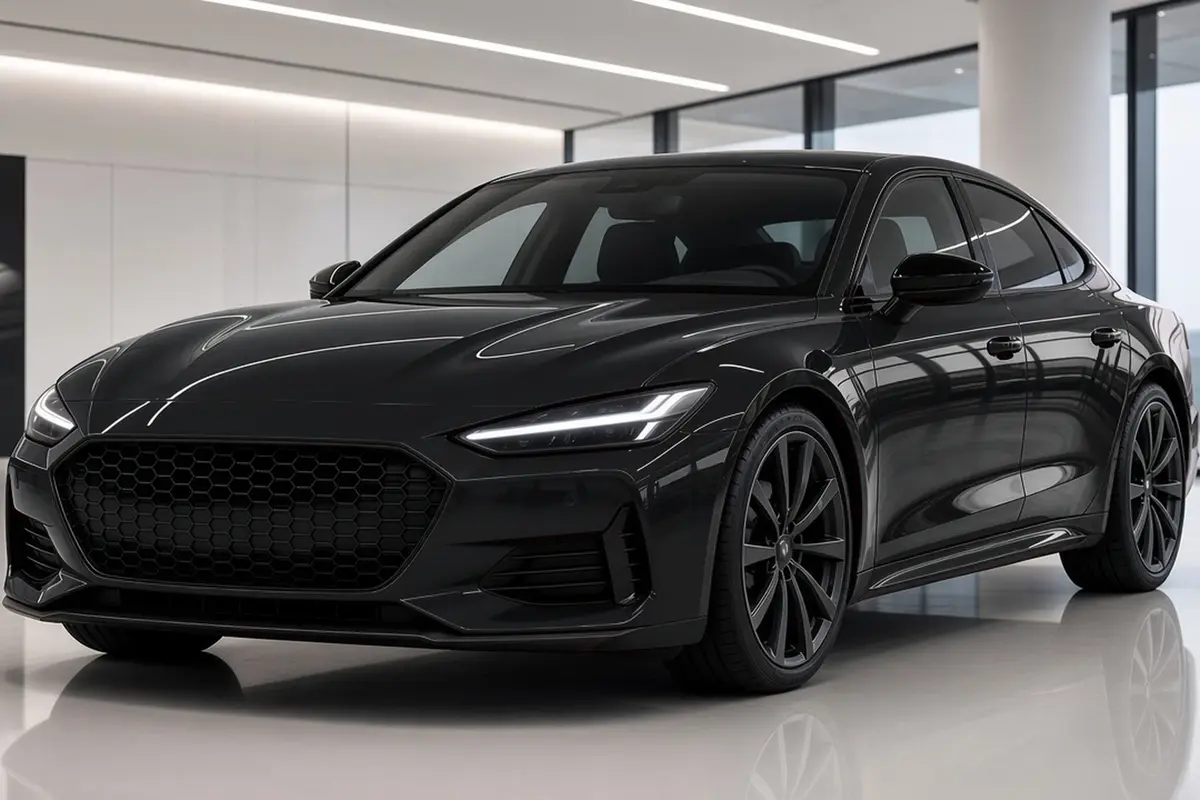
The calculator works from the outer length, width and height of the body. It treats each zone as a rectangle: hood, roof, rear lid, two sides and both bumpers. Small parts such as mirrors and pillar strips are added as fixed pieces. Each zone's size is a share of the car's dimensions, set for each body type.
Spare film, called bleed, is added on every edge of every piece. A piece wider than the roll is cut into strips that overlap by 2 cm. Where the film allows, a piece is also tried turned by 90 degrees to use less film. Carbon, brushed and patterned films are never turned, because the pattern must run one way.
The pieces are then laid out on the roll, with small pieces filling space beside big ones. A waste factor is added for curved cut-outs, relief cuts and pattern matching. The likely figure also includes spare for one re-cut of the largest panel other than a side. The total is rounded up to the next 0.5 m.
The low and high figures show where the model is less certain, not a statistical error margin. The range is wider for vans, pickups, chrome and patterned films, and for missing dimensions. Door jambs, wheel-arch edges and inner door edges are not counted. An installer still measures the car and plans the cuts before ordering film.