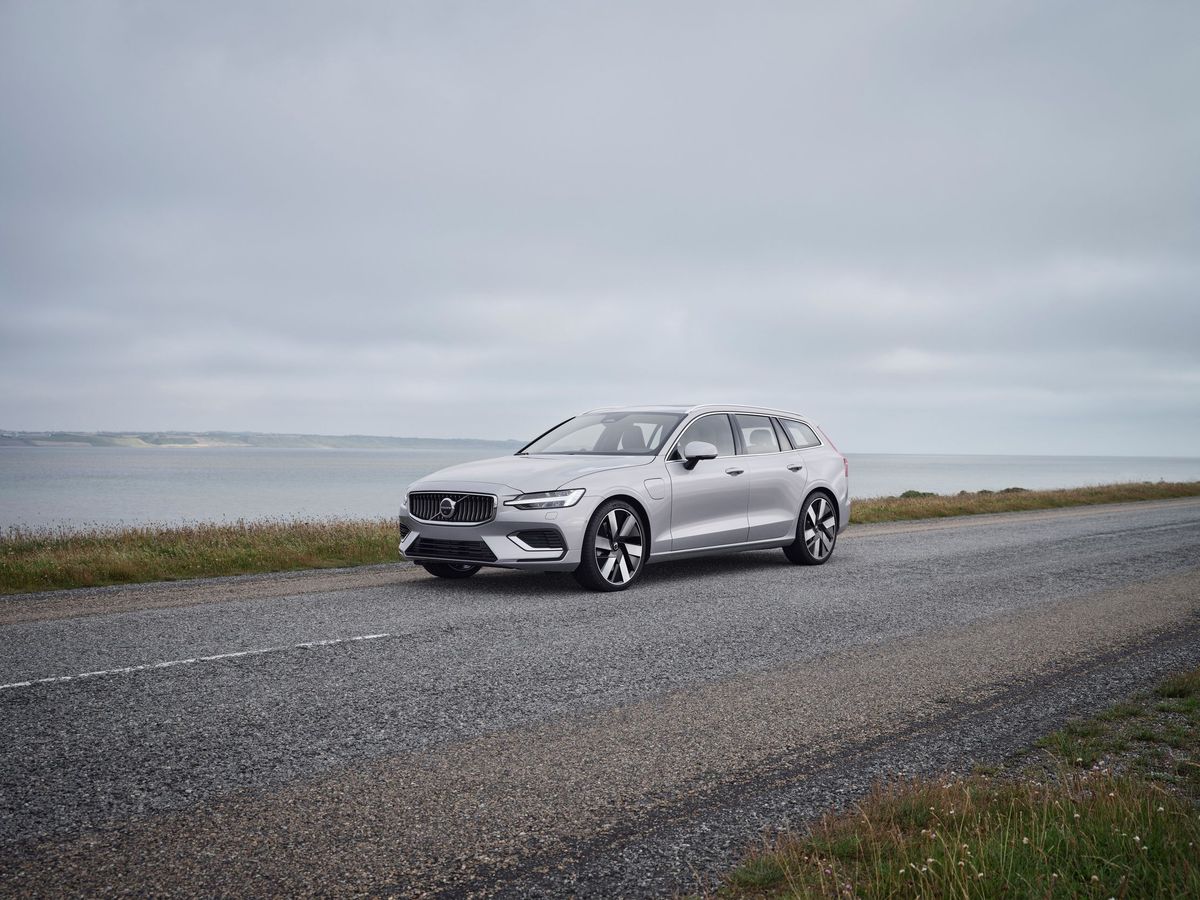
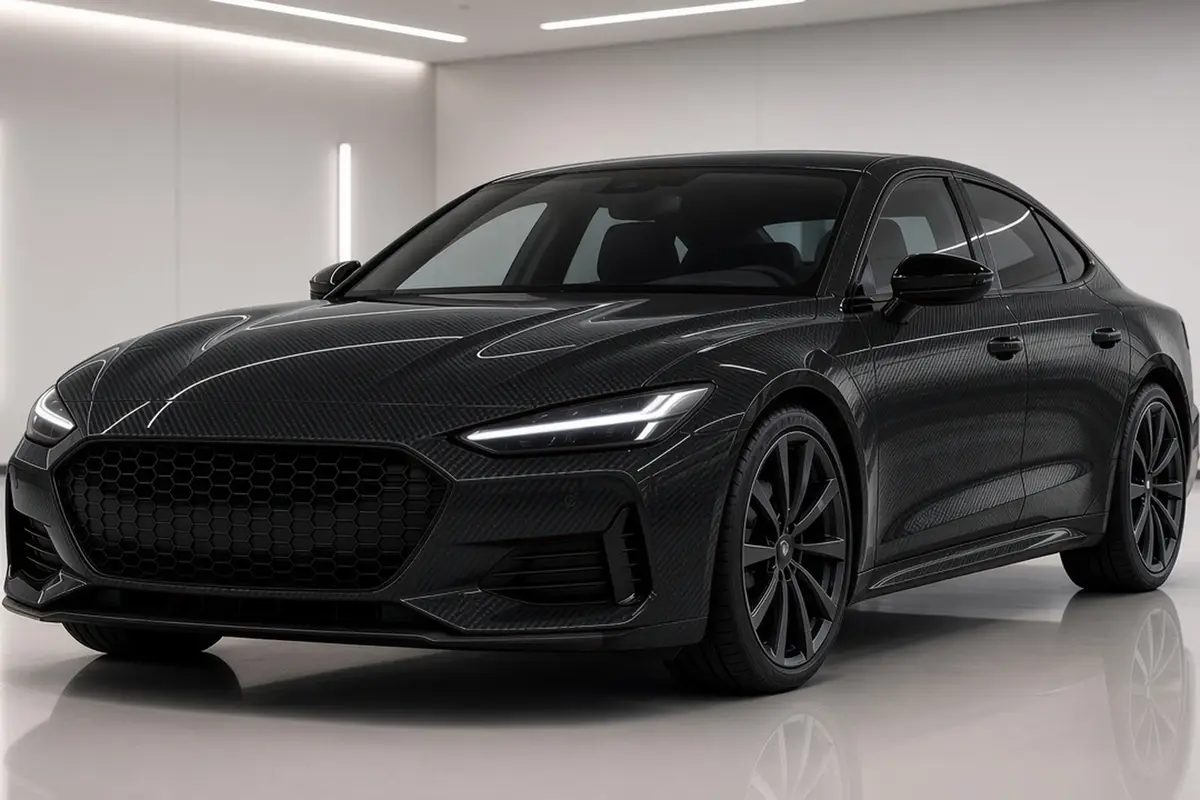
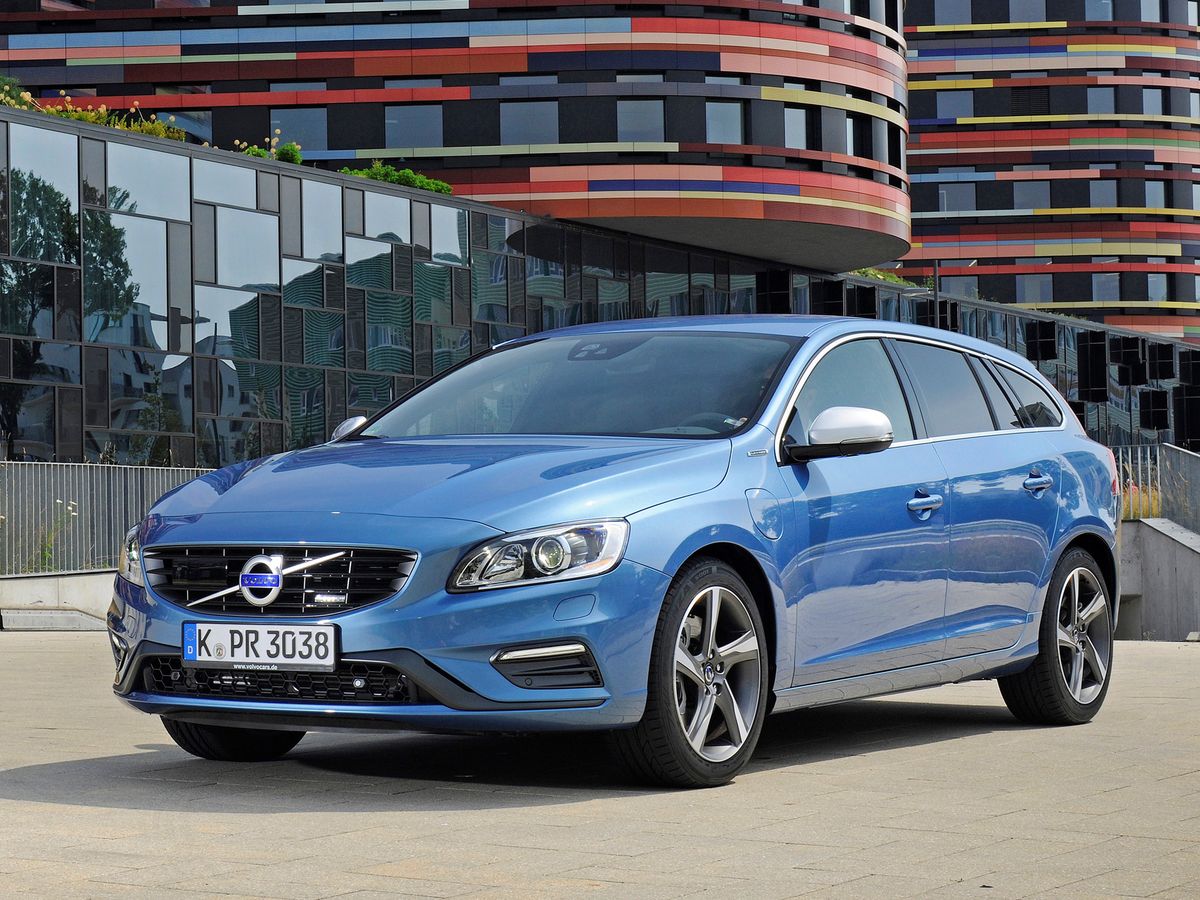
A Volvo V60 wrapped in carbon fiber film changes the color of every painted panel while leaving the glass roof dark on the second generation. The finish is the first decision: black carbon fiber weave follows a diagonal grid, while forged carbon has a random, blocky pattern. A full color change takes about 48 ft (14.5 m) of 60-inch (1.52 m) cast film on the 2018–now body. The first generation needs more film, about 64 ft (19.5 m), because the tailgate and roof add surface area.
The factory paint stays hidden under carbon fiber vinyl, so any panel repaired or repainted before the wrap must be checked first. The second generation V60 has parking sensors and cameras in the bumpers, and the film is cut around each sensor and lens. The roof is not wrapped on the 2018–now model, which reduces the film amount and avoids seams around the glass panel. On both generations the tailgate includes the rear glass, so the film stops cleanly at the edge of the glass.
Carbon fiber film is removable, but the body needs a hand wash after removal to clear any adhesive residue. The second generation V60 may have a charge port door on plug-in or electric versions, and that small piece is wrapped separately. Door jambs are not wrapped in a standard color change, so the factory color shows when the doors are open. A matte finish film should be cleaned with products made for matte vinyl to avoid adding gloss.