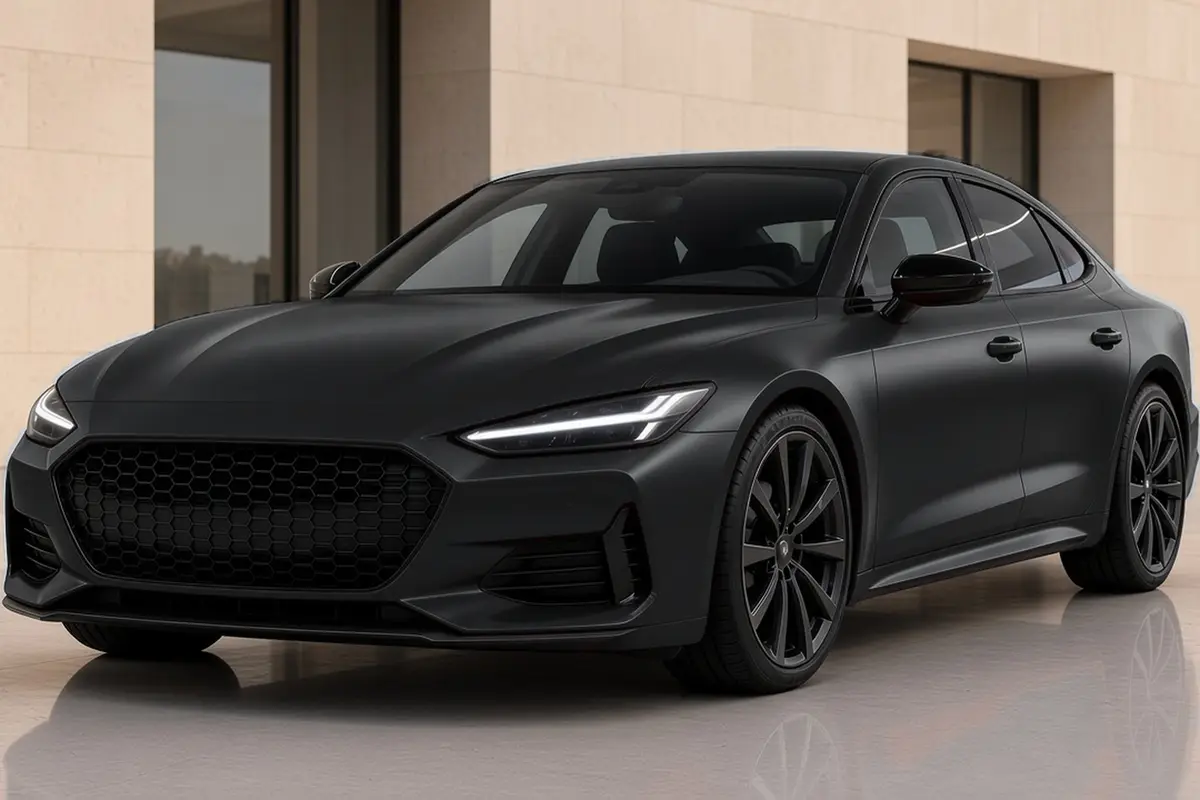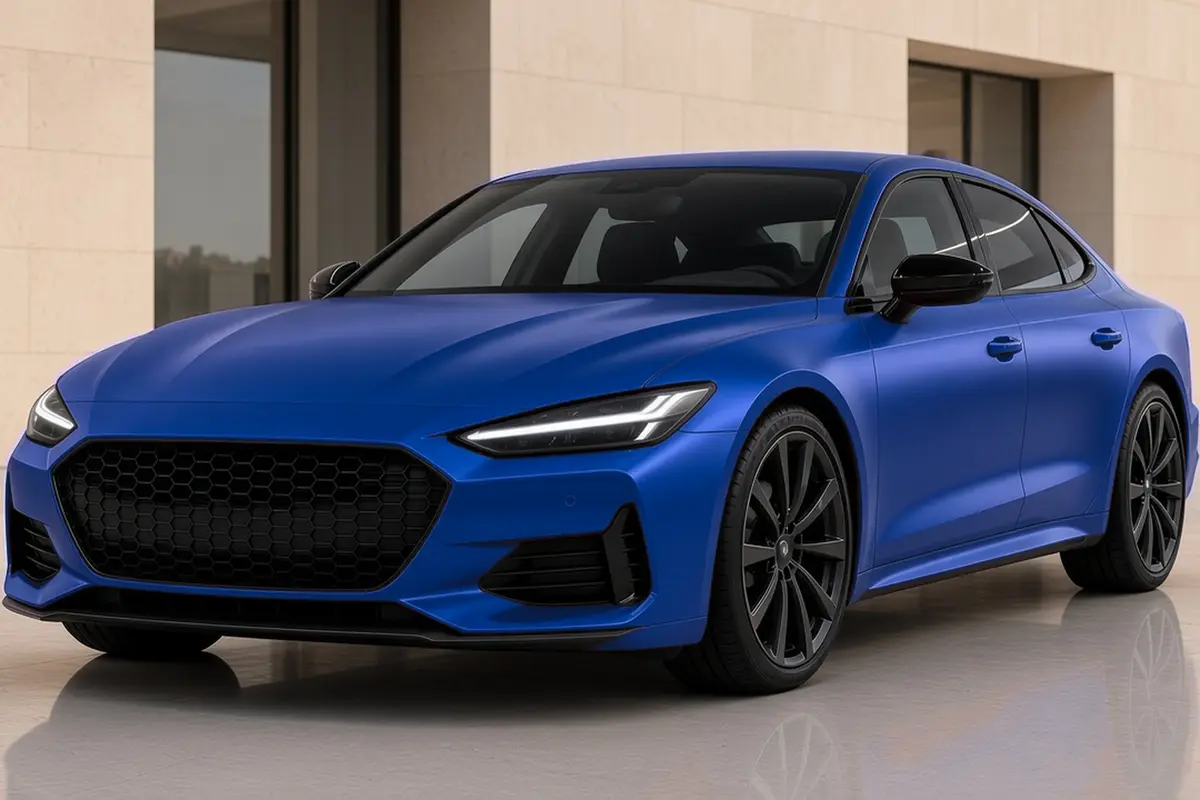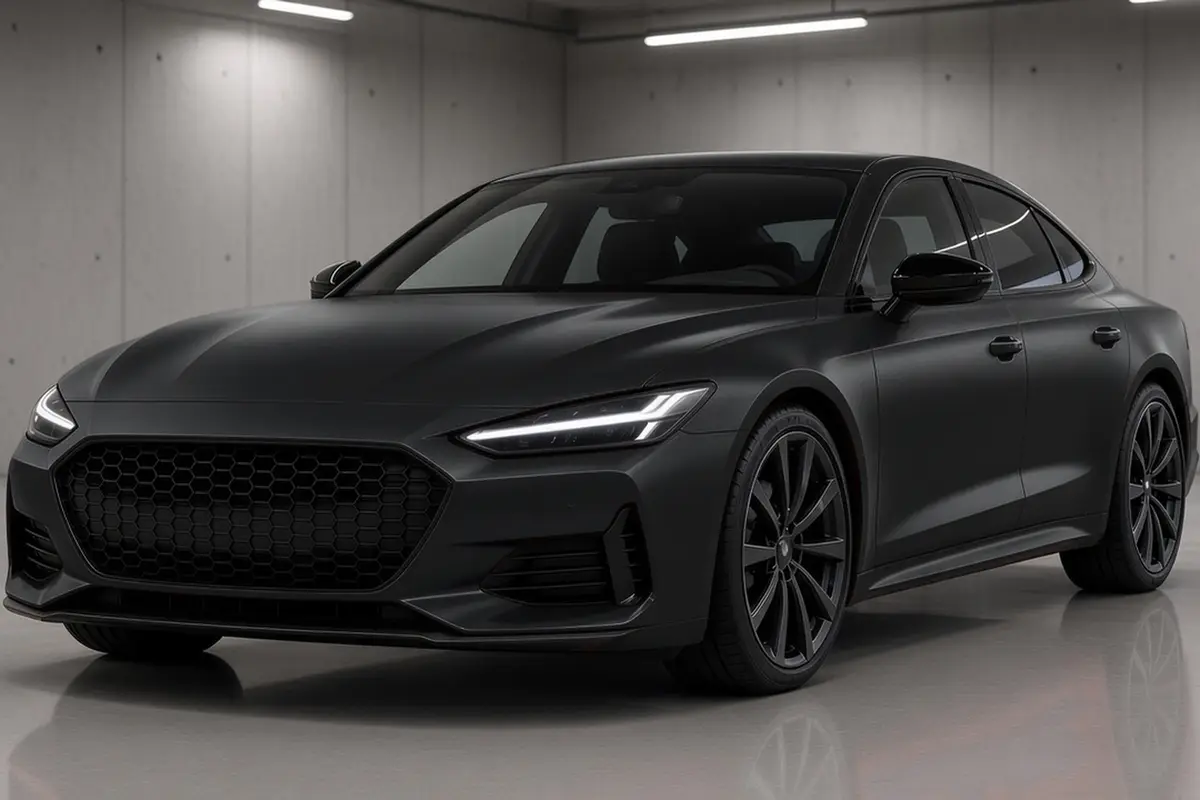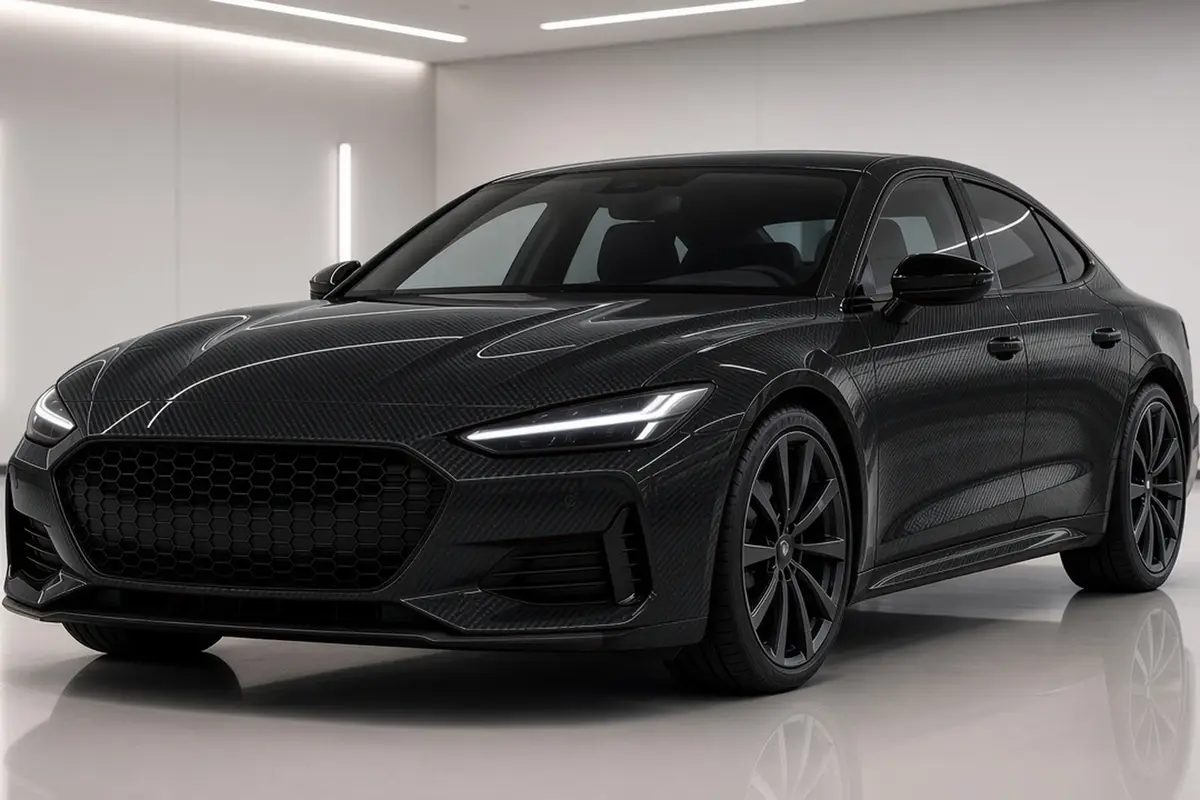
A carbon fiber wrap is a vinyl film made to look like woven carbon fiber. Fitted over paint or trim, it gives the carbon look without real carbon parts. The film comes in two looks: the regular weave and the marbled forged carbon pattern.
Key facts
- The catalog on this site lists 106 carbon fiber films and 42 forged carbon films.
- Carbon film is directional, so the pattern must run the same way on every panel.
- For a full sedan wrap, the film calculator estimates 19 m (62 ft) of carbon, brushed or patterned film.
- Carbon looks also come as paint protection film, such as LLumar Gloss Carbon Fiber Weave.
Carbon look film versus real carbon
Carbon wrapping means covering a part with film that copies the look of carbon fiber. Real carbon fiber is woven sheets of fiber set in resin, so it shows a deep checked pattern. The film reproduces that pattern on vinyl, and some films add a raised texture you can feel.
Real carbon parts take many steps of layering, curing and finishing, which makes them costly to produce. Film gives the same pattern on the original panel, and a trained installer can remove it later. That makes it a way to try the look before committing to real carbon parts.
Weave and forged carbon wrap looks
Weave carbon shows the regular checked pattern of woven fiber, in fine or coarse sizes. Forged carbon wrap copies a newer type of carbon part made from chopped fiber pressed in a mold. Its look is marbled and random, with no repeating grid.
The catalog lists 106 carbon fiber films and 42 forged carbon films. 3M Carbon Fiber Black 2080-CFS12 and 3M Carbon Fiber Anthracite 2080-CFS201 are two weave examples. Tinybot Midnight Forged Carbon Fiber 9318 is one forged example in the catalog.
Weave films also come in different sheens, much like solid colors. Tinybot Gloss Gronos Carbon Fiber 9316 and Tinybot Satin Gronos Carbon Fiber 9317 show two finishes. A gloss carbon looks like lacquered real carbon, while a satin carbon looks drier and more technical.
Carbon fiber wrap for cars: where it works
Carbon fiber wrap for cars suits the parts that real carbon parts often replace. Hoods, roofs, mirror caps, spoilers, diffusers and side skirts all take the look naturally. A full carbon wrap is possible, but the pattern can look busy over a whole body.
Carbon fiber wrap on interior trim needs clean, smooth plastic and careful trimming around edges. Parts near airbags must not be covered, because film can change how an airbag cover opens.
- Hood: a single large panel that makes a strong statement.
- Roof: pairs well with a contrasting body color.
- Mirror caps and spoilers: small parts that add a sporty detail.
- Interior trim: dash inserts, console panels and door trims away from airbags.
Wrapping a carbon fiber hood
A carbon fiber hood wrap changes the front of the car with a single panel of film. The pattern must sit straight along the center line of the hood, or the eye notices at once. Hoods with deep vents or sharp creases need more stretch, which can distort the weave.
Distortion is the main risk when patterned film is pulled over curves. Stretching opens the weave and makes the checks look bigger or bent in that spot. For that reason, carbon film on complex shapes needs an installer who plans the stretch.
For a sedan, the film calculator gives 3 m (10 ft) of cast film for a hood alone. Patterned film may need extra, since the pattern direction limits how a piece can be placed.
How much carbon film a full wrap takes
Carbon film is directional, so the weave must run the same way on every panel of the car. Pieces cannot be rotated to save film, which raises the amount over a plain color.
The table compares the film calculator's full-wrap estimates for patterned and cast color-change film. Figures assume a 60-inch roll, rounded up to half a meter, with spare for one re-cut panel.
| Body type | Carbon, brushed or patterned film | Cast color-change vinyl |
|---|---|---|
| Sedan | 19 m (62 ft) | 17.5 m (57 ft) |
| SUV | 20 m (66 ft) | 19 m (62 ft) |
| Hatchback | 18 m (59 ft) | 16.5 m (54 ft) |
| Coupe | 16 m (52 ft) | 15 m (49 ft) |
| City car | 16 m (52 ft) | 14.5 m (48 ft) |
| Wagon | 20.5 m (67 ft) | 17.5 m (57 ft) |
| Pickup | 22 m (72 ft) | 21 m (69 ft) |
Carbon look in paint protection film
Carbon film is not only a styling layer, since some carbon looks come as paint protection film (PPF). LLumar Gloss Carbon Fiber Weave and Optimum Wrap Carbon Fiber CSP-M001 are two carbon films in the catalog. A carbon PPF adds the look and a protective layer against chips in one step.
Ask a fitter whether a protective or a standard carbon film suits each part. A clear PPF over real carbon parts is the other way to protect an existing weave.
Questions
What is carbon wrapping?
Carbon wrapping is covering a car part with vinyl film that copies the pattern of carbon fiber. The film goes over paint or plastic trim and can be removed by a trained installer. Weave and forged carbon are the two main looks of the film.
How long does carbon fiber wrap last on a car?
The life of carbon fiber wrap depends on the film, its placement and how much sun it takes. A hood or roof faces more sun and heat than a mirror cap or interior trim. Gentle washing and prompt cleaning of droppings help the film keep its look.
Why is carbon fiber so expensive?
Real carbon fiber parts take specialist material and many steps of layering, molding and curing. Each part is made for one shape, so tooling adds to the cost. Carbon film copies the look on the existing panel without those steps.
What protective film suits cars with carbon parts?
Clear paint protection film suits real carbon parts, because it covers the weave without hiding it. The catalog lists 64 clear PPF films and 1,047 colored PPF films. A fitter can confirm which film suits the shape and finish of each part.
Films from this guide