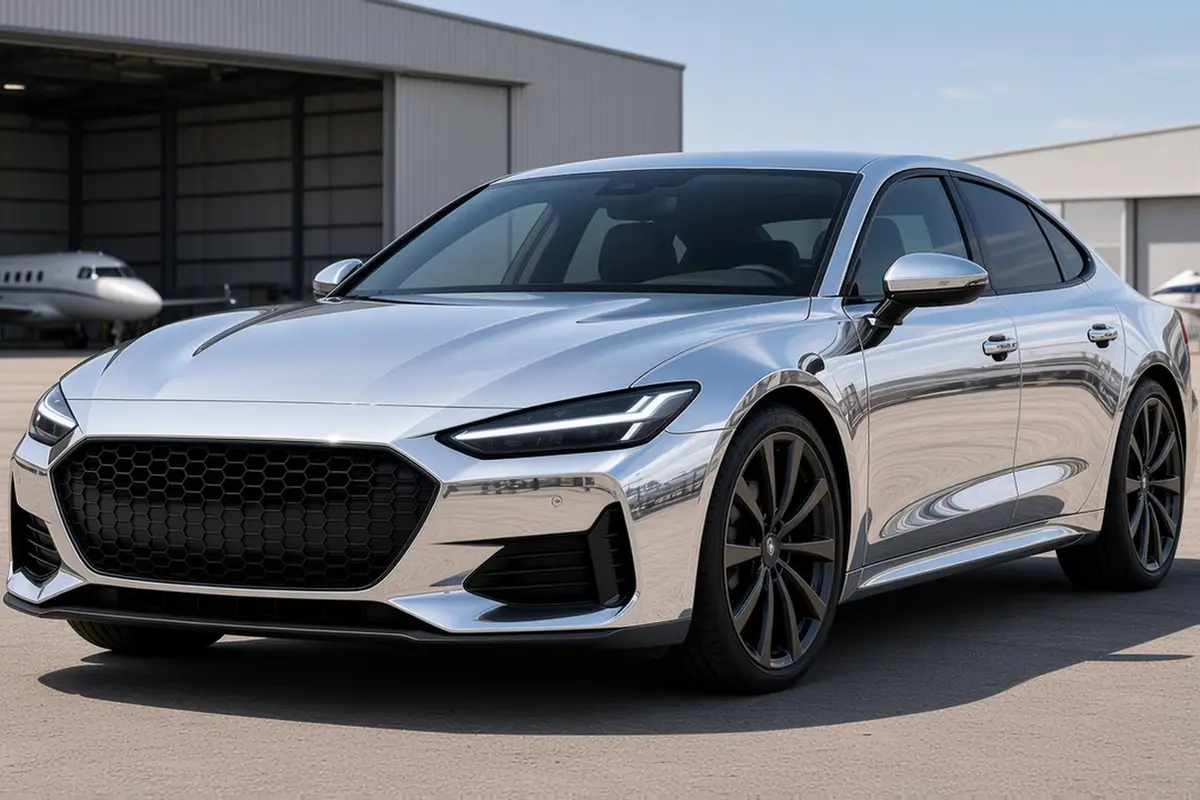
A chrome car wrap is a mirror-like metallic film that turns the whole car into a reflector. The look is striking, but chrome film is hard to fit and marks easily. A full chrome wrap also takes more film than a standard color change wrap.
Key facts
- The catalog lists 243 mirror chrome films, 163 colored chrome films and 16 gold chrome films.
- For a sedan, the film calculator estimates 20.5 m (67 ft) of chrome film against 17.5 m (57 ft) of cast color-change vinyl.
- Chrome film marks easily, so the calculator adds more spare film to every chrome estimate.
- A chrome wrap is a job for a trained installer with chrome experience.
- Rules on reflective finishes differ between countries, so check them before a full chrome wrap.
What a chrome wrap looks like
Chrome wrap reflects its surroundings almost like a mirror, so the car takes on the colors around it. On a bright day the film throws back the sky around the car. In shade the same panels turn dark and smoky, almost like black glass. Few other films change character so much with their setting.
Mirror chrome is the plain silver version of the look. Colored chrome adds a tint such as blue, red, black or orange over the mirror base. One colored chrome example is a paint protection film (PPF): Aura Vinyl Hyper Gloss Blue Chrome PPF P158.
Gold chrome wrap and other metal tones
Gold chrome wrap is a mirror film tinted gold, and it reflects as strongly as silver chrome. The catalog lists 16 gold chrome films, plus 103 films in the wider gold finish group. Aura Vinyl Hyper Gloss Gold Chrome PPF P159 is one gold chrome film in the catalog.
Gold chrome draws attention fast, so it also works well on details instead of the whole body. Mirror caps, roof panels, badges and stripes are smaller areas where the effect reads as an accent. Gold chrome on wheels raises the same fitting questions as silver chrome, covered further below.
What chrome film does well and badly
Asked whether chrome wrap is any good, a fitter points to its look first and its limits next. Few paint finishes come close to the mirror effect of chrome film on a whole car. The same mirror surface, though, makes every flaw underneath visible.
Because of these limits, chrome is a job for a trained installer with chrome experience. Overheating or overstretching chrome film can haze the mirror surface on curves. A first-time fitter will struggle with chrome even on flat panels.
- Chrome film stretches less than color-change vinyl, so deep curves are hard to cover.
- Fingerprints, scratches and wash marks show clearly on the mirror surface.
- Dents, dust and uneven paint underneath show as ripples in the reflection.
- Seams and relief cuts are more visible than on solid colors.
- Harsh brushes and abrasive cleaners dull the surface.
How much film a chrome wrap takes
A chrome car wrap takes more film than a color change in cast vinyl on the same body. The film calculator on this site explains why: chrome marks easily, so its estimate carries more spare film.
The figures below are full-wrap estimates for a typical body on a 60-inch roll. Each one is rounded up to half a meter and is not a cutting plan.
| Body type | Chrome film | Cast color-change vinyl |
|---|---|---|
| Sedan | 20.5 m (67 ft) | 17.5 m (57 ft) |
| SUV | 21.5 m (71 ft) | 19 m (62 ft) |
| Hatchback | 19.5 m (64 ft) | 16.5 m (54 ft) |
| Coupe | 17 m (56 ft) | 15 m (49 ft) |
| Minivan | 26.5 m (87 ft) | 23 m (75 ft) |
| Pickup | 23.5 m (77 ft) | 21 m (69 ft) |
| Van | 32.5 m (107 ft) | 27 m (89 ft) |
Chrome wrap for wheels, rims and bumpers
Chrome wrap for rims and wheels is a hard job, because wheels have tight curves and spokes. Wheels also take heat from the brakes and grit from the road, which put film under heavy strain. Ask an installer whether a given film is meant for wheels before choosing it.
Bumpers and trim pieces suit chrome accents more easily than wheels do. Chrome wrap for a bumper insert, a grille surround or window trim can bring back a bright detail. The opposite job, chrome delete, covers bright trim with black film instead.
Road rules and paperwork to check
Rules about reflective car finishes differ from one country to another. Some places limit mirror finishes on vehicles because they can dazzle other drivers in sun. Check the rules where the car is registered before ordering a full chrome wrap.
Some countries also expect a color change to be reported in the vehicle records. A full chrome wrap can count as a color change in those cases, so check that step too.
Questions
Is there a chrome vinyl wrap?
Yes, chrome is made as vinyl wrap film as well as paint protection film. The catalog includes Nippon Carbide Industries Metallic Mirror Film among 243 mirror chrome films. Colored and gold chrome versions add 179 more films to that choice.
How long does chrome wrap last on a car?
The life of a chrome wrap depends on the film, sun exposure, climate and washing habits. Chrome shows any surface wear plainly, so gentle hand washing matters more than on solid colors. Horizontal panels such as the roof and hood take the most sun and deserve the first checks.
Do wraps look as good as paint?
A well-fitted gloss wrap can pass for paint from a normal viewing distance. Up close, edges, seams and relief cuts show where the film ends. Chrome does not try to look like paint, so the comparison matters less for it.
Should I wrap or paint a car chrome?
A wrap is the practical route to a full chrome look, because chrome paint is a specialist process. The cost of either depends on the size of the car, its condition and the labor involved. A trained installer can also remove a chrome wrap later.
Films from this guide