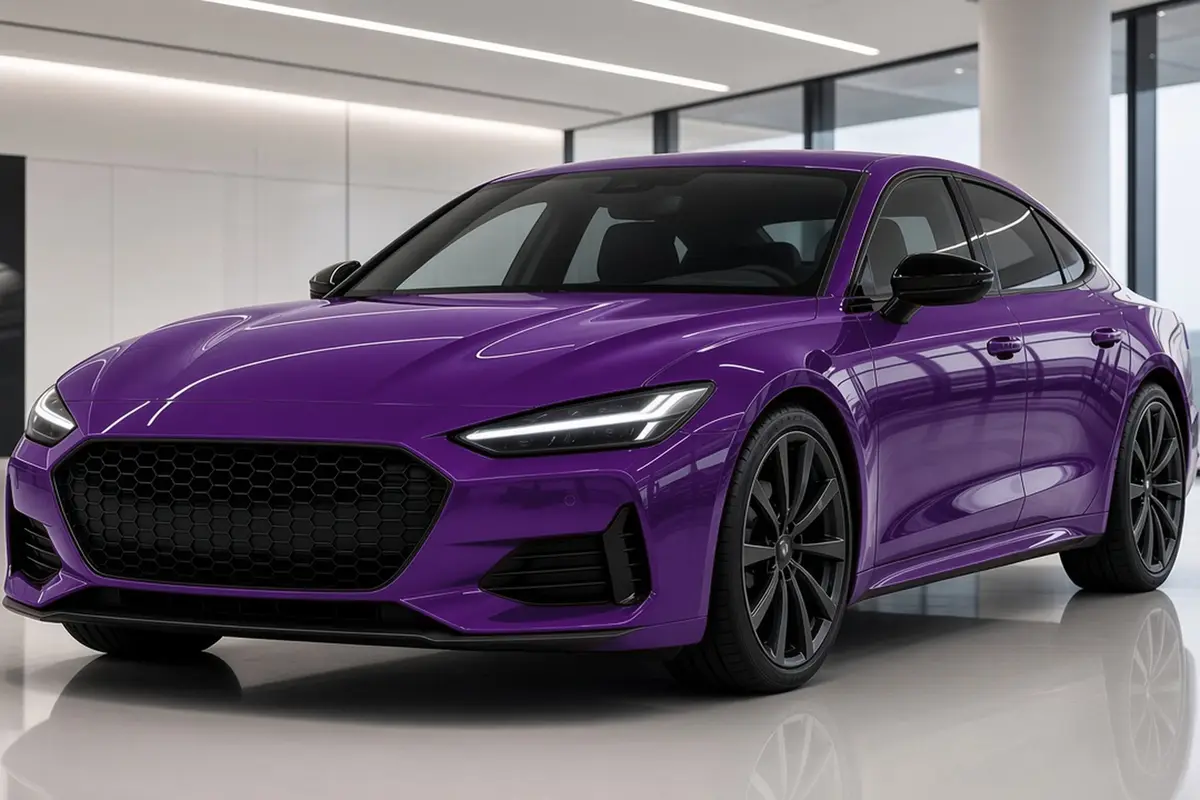
You can wrap a car yourself if you start with flat panels and prepare the paint with care. A first color change wrap, meaning film that changes the body color, demands patience more than strength. Expect to waste film and redo panels while your hands learn how vinyl behaves.
Key facts
- The site's film calculator puts a full sedan wrap at 17.5 m (57 ft) of cast vinyl.
- Cast film stretches into curves and holds its shape, while calendered film suits flat areas.
- Paint defects show through vinyl, so the surface must be sound before any film goes on.
- A hood or roof is a sensible first panel because both are large and mostly flat.
Wrapping your own car: what it takes
Yes, you can wrap your car yourself with patience, a clean space and the right film. The work rewards careful hands more than strength or special talent. Your first attempts will show every mistake, from creases to short edges. Plan for that by buying extra film and starting on panels that hide errors.
The space you work in matters as much as your own skill. Dust settles under film and shows as small bumps you cannot remove. A closed garage with good light and a steady, mild temperature is the minimum. Wind, direct sun and cold all make vinyl harder to handle outside.
How to wrap a car for beginners: the steps
Beginners do better when they follow the same order on every panel. Each step depends on the one before, and skipping one shows in the finish. The list below is the order a professional wrapper follows on a whole car.
Post-heating means warming stretched areas to the temperature the film maker specifies. The heat relaxes the film's memory so it does not pull back from recesses. Skipped post-heating is one reason edges lift on a first wrap.
- Wash the car, then remove tar and fallout with a clay bar.
- Wipe each panel with isopropyl alcohol or a panel-prep cleaner just before the film goes on.
- Remove badges, handles or lights where you can do so safely.
- Lay the film loosely, anchor it in the center and squeegee outward.
- Trim the film, fold the edges around the panel and post-heat curves and edges.
Choosing film for a first job
Cast film is the material to choose for a whole car with curves and recesses. The film stretches with gentle heat and stays where you put it. Calendered film is stiffer and tends to shrink back on deep curves. Keep calendered film for flat surfaces such as a roof or a door skin.
Look for film with an air-release liner, which has channels that let trapped air escape. The catalog on this site lists 4,686 films from 31 manufacturers, sorted by finish and color. Chrome film marks easily, so leave it until several panels have gone well.
How much film a first full wrap needs
Film amount depends on body type, roll width and how many panels you redo. The film calculator on this site counts film by body type, size, film type and roll width. Its figures assume a 60 inch roll and include spare for one re-cut panel.
A first-timer should order more than the estimate, since one panel is rarely the only redo. Order all the film at once so every panel comes from the same production batch.
| Body type | Cast color-change vinyl | Calendered vinyl |
|---|---|---|
| Coupe | 15 m (49 ft) | 15.5 m (51 ft) |
| Hatchback | 16.5 m (54 ft) | 17 m (56 ft) |
| Sedan | 17.5 m (57 ft) | 18 m (59 ft) |
| SUV | 19 m (62 ft) | 19.5 m (64 ft) |
| Pickup | 21 m (69 ft) | 21.5 m (71 ft) |
Paint protection film as a DIY job
Paint protection film (PPF) is a clear or colored urethane layer that guards paint against chips. Installing PPF yourself is possible, but the film stretches less than vinyl. PPF goes on wet with a slip solution, and every edge must be cut precisely. Precut kits for single panels make a first PPF attempt more realistic.
Colored PPF exists too, and the catalog lists 1,047 color PPF films beside 64 clear ones. A color PPF install joins the difficulty of PPF with the precision of a color change. Ask whether the film maker supports home installs before you buy a full kit.
When to hand the job to a trained installer
Some parts of a car are risky for a first job and deserve a trained installer. Deep bumpers, mirror housings and door handle recesses need inlays and seams. Cutting film on the car with a blade can score the paint beneath it. Knifeless tape, laid under the film before it goes down, avoids that risk.
A paid installer brings a clean bay, spare film and experience with your exact body shape. Watching a professional wrap one panel teaches more than hours of video. The separate guides on bumpers and small parts explain those jobs in detail.
Questions
Can you wrap your car yourself?
Yes, with a clean indoor space, cast film and plenty of patience. Start with a hood or roof before moving on to doors and bumpers. Expect to redo some panels, and order spare film for that.
Can you put PPF on yourself?
Yes, though PPF is harder to install than color change vinyl. The film stretches less and goes on wet, so edges need precise cuts. A precut kit for one panel is a sensible first attempt.
Can you remove a car wrap by yourself?
Yes, if the film is in fair condition and the paint underneath was sound. Use gentle heat and peel slowly at a low angle to keep adhesive on the film. Brittle film that breaks into flakes is safer left to a trained installer.
How do you wrap a car for the first time?
Start with one flat panel, such as the hood or roof, using cast film. Wash, clay and degrease the panel, then lay the film and squeegee from the center. Trim, tuck the edges and post-heat them before moving to the next panel.