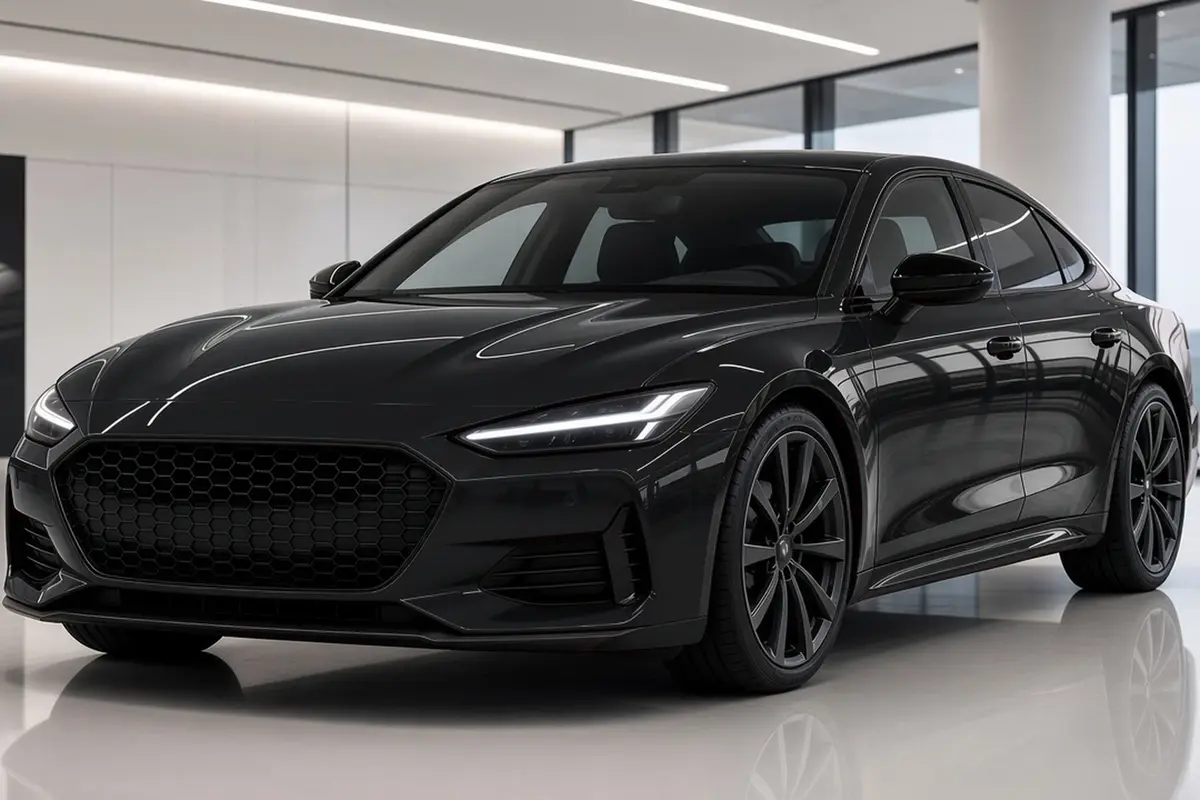
The downsides of car wrap start here: film hides paint without fixing it and shows edges up close. Film also needs gentler care than paint and cannot be polished like a clear coat. Removal can pull weak or repainted paint off along with the film.
Key facts
- Film follows every dent, chip and rust spot beneath it, so the surface must be sound first.
- Repainted or poorly bonded paint can lift when the wrap is removed.
- Door jambs and hidden edges keep the original color unless they are wrapped separately.
- Scratches in wrap film cannot be polished out the way swirls in a clear coat can.
- A panel rewrapped later may not match exactly, because film batches can vary slightly.
Film hides paint but does not fix it
The first downside of wrapping a car is that film copies the surface beneath it. Dents, deep scratches, chips and rust show through, sometimes more clearly than on paint. Body work and paint repair must come before the wrap, not after it.
Paint with cracked or peeling clear coat gives the adhesive a poor base. Film laid on such paint lifts early and can tear the weak layer away when removed.
Where a wrap gives itself away
A wrap shows its nature up close, mostly at edges, seams and hidden areas. Large panels such as a van side or a long hood may need a seam. On a roll narrower than 1.52 m, wide panels need two strips with a seam between them.
Door jambs, the inside of the fuel flap and the engine bay keep the old color. Wrapping the jambs is possible, but the job takes much more labor and more film.
Removal can damage weak paint
Removal carries a real risk for paint that has been repainted or poorly bonded. The adhesive can grip harder than a weak paint layer and pull flakes away with it. Factory paint in good condition generally lets film come away without damage.
Film left on long past its service life turns brittle and breaks into small pieces. That kind of removal takes much longer and leaves more adhesive residue on the paint.
Care and repair limits of film
Film needs gentler care than paint, and some fixes that work on paint do not work on film. Scratches in the face film cannot be polished away like swirls in a clear coat. A damaged panel is rewrapped instead, which means a new piece of the same film.
Batches of one color can differ slightly, so a new panel may not match its neighbors. Product lines also change, and a discontinued film cannot be matched at all.
Downsides of matte and chrome wraps
The downsides of matte car wraps come from the surface that gives them their look. Oil, fingerprints and wax leave marks on matte film that do not polish out. Bird droppings left in the sun can mark matte film for good.
Mirror chrome marks easily, so the film calculator on this site adds extra film for chrome jobs. The estimate for a sedan is 20.5 m (67 ft) of chrome against 17.5 m of cast film.
Does wrapping a car lower its value
Wrapping a car does not lower its value by itself, since the original paint stays underneath. Value suffers when removal damages that paint or when a buyer dislikes the wrapped color. Keep the factory color code and photos of the paint from before the wrap.
A wrap can also shield the paint from light scratches and sun while it is on. Some buyers ask for the wrap to come off before a sale, so plan for that step.
When wrapping a car is worth it
Whether wrapping a car is worth it depends on what you want the film to do. A wrap makes sense for a reversible color change, a finish paint cannot easily give, or a lease. A wrap makes less sense on damaged paint that needs a respray anyway.
Before deciding, check the paint condition, how long you will keep the car and where it parks. The visualizer on this site shows 191 wrap looks on body types for testing an idea. Leased cars have their own points, covered in the guide on wrapping a leased car.
Questions
Is wrapping a truck worth it?
Wrapping a truck is worth it when you want a new color or graphics without a respray. Long flat panels suit film, but work use scrapes the bed and sides. Damaged panels can be rewrapped one at a time without redoing the rest.
What are the downsides of using matte car wraps?
Matte wraps cannot be polished, and oil, wax and fingerprints leave visible marks. Stains from droppings or sap need quick removal before they set. Washing calls for a gentle shampoo made specifically for matte surfaces.
How do I remove car wrapping?
Have a trained installer remove it, especially on repainted panels or old, brittle film. The film is warmed with gentle heat and peeled back slowly at a low angle. Adhesive residue comes off with a remover made for automotive paint, never with a metal blade.
Is there a downside to ceramic coating?
Yes, a ceramic coating does not stop scratches or stone chips, despite its glossy look. Coatings not made for vinyl can stain or haze wrap film. The coating also comes off with the wrap, so it must be redone after any rewrap.
Films from this guide