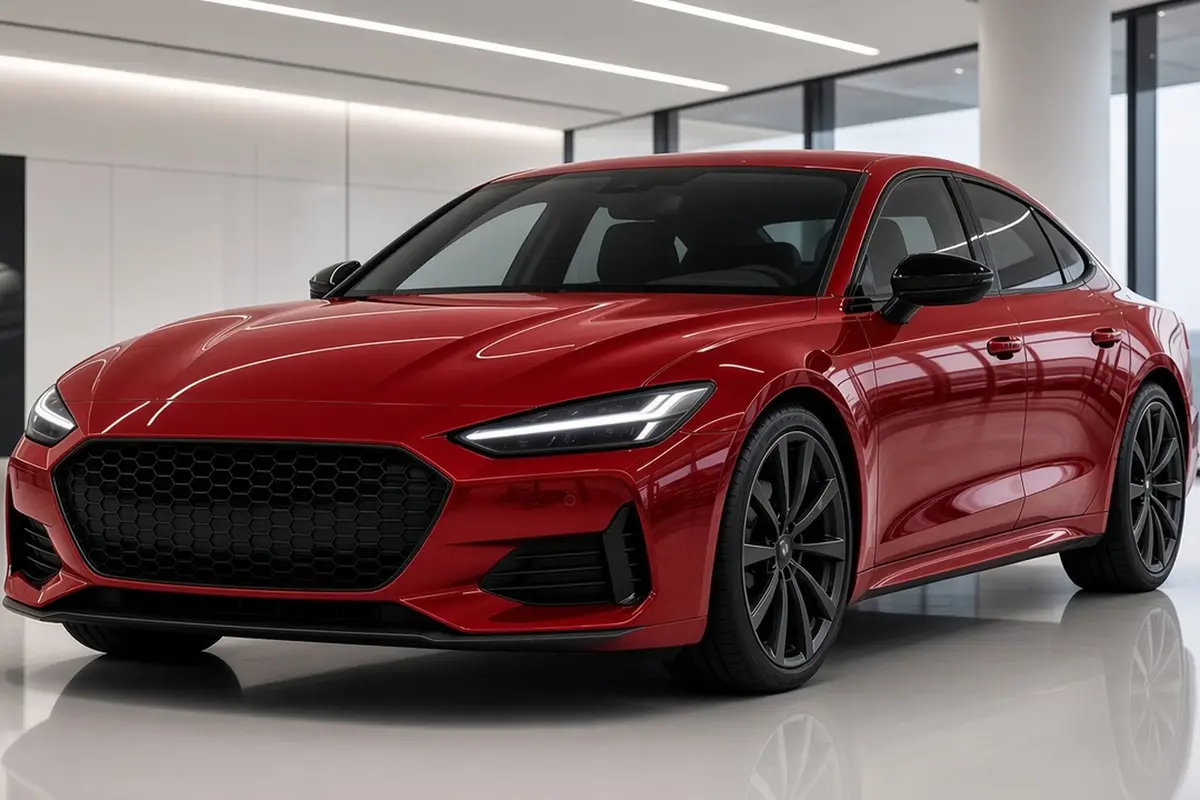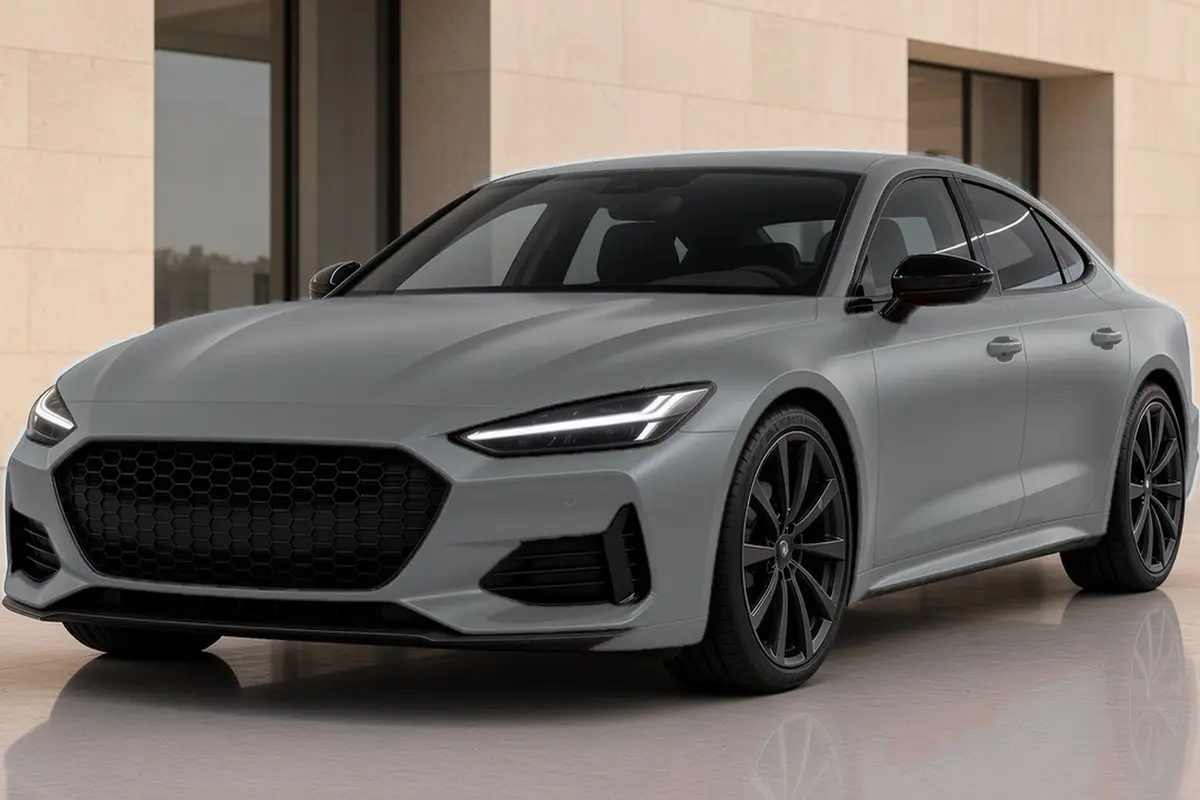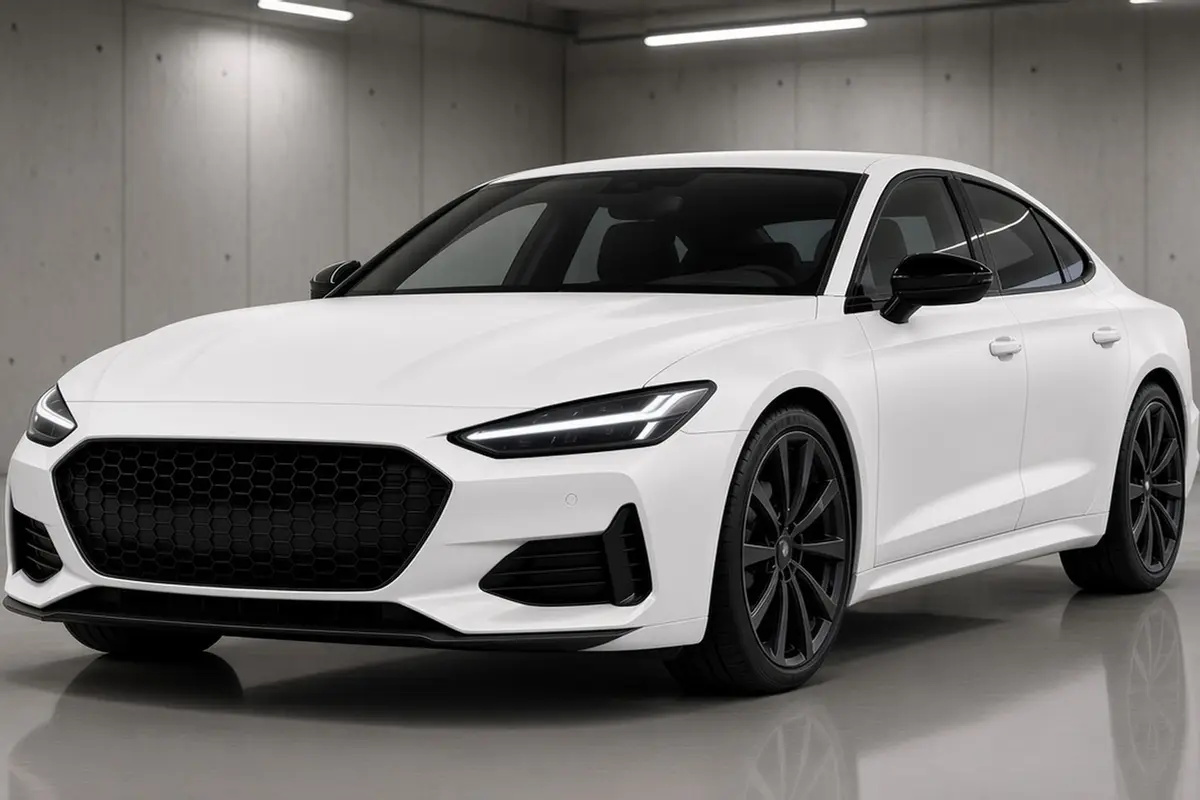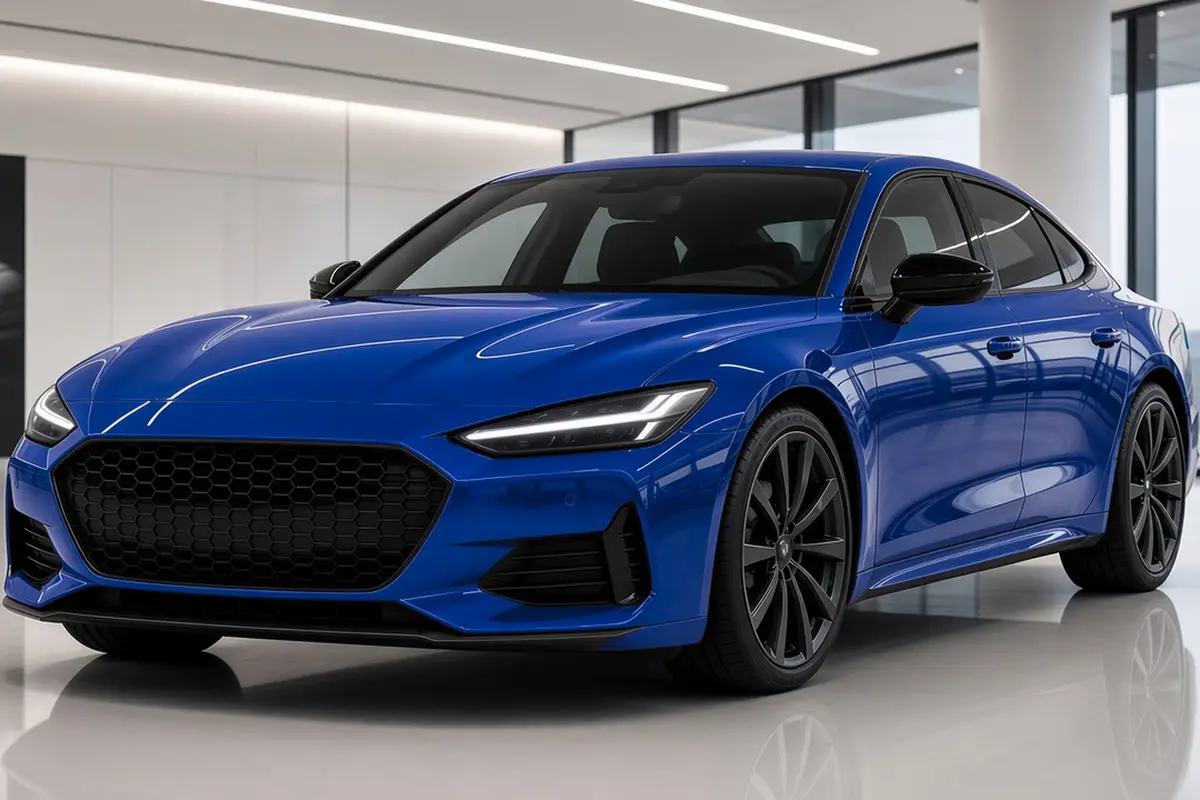
A car wrap is a thin adhesive film, mostly vinyl, stretched over the painted panels of a car. The film covers the factory paint rather than replacing it with a new coat. Peel the wrap off, and the original color is still there underneath.
Key facts
- A wrap film has three layers: the colored face film, a pressure-sensitive adhesive and a protective liner.
- Color change wrap film is made of PVC vinyl, while paint protection film (PPF) is a different, tougher plastic film.
- The imageautobody.net catalog lists 4,686 films from 31 manufacturers.
- Gloss is the largest finish group in the catalog, with 1,996 films.
- The film calculator on this site counts film on rolls 1.52 m (60 in), 1.37 m (54 in) and 1.22 m (48 in) wide.
What a vehicle wrap actually is
A vehicle wrap is a sheet of adhesive film applied panel by panel over the existing paint. The installer cleans each panel, lays the film on and trims the edges by hand. Gentle heat helps the film follow curves, recesses and the shape of bumpers. The result looks like a new coat of color, yet nothing has been sprayed or sanded.
The same word covers cars, vans, trucks and motorcycles, so car wrap and vehicle wrap mean one thing. A wrap can cover the whole body or only chosen parts, such as the roof, hood or mirrors. Door jambs and the inner edges of doors keep the original color unless they are wrapped separately.
What a car wrap is made of
A car wrap is made of three layers that arrive together on a roll. The face film on top carries the color, the finish and any metallic or printed effect. Under it sits a pressure-sensitive adhesive, which grips once the film is pressed down firmly.
Many wrap films have air-release channels in the adhesive, fine paths that let trapped air escape. Several catalog names show this feature, such as KPMF White Gloss VWS Airelease liner K88011. Air-release adhesive makes bubbles easier to push out, but careful installation still matters.
- Face film: the vinyl layer that carries color and finish.
- Adhesive: the pressure-sensitive glue that holds the film to the paint.
- Liner: the backing sheet that protects the adhesive until the film is laid.
Vinyl wrap material and how it is made
A vinyl wrap is a wrap whose face film is PVC, the plastic known as vinyl. Wrap vinyl is produced in two ways, cast and calendered, and each behaves differently on curves. The guide on cast and calendered vinyl on this site explains that difference in detail.
Vehicle wrap vinyl is soft enough to stretch under gentle heat and firm enough to hold its shape. Specialty films add metal layers, printed patterns or textures to the same basic structure. Chrome, carbon fiber and brushed metal films are all built on that principle.
Types of vehicle wraps by coverage and purpose
Vehicle wraps differ by how much of the car they cover and by what the film is for. Vehicle wrap design for business graphics starts as artwork that a print shop prints onto white film. The catalog holds 2 ready printed films, since printed wraps are made to order for each design.
Paint protection film is a separate product family, made of a tougher plastic than PVC. The catalog lists 64 clear PPF films and 1,047 color PPF films. Color PPF changes the color and guards the paint at once.
- Full color change wrap: film over every painted panel, changing the whole look.
- Partial wrap: the roof, hood, mirrors or another chosen part in a contrasting film.
- Chrome delete: bright trim covered with black film.
- Printed wrap: a design printed onto white film for graphics or lettering.
- Paint protection film (PPF): clear or colored film made to shield paint from chips.
Vehicle wrap colors and finishes in the catalog
The finish is the surface look of a film, and it is chosen separately from the color. The catalog sorts its 4,686 films by finish, and the table shows the main surface groups. Specialty looks such as chrome, carbon fiber and color shift sit in groups of their own.
Among vehicle wrap colors, green leads the catalog with 456 films, followed by blue with 436. Gray, black and purple come next, while bronze and copper have the fewest entries.
| Finish | Films in the catalog |
|---|---|
| Gloss | 1,996 |
| Metallic | 1,193 |
| Matte | 656 |
| Satin | 583 |
| High Gloss | 579 |
| Super Matte | 47 |
Manufacturers and series behind the films
The catalog lists films from 31 manufacturers, from single entries up to several hundred films each. ORACAL by ORAFOL has 152 films, all in the ORACAL 970RA series, with 101 gloss and 34 matte. 3M has 112 films in Wrap Film Series 2080, and Avery Dennison has 54 in Supreme Wrapping Film.
A series name tells you which product line a film belongs to and helps when comparing samples. Ask an installer for a real sample of the exact film, since screens shift colors. The film calculator on this site counts the film a car needs by body type and roll width.
Questions
Can a wrapped car go through a carwash?
A wrapped car can be washed, but hand washing is the gentlest choice for the film. Brush carwashes can scratch the surface and catch lifted edges. Touchless washes are kinder, though strong jets aimed at edges and seams can lift the film.
How long will a wrap last on a car?
No single figure applies, since a wrap's life depends on the film, installation, sun and care. Horizontal panels such as the roof and hood take the most sun. The guide on wrap life on this site goes through each factor.
Is 3M a good vinyl wrap brand?
The catalog does not rate brands, but it shows what each one offers. 3M has 112 films there, all in Wrap Film Series 2080. Its finishes include gloss, satin, high gloss, matte and one super matte film. Judge any brand on real samples and on the installer's experience with that exact film.
How much does it cost to remove a vehicle wrap?
The cost of removal depends on the age and condition of the film and the paint beneath it. Film that has baked in the sun comes off in small pieces and leaves more adhesive behind. Repainted panels can lose paint with the film, so removal by a trained installer is the safer route.
Films from this guide