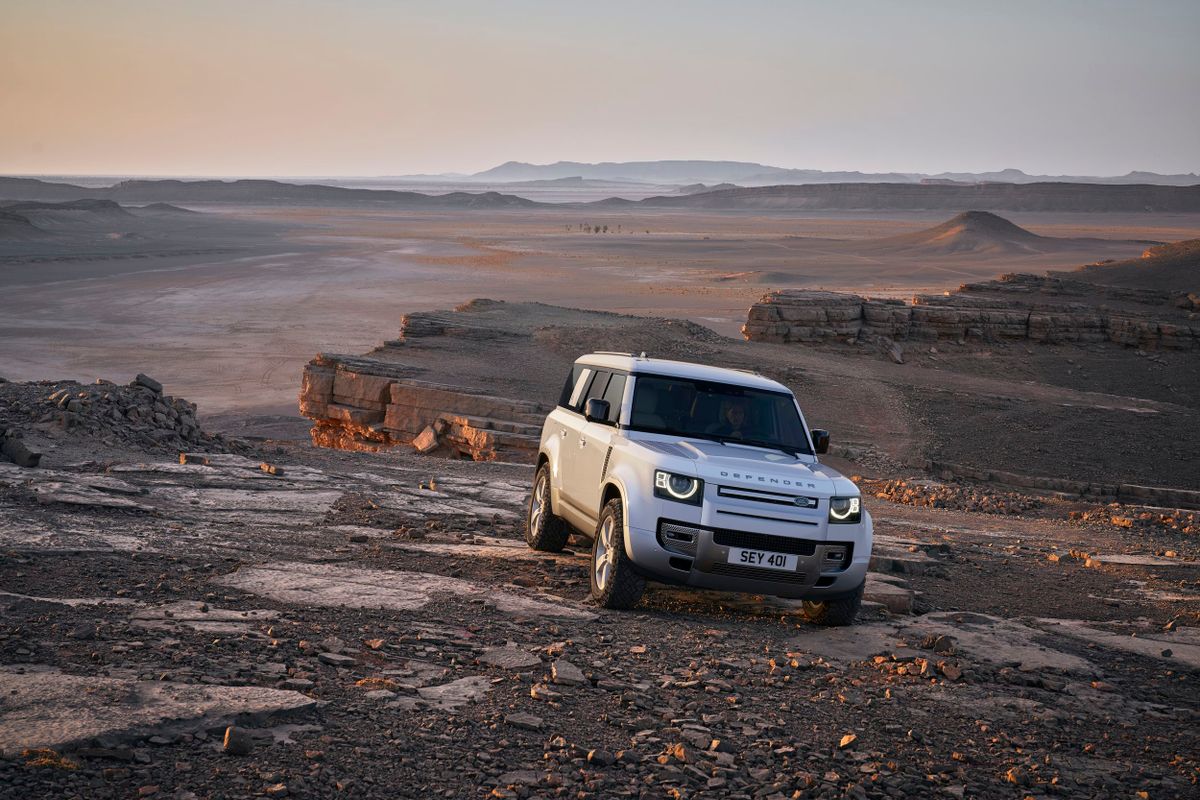
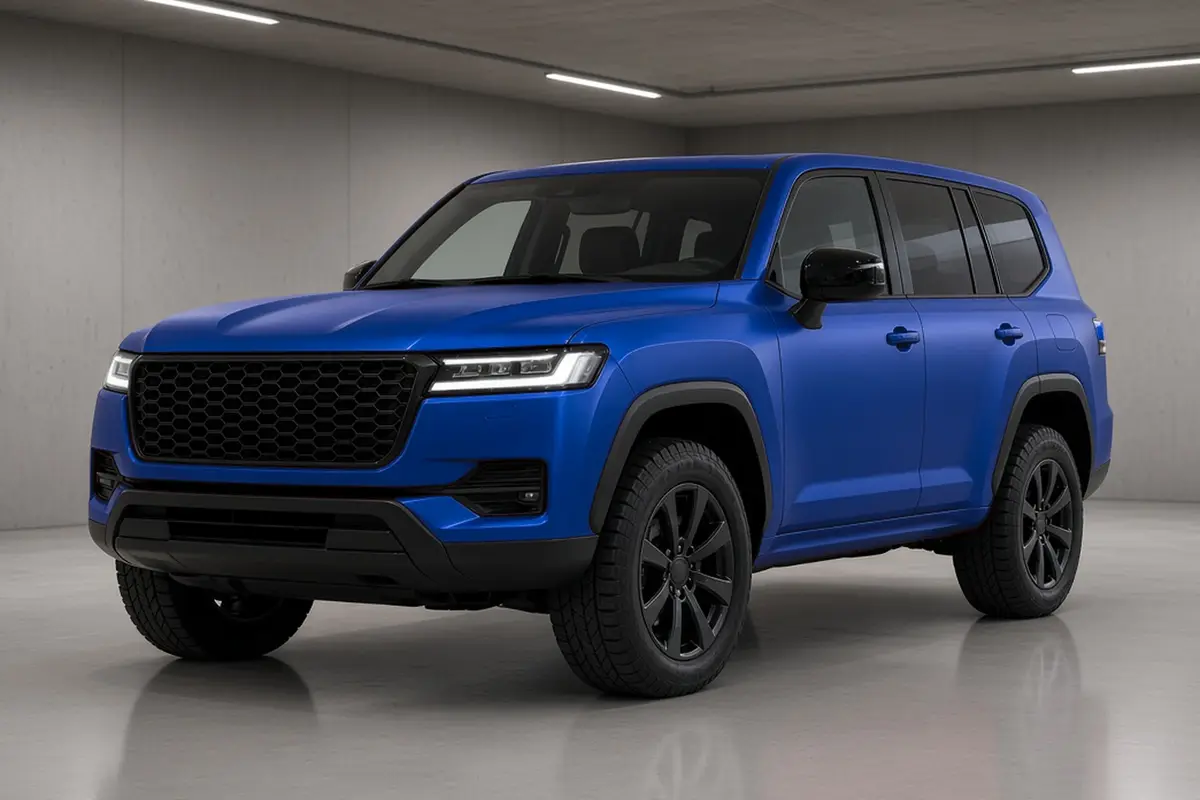
A Defender wrapped in blue begins with choosing a finish that suits the car's straight panels and tall body. Matte blue works well on the Defender's flat surfaces by hiding small scratches and giving a soft look. Gloss blue brings out reflections that make the car look closer to factory paint, and satin sits between them. After the finish, you pick the film line, then decide on a full or partial color change.
Factory paint matters because the Defender's panels are flat enough to show every imperfection under a film. Any chip or scratch will be visible through most blues, so the paint should be smooth before wrapping. Seams are placed at panel edges where the film naturally ends, like along the doors or the tailgate. The Defender's tailgate has the rear glass in it, so the film ends at the edge of the glass on every trim.
A blue wrap on a Defender is removable, and with proper care it comes off without leaving adhesive behind. Hand wash the car with a mild soap and a soft mitt to protect the film edges. The Defender's body has parking sensors and cameras, so keep water pressure low around those cut-outs. Avoid automatic car washes because their brushes can lift the film at the seams.