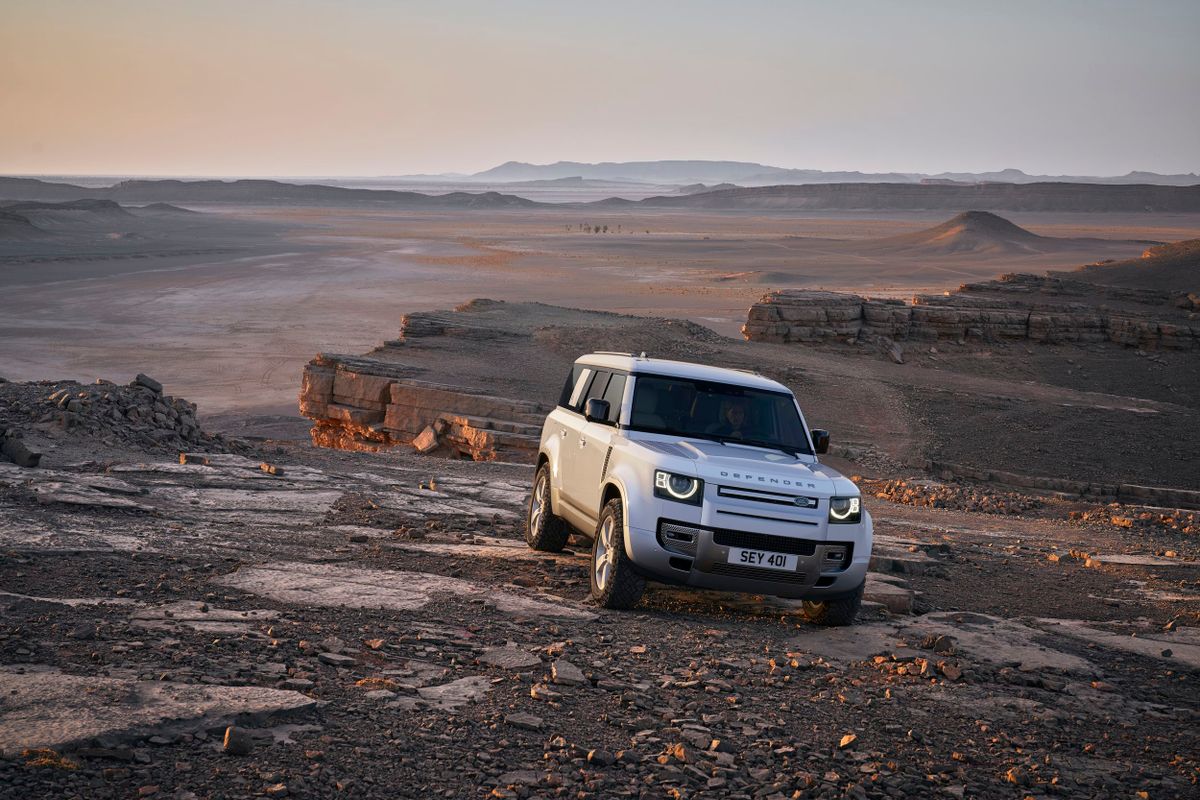
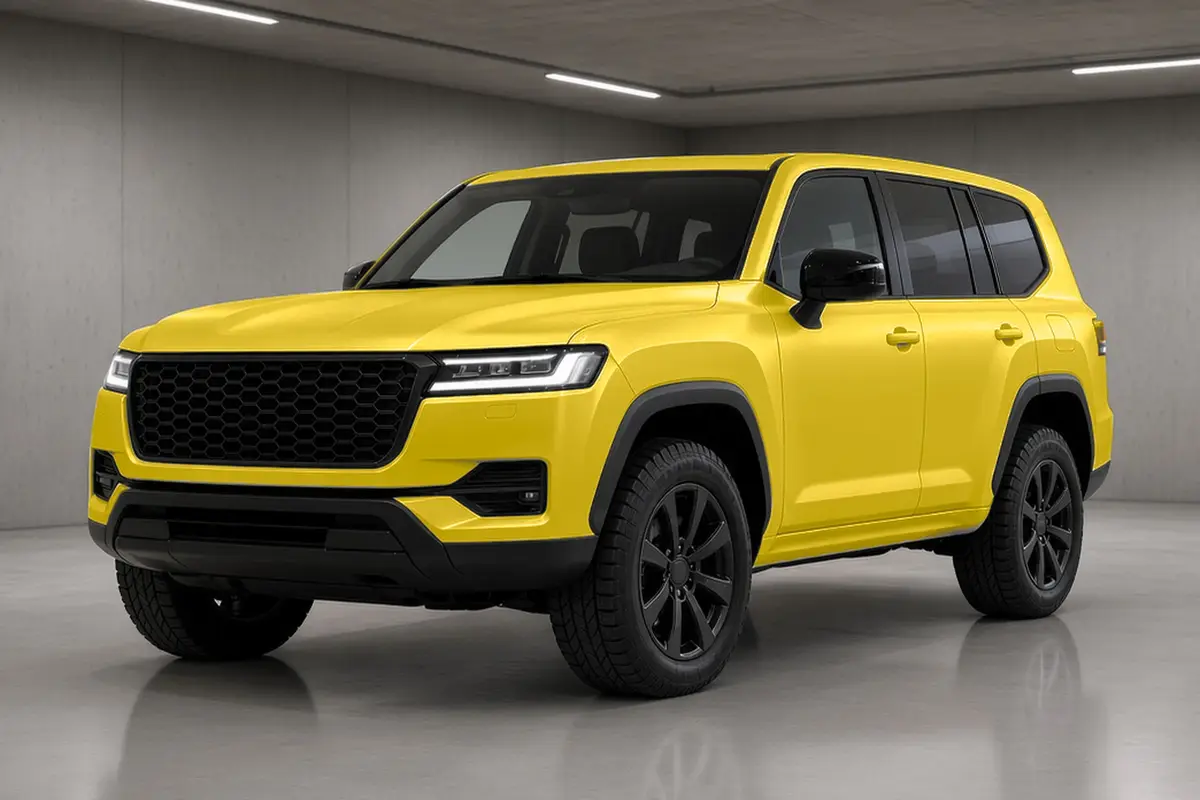
Choosing yellow for a Defender starts with the finish, because matte, satin, gloss and metallic films reflect light differently on the tall, flat panels. Then pick the film within that finish, since each brand offers its own shade of yellow and its own working properties. Finally decide between a full color change wrap and a partial wrap, where the yellow covers only the hood, roof or mirror caps. On a body with factory two-tone paint, the wrap can either keep that split or cover the second color.
Factory paint on a 2019–now Defender is generally smooth, so the wrap lies flat and the yellow reads evenly across the body. On a 1990–2016 Defender, some panels may be repainted, and a test spot shows whether the film will stick well before the full job. Seams are planned along body lines and panel edges, and the rear film ends at the edge of the tailgate glass. Parking sensors and camera lenses are cut around on every trim, so the yellow film does not interfere with the car's systems.
A yellow wrap on a Defender is removable without leaving adhesive on the factory paint when removed by an installer. Hand washing with a soft sponge keeps the film clean, and high-pressure water should be kept away from film edges. The charge port door on plug-in and electric versions is wrapped as a small piece of its own, so it can be opened without stretching the film.