Wraps by car

Smart Fortwo wrap

The Smart Fortwo wrap page covers the three generations of the mini car, from the first built in 1998 to the current model. A complete color change wrap on the newest Fortwo needs about 34 ft (10.5 m) of 60-inch (1.52 m) cast vinyl for the convertible or 38 ft (11.5 m) for the hatchback. Chrome or patterned film can take up to about 46 ft (14 m) because of pattern matching.

3generations10.5 mof film for a full wrap

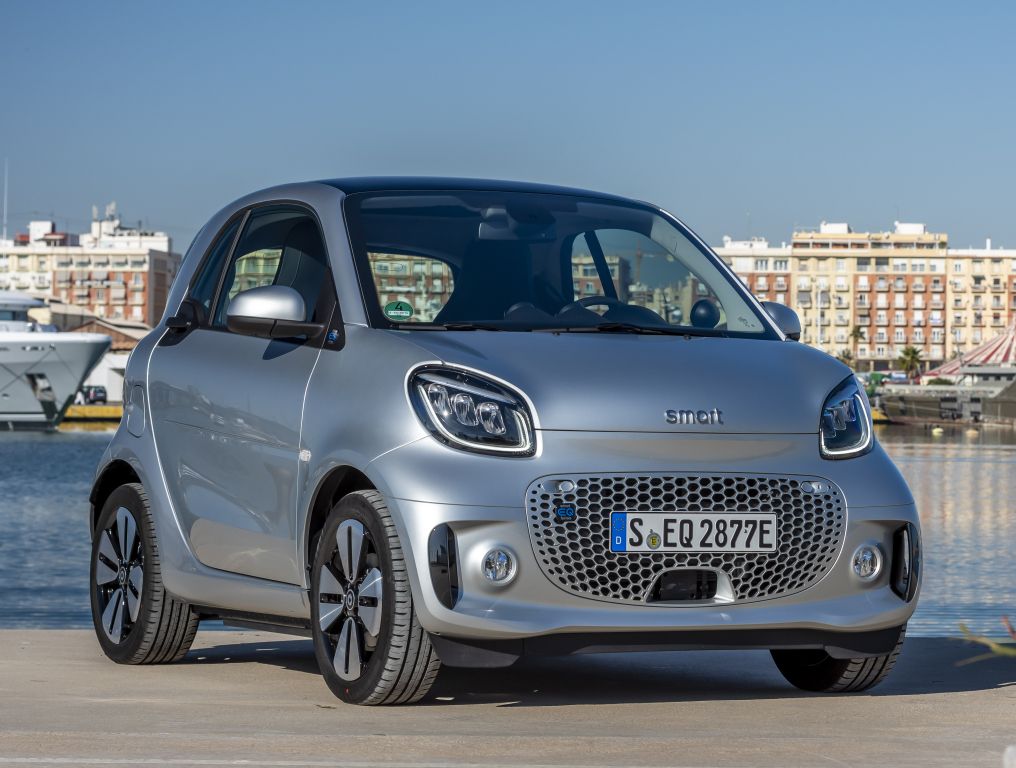
Smart Fortwo, third generation, factory photo
Smart Fortwo, third generation. Factory color shown.

Smart Fortwo wrap colors and ideas

  • Fortwo black wrap
  • Fortwo white wrap
  • Fortwo gray wrap
  • Fortwo silver wrap
  • Fortwo red wrap
  • Fortwo blue wrap
  • Fortwo green wrap
  • Fortwo yellow wrap
  • Fortwo orange wrap
  • Fortwo purple wrap
  • Fortwo pink wrap
  • Fortwo teal wrap
  • Fortwo brown wrap
  • Fortwo gold wrap
  • Fortwo chrome wrap
  • Fortwo color shift wrap
  • Fortwo carbon fiber wrap
  • Fortwo camo and patterned wrap

How much vinyl to wrap a Smart Fortwo

Estimates from the body dimensions in the catalog, for a 1.52 m (60 in) roll.

YearsBodyLengthFilm to order
2014–nowconvertible, hatchback (3 doors)106.1 in (2,695 mm)about 34 ft (10.5 m) for the convertible to 38 ft (11.5 m) for the hatchback, 60-inch (1.52 m) cast film; chrome or patterned film: up to about 46 ft (14 m)
2006–2016convertible, hatchback (2 or 3 doors)106.1 in (2,695 mm)about 33 ft (10 m) for the convertible to 38 ft (11.5 m) for the hatchback, 60-inch (1.52 m) cast film; chrome or patterned film: up to about 44 ft (13.5 m)
1998–2007convertible, hatchback (2 or 3 doors)98.4 in (2,499 mm) to 98.4 in (2,500 mm)about 31 ft (9.5 m) for the convertible to 36 ft (11 m) for the hatchback, 60-inch (1.52 m) cast film; chrome or patterned film: up to about 43 ft (13 m)

Fortwo wrap cost factors

Fortwo wrap cost depends on the size of the car, the film you choose, and how much of the body is covered. A full wrap on the newest Fortwo uses about 34 ft (10.5 m) to 38 ft (11.5 m) of 60-inch (1.52 m) cast film, while chrome or patterned film can take up to about 46 ft (14 m). The convertible needs slightly less film than the hatchback because its roof is not wrapped. Preparation work like removing trim or repairing paint also changes the total.
  • Film for a full wrap: about 34 ft (10.5 m) for the convertible to 38 ft (11.5 m) for the hatchback, 60-inch (1.52 m) cast film; chrome or patterned film: up to about 46 ft (14 m).
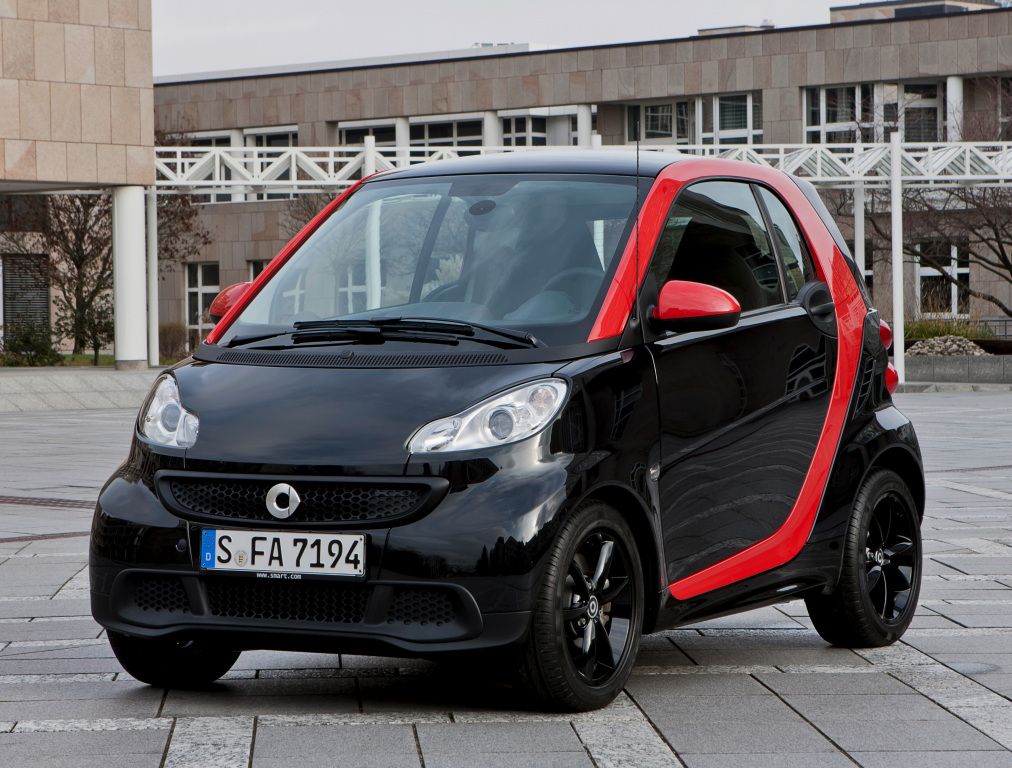
  • Body: convertible, hatchback (3 doors).
  • Convertible body: a fabric top is not wrapped and the film ends where it begins; a folding hard top is wrapped as panels of its own.
  • A tailgate with the rear glass in it: the film ends at the edge of the glass.
  • Two long side doors: each door is one large piece of film.
  • Some trims have a panoramic glass roof: glass is not wrapped, and the film ends at the roof rails.
  • Some trims have a sunroof: the roof film is cut around its opening.
  • Some trims have cameras in the body: the film is cut around each lens.
  • Some trims have fog lamps in the front bumper: cut-outs in the bumper film.
  • Plug-in and electric versions: the charge port door is wrapped as a small piece of its own.
  • Restyled in 2019: bumpers and lights differ between the versions, and so do the film cuts.

Fortwo wraps by generation

Swipe sideways. Tap a card for the full description.

Smart Fortwo, third generation, factory photo
Factory color shown

2014–now Fortwo convertible, hatchback (third generation)

2014–nowconvertible, hatchback (3 doors)106.1 in (2,695 mm)

The third generation Smart Fortwo offers the open top as a convertible with a fabric roof or a folding hard top. A fabric top is never wrapped, and the vinyl film ends exactly where the fabric begins along the body. A folding hard top is treated as separate panels, each wrapped individually so the roof can still fold. The rest of the car is wrapped as normal, with the film meeting the roof edges cleanly.

Convertible body: a fabric top is not wrapped and the film ends where it begins; a folding hard top is wrapped as panels of its own.

A tailgate with the rear glass in it: the film ends at the edge of the glass.

Two long side doors: each door is one large piece of film.

Some trims have a panoramic glass roof: glass is not wrapped, and the film ends at the roof rails.

Some trims have a sunroof: the roof film is cut around its opening.

Some trims have cameras in the body: the film is cut around each lens.

Some trims have fog lamps in the front bumper: cut-outs in the bumper film.

Plug-in and electric versions: the charge port door is wrapped as a small piece of its own.

Film: about 34 ft (10.5 m) for the convertible to 38 ft (11.5 m) for the hatchback, 60-inch (1.52 m) cast film; chrome or patterned film: up to about 46 ft (14 m).

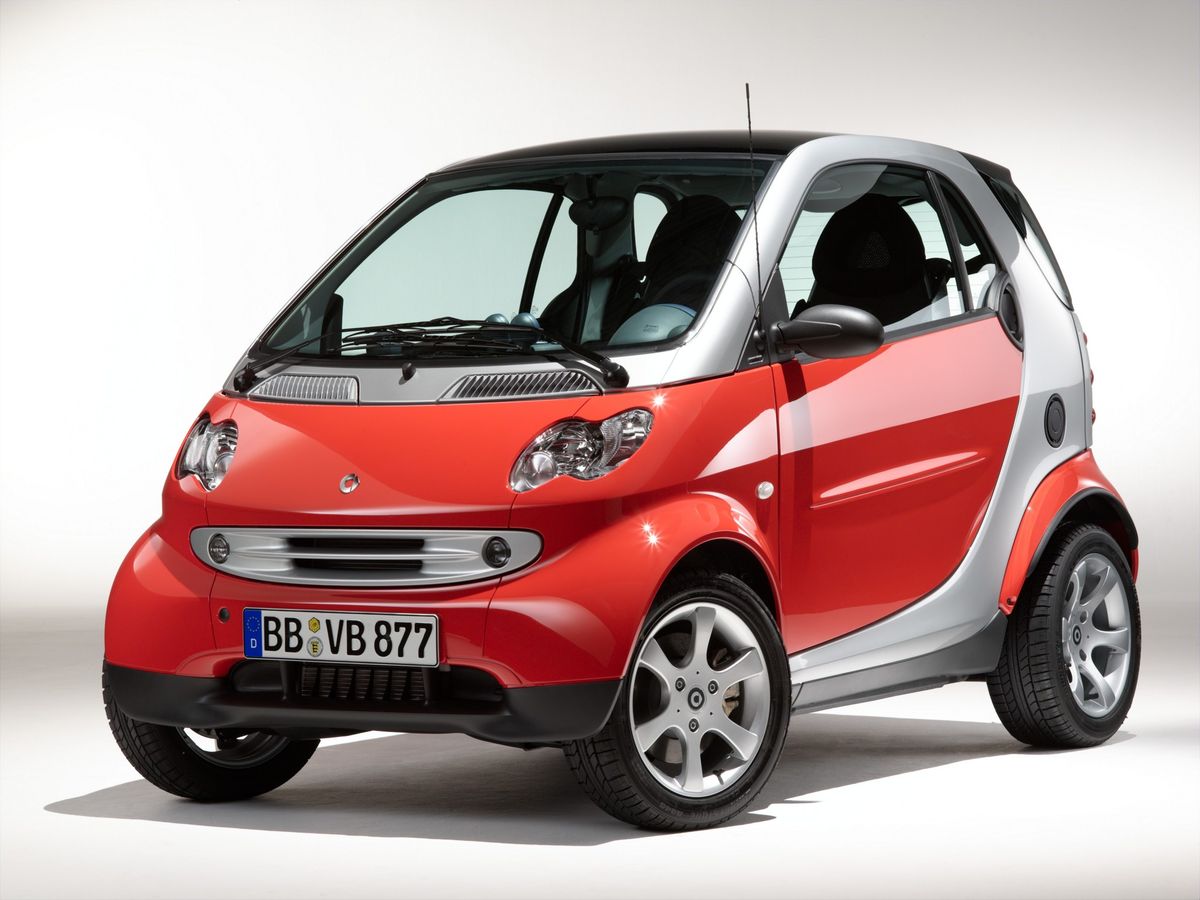
Smart Fortwo, second generation, factory photo
Factory color shown

2006–2016 Fortwo convertible, hatchback (second generation)

2006–2016convertible, hatchback (2 or 3 doors)106.1 in (2,695 mm)

The second generation Fortwo could be ordered with a panoramic glass roof, and that panel is not wrapped. The roof stays dark no matter what color the vinyl film is on the rest of the car. The film ends at the roof rails, leaving the glass exposed and the wrap line clean. On cars with a sunroof, the roof film is cut around the opening in a neat border.

Convertible body: a fabric top is not wrapped and the film ends where it begins; a folding hard top is wrapped as panels of its own.

A tailgate with the rear glass in it: the film ends at the edge of the glass.

Some trims have a panoramic glass roof: glass is not wrapped, and the film ends at the roof rails.

Some trims have a sunroof: the roof film is cut around its opening.

Some trims have fog lamps in the front bumper: cut-outs in the bumper film.

Plug-in and electric versions: the charge port door is wrapped as a small piece of its own.

Film: about 33 ft (10 m) for the convertible to 38 ft (11.5 m) for the hatchback, 60-inch (1.52 m) cast film; chrome or patterned film: up to about 44 ft (13.5 m).

Smart Fortwo, first generation, factory photo
Factory color shown

1998–2007 Fortwo convertible, hatchback (first generation)

1998–2007convertible, hatchback (2 or 3 doors)98.4 in (2,499 mm) to 98.4 in (2,500 mm)

The first generation Fortwo from 1998 to 2007 needs a paint check before a full wrap because of its age. Panels may be original, faded, or repainted, and old paint can fail under vinyl adhesive. A test spot on a hidden area shows whether the paint is strong enough for film. If the paint is sound, the wrap goes on normally; if not, the panel may need paint repair first.

Convertible body: a fabric top is not wrapped and the film ends where it begins; a folding hard top is wrapped as panels of its own.

A tailgate with the rear glass in it: the film ends at the edge of the glass.

Film: about 31 ft (9.5 m) for the convertible to 36 ft (11 m) for the hatchback, 60-inch (1.52 m) cast film; chrome or patterned film: up to about 43 ft (13 m).

Roof, hood, chrome delete and PPF on a Fortwo

Fortwo chrome delete is a smaller job that covers the bright window trim and badges with black film. A partial wrap on the Fortwo can include the hood, mirror caps, and the roof on cars without the glass panel. Paint protection film (PPF) is clear film applied to the front end to guard against stone chips. These options cost less than a full wrap and still change the look or protect the paint.

  • Partial wrap: hood, mirror caps, roof on cars without the glass panel.
  • Chrome delete: window trim and badges.
  • Paint protection film: clear film on the front end, also over a wrap.

Wrapping a Smart Fortwo: body, cut-outs and film

The Smart Fortwo vinyl wrap suits the car's very compact body, with the third generation measuring 106.1 in (2,695 mm) overall. The convertible and the hatchback have few large flat panels, so a full wrap uses less film than on most cars. The two long side doors are each covered with one large piece, which keeps seams away from the main surfaces. The short hood and rear tailgate are straightforward single panels on the latest model.

Fortwo wrap ideas start with the parts that need cut-outs or come off the car. The tailgate carries the rear glass within it, so the film stops at the edge of the glass. Some trims have a panoramic glass roof or a sunroof, and the film is trimmed around the opening because glass is not wrapped. Cameras, fog lamps, and the charge port door on electric versions are all cut around or wrapped as small separate pieces.

How much vinyl to wrap a Fortwo depends on which of the three generations you have, since the bodies changed over time. The first generation is shorter at 98.4 in (2,499 mm) to 98.4 in (2,500 mm) and takes about 31 ft (9.5 m) for the convertible to 36 ft (11 m) for the hatchback. The second generation matches the current length of 106.1 in (2,695 mm) and uses about 33 ft (10 m) to 38 ft (11.5 m). Restyling years of 2003, 2012, and 2019 changed bumpers and lights, but the main panel shapes stayed close.

Questions about wrapping a Smart Fortwo

How much vinyl does it take to wrap a Smart Fortwo?

Yes, a full Smart Fortwo wrap takes about 34 ft (10.5 m) for the convertible and 38 ft (11.5 m) for the hatchback using 60-inch (1.52 m) cast film. Chrome or patterned film can take up to about 46 ft (14 m) because of extra material for matching. The first generation needs slightly less film, and the second generation is close to the current figures.

Is the top of a Fortwo wrapped?

Yes, the top of a Fortwo is wrapped if it is a hard top or a folding hard top, but a fabric top is not wrapped. The film ends where the fabric begins on a convertible with a fabric roof. A folding hard top is wrapped as separate panels so the mechanism still works.

Can the roof of a Fortwo be wrapped?

Yes, the roof of a Fortwo can be wrapped unless it has a panoramic glass roof or a sunroof. On a car with a glass roof, the film is not applied to the glass, so the roof stays dark. On a car with a sunroof, the roof film is cut around the opening, and the sunroof panel can be left or wrapped separately.

Which years of the Fortwo take the same film cuts?

The same film cuts fit the first generation from 1998 to 2003, and the updated first generation from 2003 to 2007. The second generation uses one set of cuts from 2006 to 2012, and another from 2012 to 2016. The current third generation has a cut set for 2014 to 2019, and a revised set for 2019 onward.