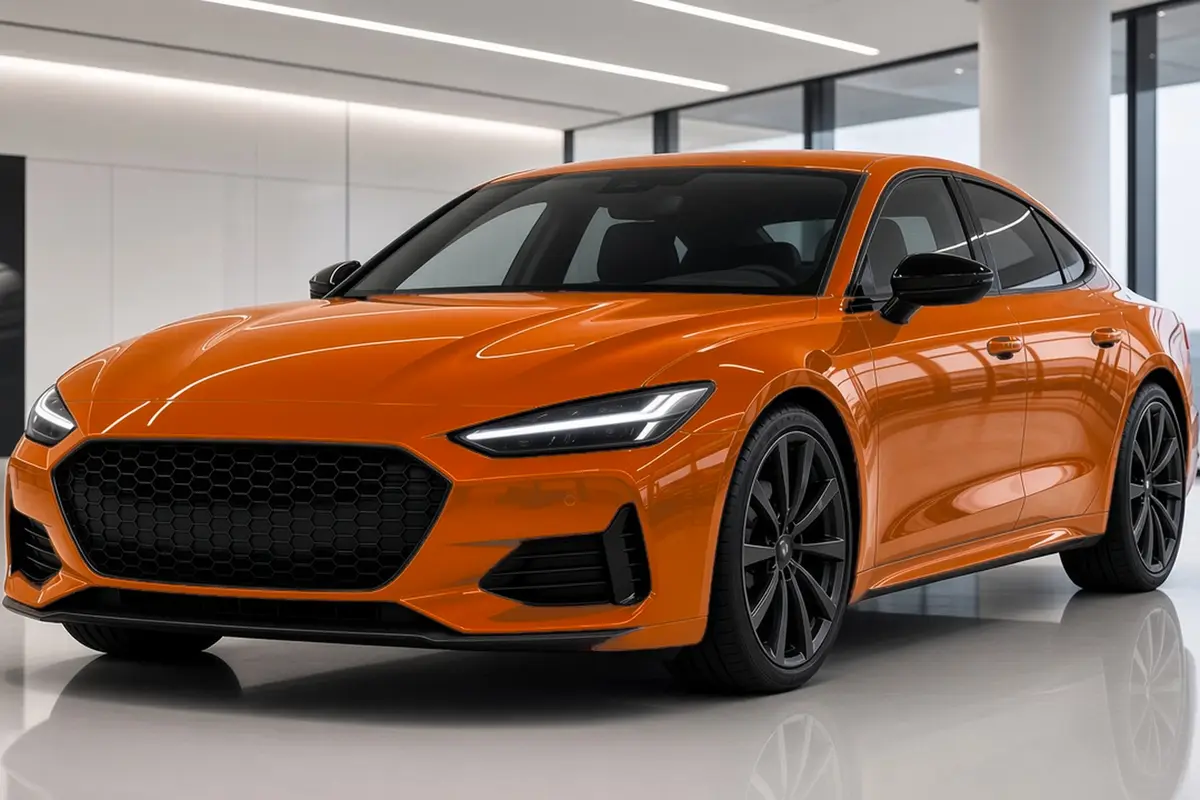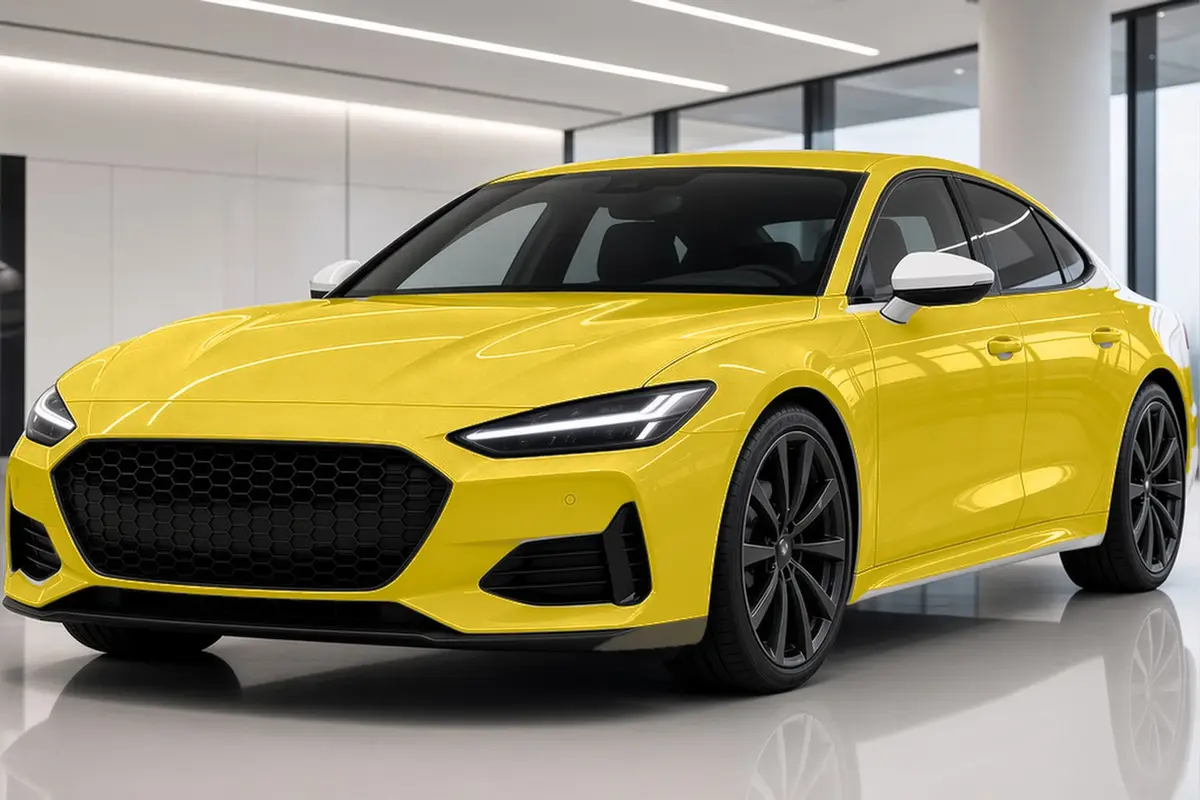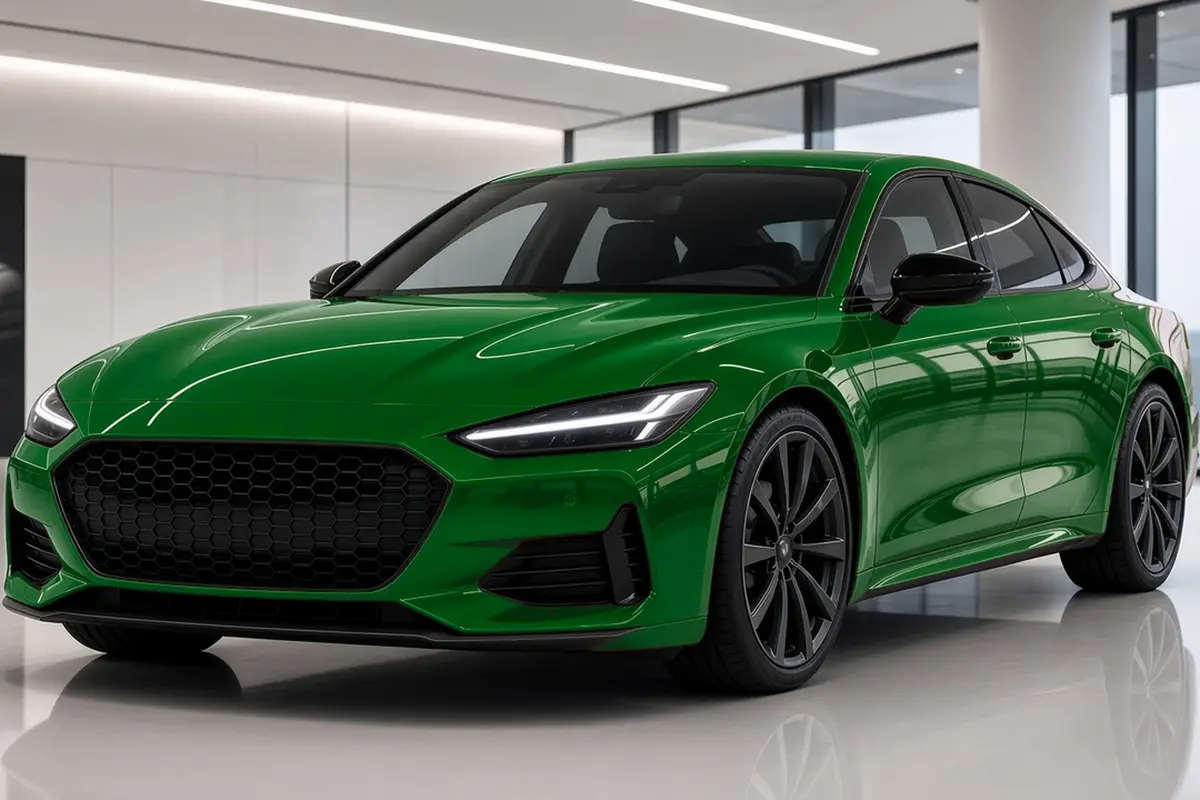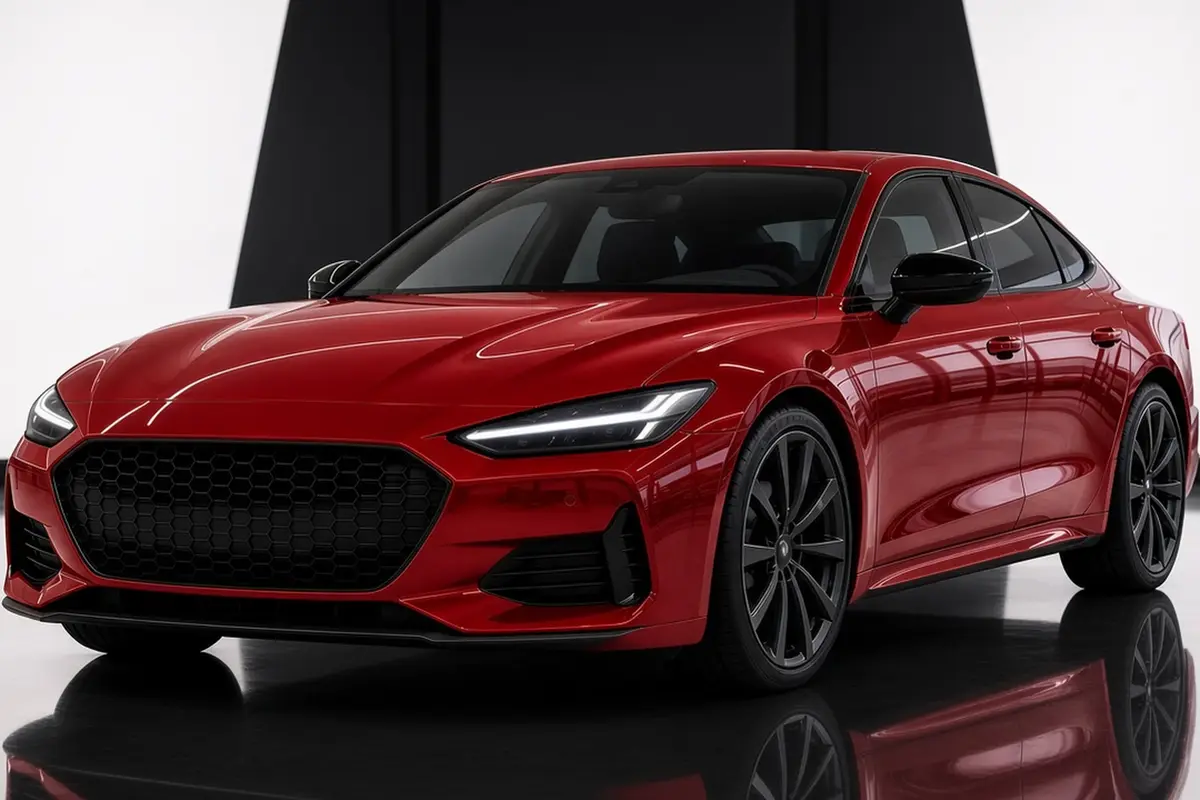
In a car wrap vs paint job comparison, a wrap covers paint with removable film. A repaint replaces the original finish with a new one for good. The choice depends on the paint underneath, the look you want and the value of the original color.
Key facts
- A wrap leaves the original paint in place under the film, while a repaint replaces it.
- The catalog on this site lists 243 Mirror Chrome films and 359 Color Shift films, finishes that are hard to spray evenly.
- Peeling clear coat, rust and dents show through film, so failing paint needs repair first.
- Clear paint protection film (PPF) keeps the paint color and adds a protective layer.
What each job does to the car
A wrap adds a layer of film over the existing paint. The film can be removed later, and the original color is still underneath. Door jambs and the engine bay keep the old color unless they are wrapped too.
A repaint sands back the old finish before new layers go on. Primer, color coat and clear coat build the new surface. The change is permanent, and the old color returns only with another repaint.
A wrap leaves a way back to the original color, which matters on a rare factory shade. A repaint closes that door, so choose the new color with extra care.
Car wrap cost vs paint
Car wrap cost vs paint cannot be settled with one figure, because each job has different cost drivers. A wrap depends on film length, film type and labor around the body shape. The guide to car wrap cost covers those factors one by one.
The answer to how much to paint a car depends on prep, paint quality and coverage. Body repair, the number of coats and painting the jambs all add work. A color change in paint needs door edges and hidden areas done as well. Compare the two jobs on the same coverage, since a wrap without jambs is a smaller job.
Finishes film offers that paint rarely does
Some finishes are far easier to get in film than in paint. Mirror chrome, color shift and patterned looks are hard to spray evenly across a whole body.
Matte and satin paint can be hard to repair, because polishing changes the sheen. Film in those finishes is replaced panel by panel instead. The visualizer on this site shows 191 looks on different body types.
| Finish | Films in the catalog |
|---|---|
| Mirror Chrome | 243 |
| Color Shift | 359 |
| Carbon Fiber | 106 |
| Glitter | 260 |
| Satin | 583 |
| Matte | 656 |
Do wraps look as good as paint
A well-installed wrap looks like paint from a normal viewing distance. Up close, edges, seams and relief cuts around complex parts can show. Gloss film reads differently from polished paint, so compare a sample in daylight.
The result depends on the installer as much as on the film. Ask to see finished cars, then look closely at bumpers, mirrors and door edges.
Door edges and jambs give a wrap away first when the doors open. Wrapping the jambs closes that gap, at the cost of more film and labor.
Paint condition decides before taste does
Film needs sound paint, since it rests on the surface and follows every flaw. Peeling clear coat, rust or dents show through film and must be fixed first. When the paint is failing over large areas, a repaint is the honest choice.
Panels that were repainted before deserve a close check before any film goes on. Paint that did not bond well can lift with the film when it is removed.
Vinyl wrap vs paint protection film
Vinyl wrap and paint protection film (PPF) solve different problems on the same car. Vinyl changes the color, while PPF is made to protect paint from chips and scratches. Clear PPF keeps the original color in view under the film.
Color PPF changes the color and protects the paint at the same time. The catalog on this site lists 1,047 Color Paint Protection Film entries and 64 clear films. A full sedan takes about 15 m (49 ft) of PPF by the calculator's estimate.
Clear PPF over the existing paint is a third option for owners who like their color. The guide on what paint protection film is covers it in more depth.
Questions
Which costs less, wrapping a car or painting it?
Neither job always costs less, because the answer depends on coverage, materials and paint condition. A wrap's cost follows film length, film type and labor. A paint job's cost follows prep, paint quality and how much of the car is painted.
How much does a wrap job typically cost?
A wrap job's cost depends on the film length for the body, the film type and the labor. A coupe takes 49 ft of cast vinyl by the calculator's estimate, while a minivan takes 75 ft. Prep and old film removal add to the total.
Do wraps look as good as paint?
A good wrap looks like paint from a normal distance. Close up, edges and seams can show on complex parts. The installer's skill matters as much as the film itself.
Can a wrapped car go through a carwash?
A wrapped car can be washed, but it needs more care at the edges than paint does. Hard brushes and pressure aimed at film edges can lift them. Follow the care advice of the film maker.
Films from this guide