Wraps by car

Jeep CJ wrap

A Jeep CJ wrap uses vinyl film to change the color or finish of this classic SUV. The page covers the 1966–1987 first generation, which is the only generation in this catalog. A full wrap of the newest body takes about 41 ft (12.5 m) of 60-inch (1.52 m) cast film. The open-top body and simple panels make the Jeep CJ a direct project for a vinyl wrap.

1generations12.5 mof film for a full wrap

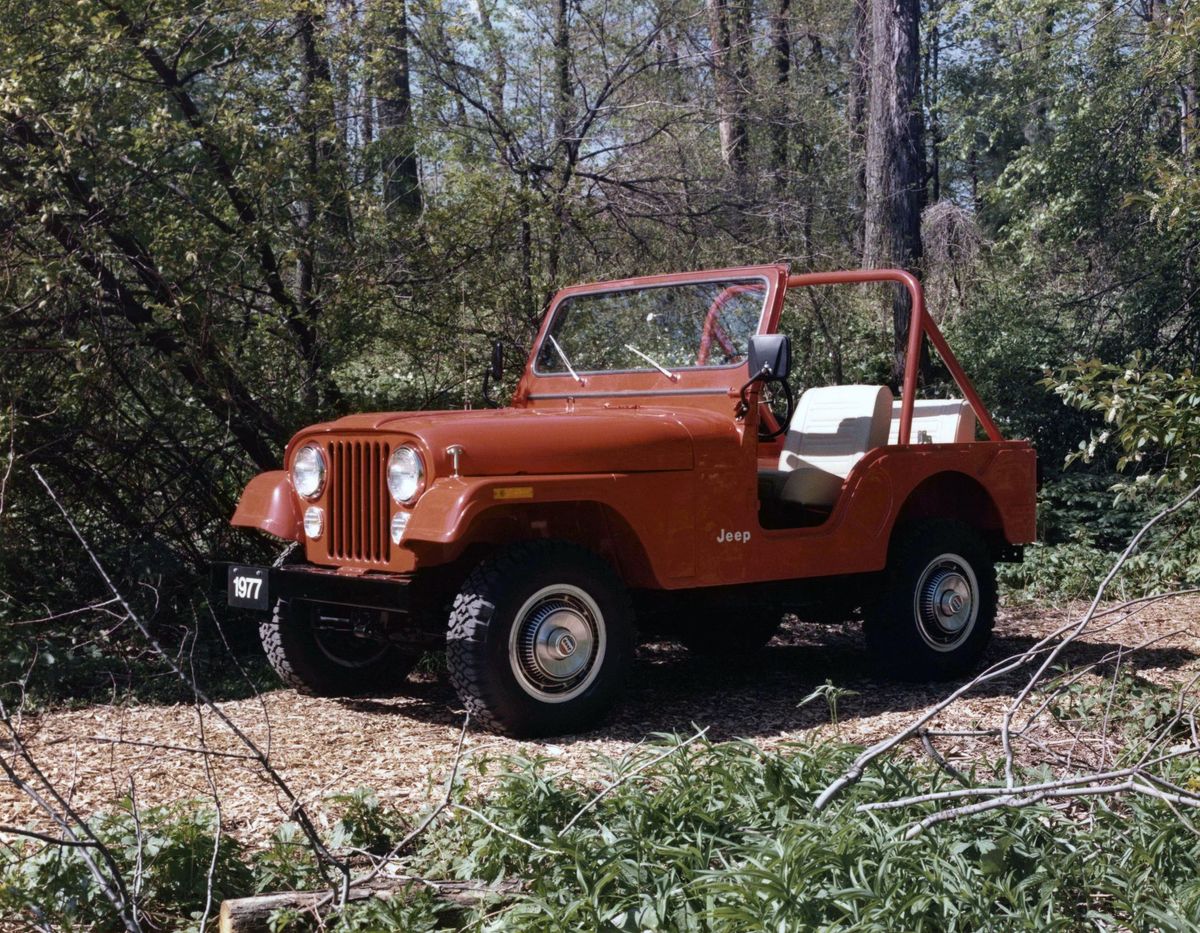
Jeep CJ, first generation, factory photo
Jeep CJ, first generation. Factory color shown.

Jeep CJ wrap colors and ideas

  • Jeep CJ black wrap
  • Jeep CJ white wrap
  • Jeep CJ gray wrap
  • Jeep CJ silver wrap
  • Jeep CJ red wrap
  • Jeep CJ blue wrap
  • Jeep CJ green wrap
  • Jeep CJ yellow wrap
  • Jeep CJ orange wrap
  • Jeep CJ purple wrap
  • Jeep CJ pink wrap
  • Jeep CJ teal wrap
  • Jeep CJ brown wrap
  • Jeep CJ gold wrap
  • Jeep CJ chrome wrap
  • Jeep CJ color shift wrap
  • Jeep CJ carbon fiber wrap
  • Jeep CJ camo and patterned wrap

How much vinyl to wrap a Jeep CJ

Estimates from the body dimensions in the catalog, for a 1.52 m (60 in) roll.

YearsBodyLengthFilm to order
1966–1987open-top SUV (2 doors)138.2 in (3,510 mm)about 41 ft (12.5 m) of 60-inch (1.52 m) cast film; chrome or patterned film: about 48 ft (14.5 m)

Jeep CJ wrap cost factors

Jeep CJ wrap cost depends on the amount of film, the number of panels, and the labor for the body details. A full wrap of this 138.2 in (3,510 mm) SUV uses about 41 ft (12.5 m) of film, so the film use is a main part of the cost. The tailgate glass and the open top add cut work and masking time. The two-door body has fewer panels than a four-door, which keeps the labor lower.
  • Film for a full wrap: about 41 ft (12.5 m) of 60-inch (1.52 m) cast film; chrome or patterned film: about 48 ft (14.5 m).
  • Body: open-top SUV (2 doors).
  • Open-top SUV body: a fabric top is not wrapped and the film ends where it begins; a folding hard top is wrapped as panels of its own.
  • A tailgate with the rear glass in it: the film ends at the edge of the glass.

Jeep CJ wraps by generation

Swipe sideways. Tap a card for the full description.

Jeep CJ, first generation, factory photo
Factory color shown

1966–1987 Jeep CJ open-top SUV (first generation)

1966–1987open-top SUV (2 doors)138.2 in (3,510 mm)

The first generation Jeep CJ from 1966–1987 is an open-top SUV with two doors. In a wrap, the fabric top is not covered with film, and the film ends where the top begins along the body edge. If the CJ has a folding hard top, those panels are wrapped as separate pieces. The tailgate has the rear glass in it, so the film stops at the edge of the glass.

Open-top SUV body: a fabric top is not wrapped and the film ends where it begins; a folding hard top is wrapped as panels of its own.

A tailgate with the rear glass in it: the film ends at the edge of the glass.

Film: about 41 ft (12.5 m) of 60-inch (1.52 m) cast film; chrome or patterned film: about 48 ft (14.5 m).

Roof, hood, chrome delete and PPF on a Jeep CJ

A partial wrap on a Jeep CJ can cover the hood, mirror caps, or tailgate on their own. A chrome delete covers the window trim and badges with black film to change the brightwork. Paint protection film (PPF) can be applied as a clear film on the front end to guard against stone chips. These smaller jobs use less film than a full wrap and focus on one area of the body.

  • Partial wrap: hood, mirror caps, tailgate.
  • Chrome delete: window trim and badges.
  • Paint protection film: clear film on the front end, also over a wrap.

Wrapping a Jeep CJ: body, cut-outs and film

Jeep CJ vinyl wrap work starts with the short open-top SUV body, which measures 138.2 in (3,510 mm) long. The two-door layout and flat side panels keep the film use close to the 41 ft (12.5 m) estimate for a full wrap. Because the CJ has no fixed roof, the wrap ends at the top of the body tub. The small size means a full wrap uses less film than a modern four-door SUV.

Jeep CJ wrap ideas include covering the body in a satin or matte color, or adding a two-tone layout that follows the fender line. The tailgate holds the rear glass, so the film must end at the edge of the glass. The fabric top is not wrapped, and the film stops where the top begins. For a folding hard top, the panels are wrapped on their own.

How much vinyl to wrap a Jeep CJ depends on the 1966–1987 body, which stayed the same for this whole generation. The film estimate is about 41 ft (12.5 m) of 60-inch (1.52 m) cast film for a full wrap of the newest body. A chrome or patterned film needs more material to match the pattern, about 48 ft (14.5 m). The open top means there is no roof panel to add to the total.

Questions about wrapping a Jeep CJ

How much vinyl does it take to wrap a Jeep CJ?

A Jeep CJ wrap uses about 41 ft (12.5 m) of 60-inch (1.52 m) cast film for a full wrap of the newest body. That figure covers the open-top two-door SUV from 1966–1987. If you choose a chrome or patterned film, the amount goes up to about 48 ft (14.5 m). The estimate does not include extra for the fabric top, which is not wrapped.

Is the top of a Jeep CJ wrapped?

No, the top of a Jeep CJ is not wrapped. The fabric top is not part of a vinyl wrap, and the film ends where the top begins. If the CJ has a folding hard top, those panels can be wrapped as separate pieces. The body wrap stops at the top edge of the body tub.

Can I wrap only the hood or the roof of a Jeep CJ?

Yes, you can wrap only the hood or the tailgate of a Jeep CJ. A partial wrap can cover the hood, mirror caps, or tailgate on their own. The roof of a CJ is not a body panel unless it has a folding hard top, which can be wrapped separately. A chrome delete is another small job, covering the window trim and badges with black film.

Is a Jeep CJ hard to wrap?

A Jeep CJ is not hard to wrap, but the open top and the tailgate glass add work. The film ends where the fabric top begins, so the top edge of the body needs a clean cut. The tailgate has the rear glass in it, so the film must be trimmed at the edge of the glass. The short 138.2 in (3,510 mm) body and flat panels make the rest of the wrap straightforward.