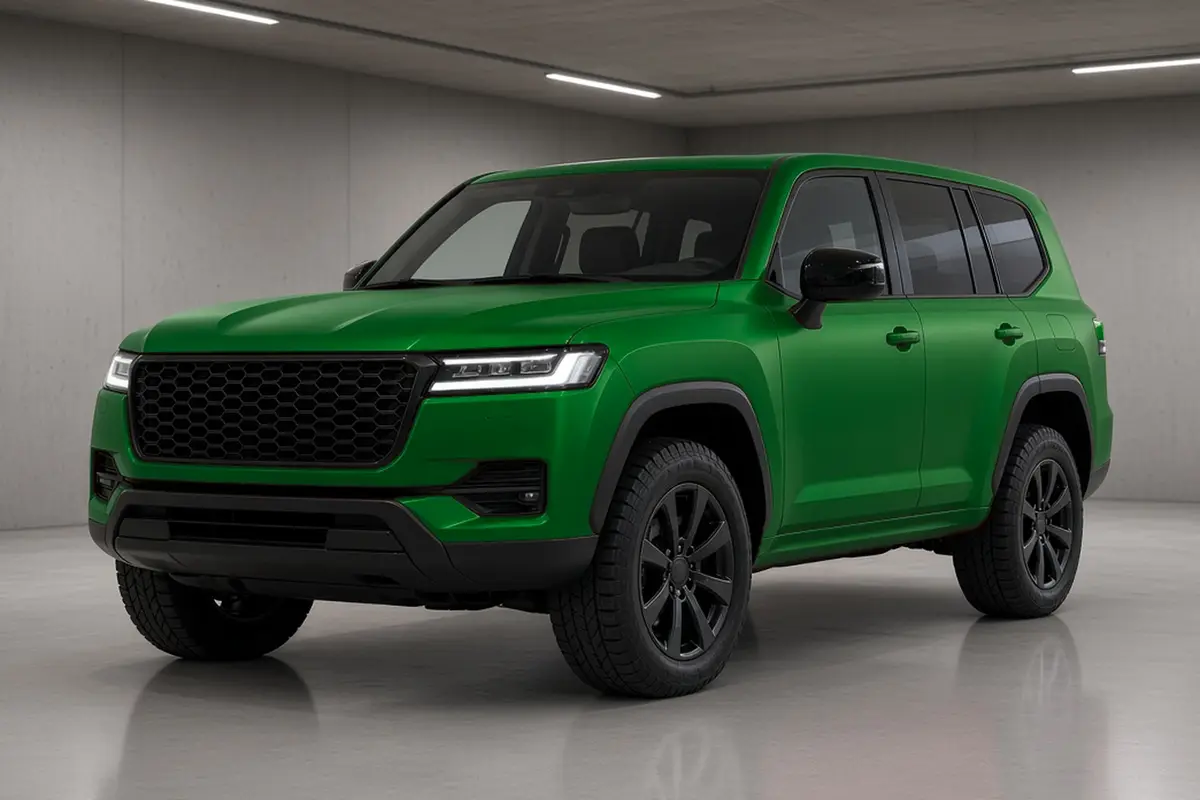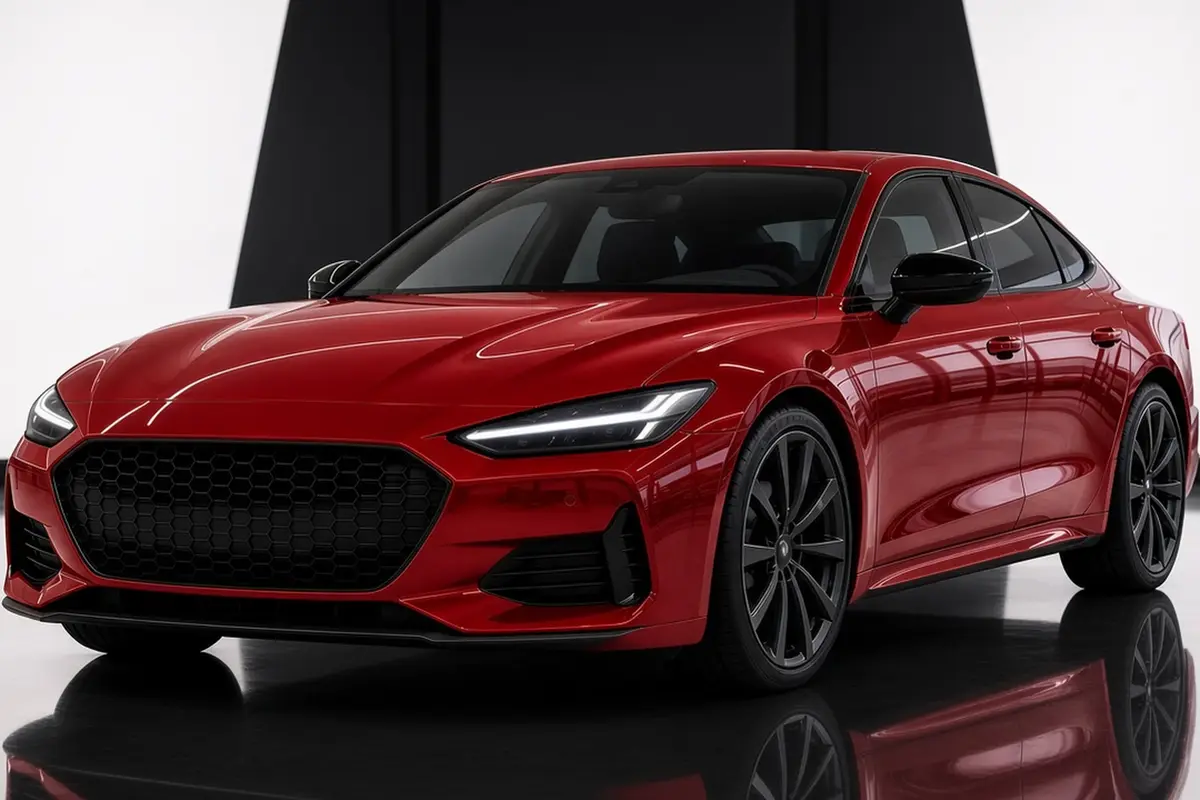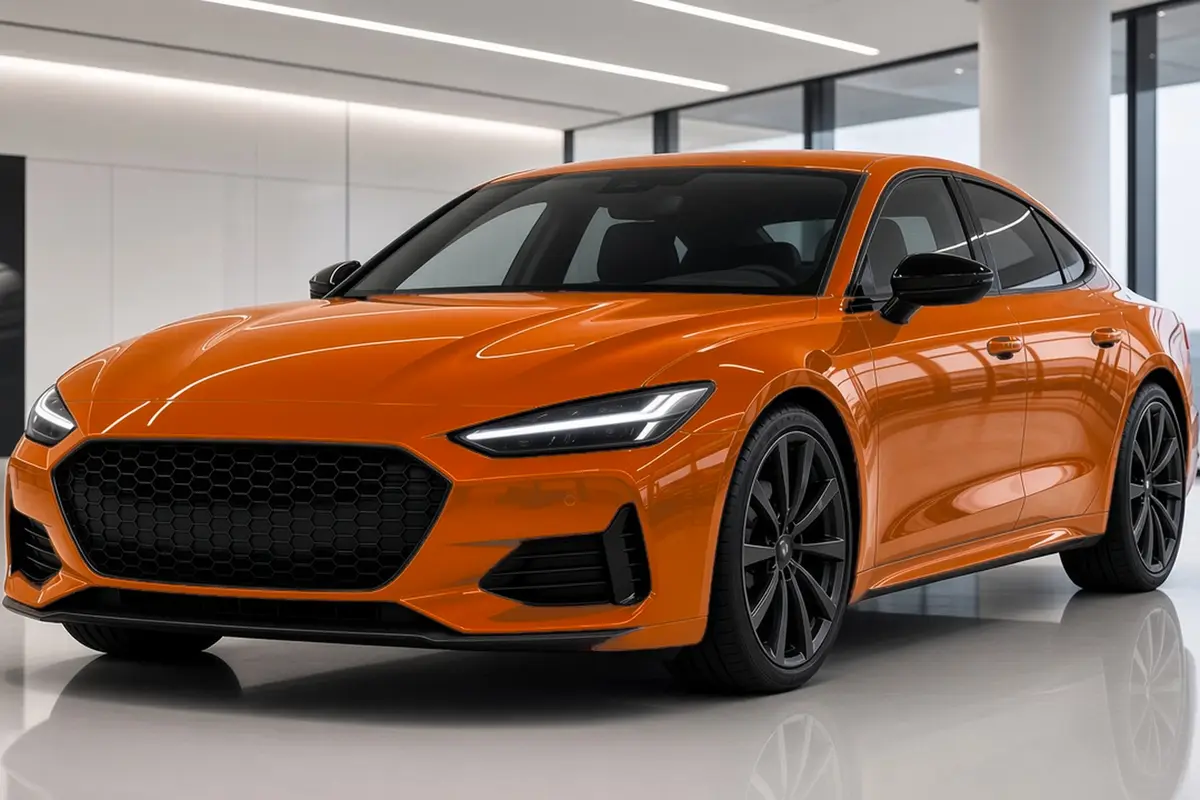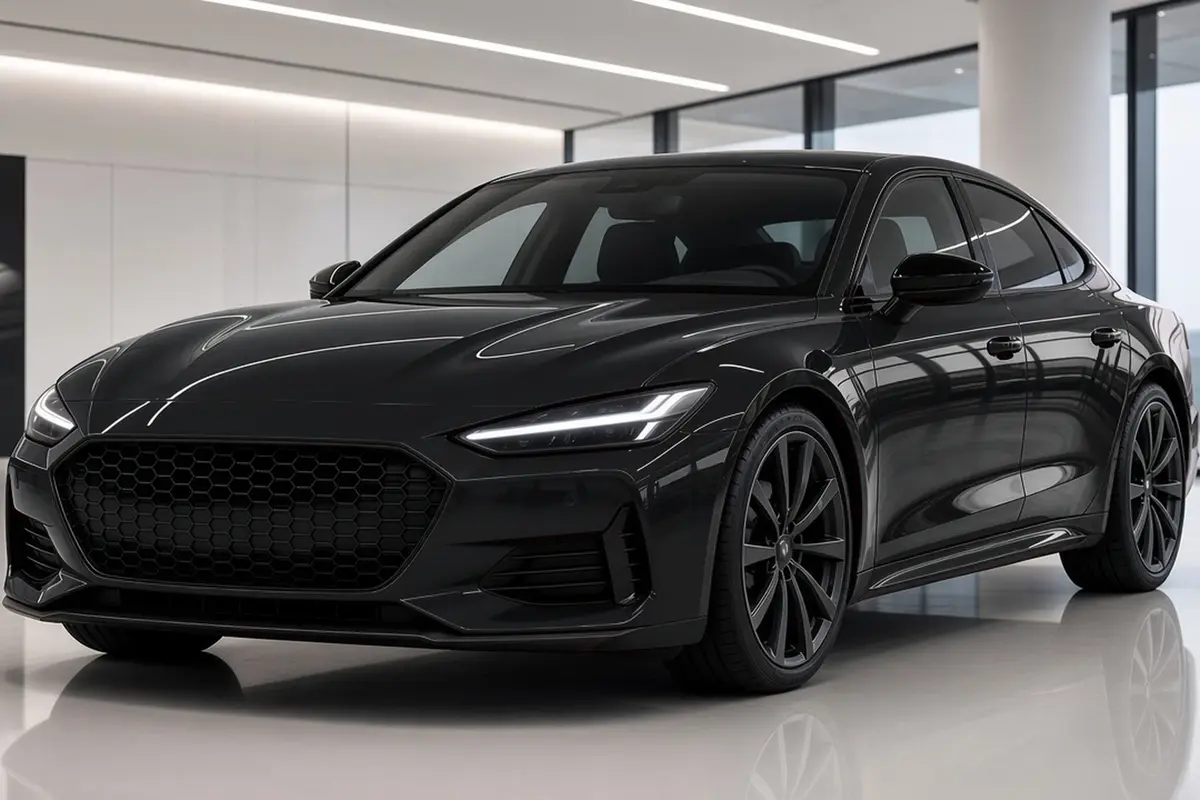
A partial car wrap covers only some panels, such as the roof, hood or mirror caps. The rest of the paint stays in view, so the film must sit well beside it. A sedan roof takes about 3.5 m (11 ft) of cast film.
Key facts
- A sedan roof takes about 3.5 m (11 ft) of cast film, and a sedan hood about 3 m (10 ft).
- A van roof is the largest single panel in the calculator, at 10.5 m (34 ft).
- A convertible has no fixed roof to wrap, so a partial job there starts with the hood.
- Paint under film is shielded from sun, so it can age differently from the paint around it.
- Mirror caps and pillars fit on offcuts from a roof or hood length.
What a partial vehicle wrap covers
A partial vehicle wrap covers chosen panels and leaves the rest painted. The roof, hood, mirror caps, pillars and spoiler are each easy to treat on their own.
The answer to can you do a partial wrap on a car is yes, on almost any panel. A chrome delete (bright trim covered with black film) is a partial wrap of window trim and grille.
A partial wrap can refresh a sun-faded roof or hood while the rest stays original. Peeling clear coat under that panel still needs repair before any film goes on.
How much vinyl to wrap a car roof
The answer to how much vinyl to wrap a car roof starts with the body type. Roofs run from 3 m (10 ft) on a coupe to 10.5 m (34 ft) on a van. The figures below are cast film estimates from the film calculator on this site.
A sunroof, roof rails or a shark-fin antenna add cutting and tucking around each part. A panoramic glass roof leaves only the frame around the glass to cover.
| Body type | Roof, cast film | Hood, cast film |
|---|---|---|
| Sedan | 3.5 m (11 ft) | 3 m (10 ft) |
| SUV | 4.5 m (15 ft) | 2.5 m (8 ft) |
| Hatchback | 4 m (13 ft) | 2.5 m (8 ft) |
| Coupe | 3 m (10 ft) | 3 m (10 ft) |
| Minivan | 6 m (20 ft) | 2 m (7 ft) |
| Convertible | no fixed roof | 3 m (10 ft) |
| Wagon | 5 m (16 ft) | 2.5 m (8 ft) |
| City car | 3.5 m (11 ft) | 2 m (7 ft) |
| Pickup | 3.5 m (11 ft) | 3 m (10 ft) |
| Off-roader | 4.5 m (15 ft) | 2.5 m (8 ft) |
| Van | 10.5 m (34 ft) | 2.5 m (8 ft) |
How much vinyl to wrap a car hood
Hood figures sit close together across body types, because hoods vary less than roofs. A sedan or coupe hood takes 3 m (10 ft), and a minivan hood 2 m (7 ft). So the answer to how much vinyl to wrap a car hood depends less on body type.
Film wraps around the front and side edges, which adds length beyond the visible area. The hood is called the bonnet in some countries, and the amounts are the same.
Hoods with vents or scoops need extra relief cuts and careful gentle heat. Ask whether the vent covers can come off before the job starts.
Mirrors, pillars and other small pieces
Small pieces such as mirror caps and pillars fit on offcuts from a roof or hood length. Mirror caps have compound curves, so they need cast film and patient work with gentle heat.
Wrapped mirrors sit at eye level, so any wrinkle or lifted edge shows at once. Removing the mirror caps where the design allows lets the edges tuck out of sight.
Door handles, pillar trim and window surrounds take small strips of film. Keep offcuts from larger panels flat and clean, since creased film is hard to use.
Partial wrap ideas that suit the paint
A partial wrap looks right when its finish and color work with the paint beside it. A black roof over light paint or carbon mirrors over any color give a clear contrast. Satin or matte film over gloss paint adds contrast without a new color.
The catalog on this site lists 285 black wrap films and 106 Carbon Fiber films. Matching a factory color closely is harder, so view a sample next to the real paint.
The visualizer on this site shows 191 wrap looks on different body types. Use it to judge a contrast roof or hood before you order film.
Partial wrap or full wrap
The choice between a partial and a full wrap comes down to what you want to change. A partial job uses less film and labor, while a full wrap changes the whole color.
Paint under film is shielded from sun, while the paint beside it keeps aging. After removal, a faint difference between the two areas can show on older paint.
Vans and trucks used for business can carry a printed partial wrap on the sides only. The guide to wrapping a truck covers business use in more detail.
Questions
Can you do a partial wrap on a car?
Yes, any panel or group of panels can be wrapped on its own. Roofs, hoods, mirror caps, pillars and trim are simple places to start. The edges need careful finishing because they meet the paint.
What is a partial vehicle wrap?
A partial vehicle wrap covers only selected panels and leaves the rest of the paint showing. It can add a color accent, a contrast roof or a printed design.
What are some creative ideas for partial car wraps?
Contrast roofs, carbon mirror caps and a chrome delete are simple ideas with a clear effect. A satin or matte hood over gloss paint changes the look without a new color. Color shift film on small parts suits a bolder design.
How much to wrap the roof of a SUV?
An SUV roof takes about 4.5 m (15 ft) of cast film, by the calculator's estimate. The cost then depends on the film, roof rails, any sunroof and the labor.
Films from this guide