Wraps by car

Hyundai Accent wrap

This page covers the Hyundai Accent wrap across all five generations, from the 1994 launch to the current body. The newest Accent is a subcompact sedan with a body length of 174.8 in (4,440 mm). A full wrap of the latest body takes about 54 ft (16.5 m) of 60-inch (1.52 m) cast vinyl wrap.

5generations16.5 mof film for a full wrap

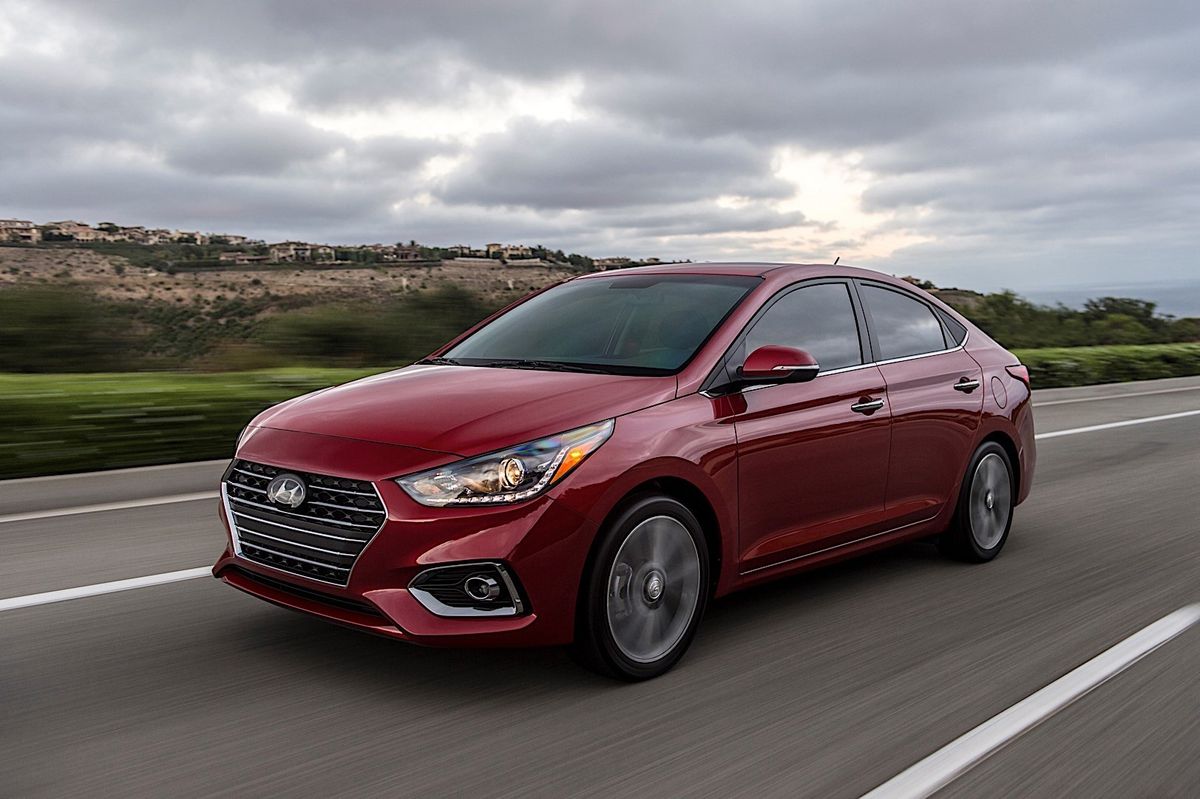
Hyundai Accent, fifth generation, factory photo
Hyundai Accent, fifth generation. Factory color shown.

Hyundai Accent wrap colors and ideas

  • Accent black wrap
  • Accent white wrap
  • Accent gray wrap
  • Accent silver wrap
  • Accent red wrap
  • Accent blue wrap
  • Accent green wrap
  • Accent yellow wrap
  • Accent orange wrap
  • Accent purple wrap
  • Accent pink wrap
  • Accent teal wrap
  • Accent brown wrap
  • Accent gold wrap
  • Accent chrome wrap
  • Accent color shift wrap
  • Accent carbon fiber wrap
  • Accent camo and patterned wrap

How much vinyl to wrap a Hyundai Accent

Estimates from the body dimensions in the catalog, for a 1.52 m (60 in) roll.

YearsBodyLengthFilm to order
2017–nowsedan (4 doors)174.8 in (4,440 mm)about 54 ft (16.5 m) of 60-inch (1.52 m) cast film; chrome or patterned film: about 64 ft (19.5 m)
2011–2017hatchback, sedan (5 doors)162.0 in (4,115 mm) to 172.0 in (4,370 mm)about 52 ft (16 m) for the hatchback to 54 ft (16.5 m) for the sedan, 60-inch (1.52 m) cast film; chrome or patterned film: up to about 62 ft (19 m)
2006–2011hatchback, sedan (3 or 4 doors)159.1 in (4,041 mm) to 168.5 in (4,280 mm)about 52 ft (16 m) of 60-inch (1.52 m) cast film; chrome or patterned film: about 61 ft (18.5 m)
1999–2006hatchback, sedan (3 or 4 or 5 doors)165.4 in (4,200 mm) to 167.7 in (4,260 mm)about 48 ft (14.5 m) of 60-inch (1.52 m) cast film; chrome or patterned film: about 59 ft (18 m)
1994–2000hatchback, sedan (3 or 4 or 5 doors)161.5 in (4,103 mm) to 162.1 in (4,117 mm)about 46 ft (14 m) for the sedan to 48 ft (14.5 m) for the hatchback, 60-inch (1.52 m) cast film; chrome or patterned film: up to about 59 ft (18 m)

Accent wrap cost factors

Accent wrap cost is driven by the size of the car, the generation, and the film you choose. The current Accent is 174.8 in (4,440 mm) long and takes about 54 ft (16.5 m) of cast film, while the first generation is 161.5 in (4,103 mm) and takes about 46 ft (14 m). Chrome or patterned film adds about 10 ft (3 m) compared to a solid color on most generations. Any parking sensors or cameras add cutting time to the job.
  • Film for a full wrap: about 54 ft (16.5 m) of 60-inch (1.52 m) cast film; chrome or patterned film: about 64 ft (19.5 m).
  • Body: sedan (4 doors).
  • Some trims have parking sensors in the bumpers: the film is cut around each sensor.
  • Some trims have cameras in the body: the film is cut around each lens.
  • Restyled in 2020: bumpers and lights differ between the versions, and so do the film cuts.

Accent wraps by generation

Swipe sideways. Tap a card for the full description.

Hyundai Accent, fifth generation, factory photo
Factory color shown

2017–now Accent sedan (fifth generation)

2017–nowsedan (4 doors)174.8 in (4,440 mm)

The fifth generation Hyundai Accent is a sedan sold from 2017, with a restyling in 2020. The 2020 update changed the bumpers and lights, so film cut for one version does not fit the other. It is the longest Accent at 174.8 in (4,440 mm), and a full wrap uses about 54 ft (16.5 m) of 60-inch (1.52 m) cast film.

Some trims have parking sensors in the bumpers: the film is cut around each sensor.

Some trims have cameras in the body: the film is cut around each lens.

Film: about 54 ft (16.5 m) of 60-inch (1.52 m) cast film; chrome or patterned film: about 64 ft (19.5 m).

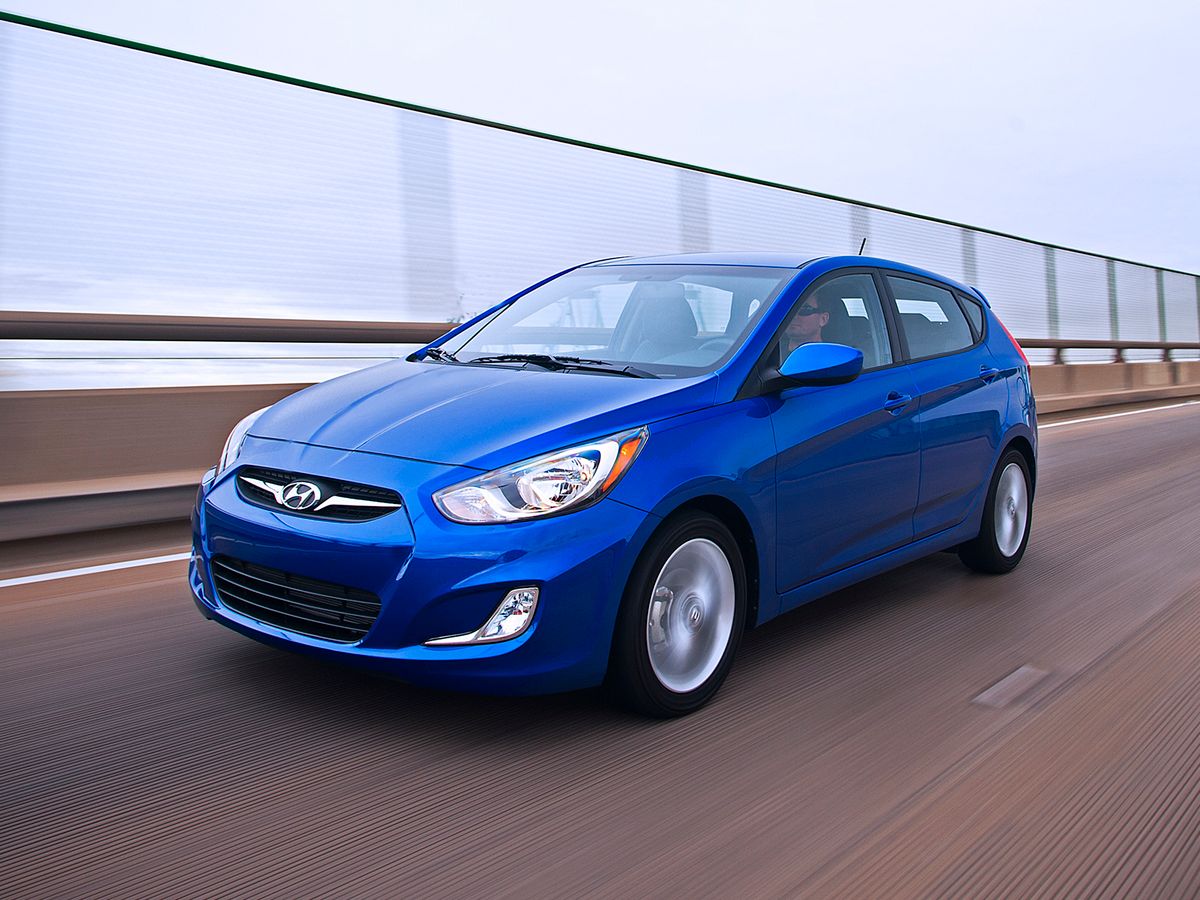
Hyundai Accent, fourth generation, factory photo
Factory color shown

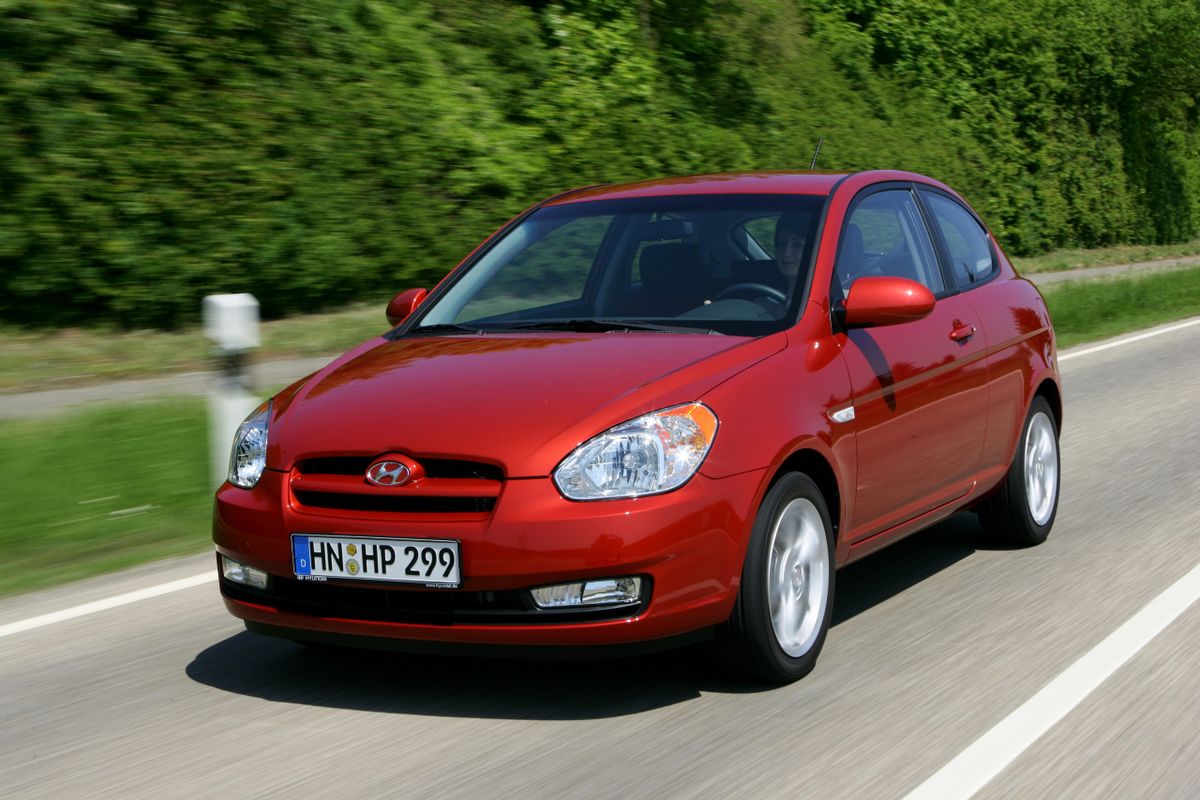
2011–2017 Accent hatchback, sedan (fourth generation)

2011–2017hatchback, sedan (5 doors)162.0 in (4,115 mm) to 172.0 in (4,370 mm)

The fourth generation Hyundai Accent offered a hatchback and a sedan from 2011 to 2017. The body style decides the panel plan and the film amount: the hatchback needs about 52 ft (16 m) and the sedan about 54 ft (16.5 m) of 60-inch (1.52 m) cast film. The hatchback has a tailgate with the rear glass in it, so the film ends at the edge of the glass.

A tailgate with the rear glass in it: the film ends at the edge of the glass.

Film: about 52 ft (16 m) for the hatchback to 54 ft (16.5 m) for the sedan, 60-inch (1.52 m) cast film; chrome or patterned film: up to about 62 ft (19 m).

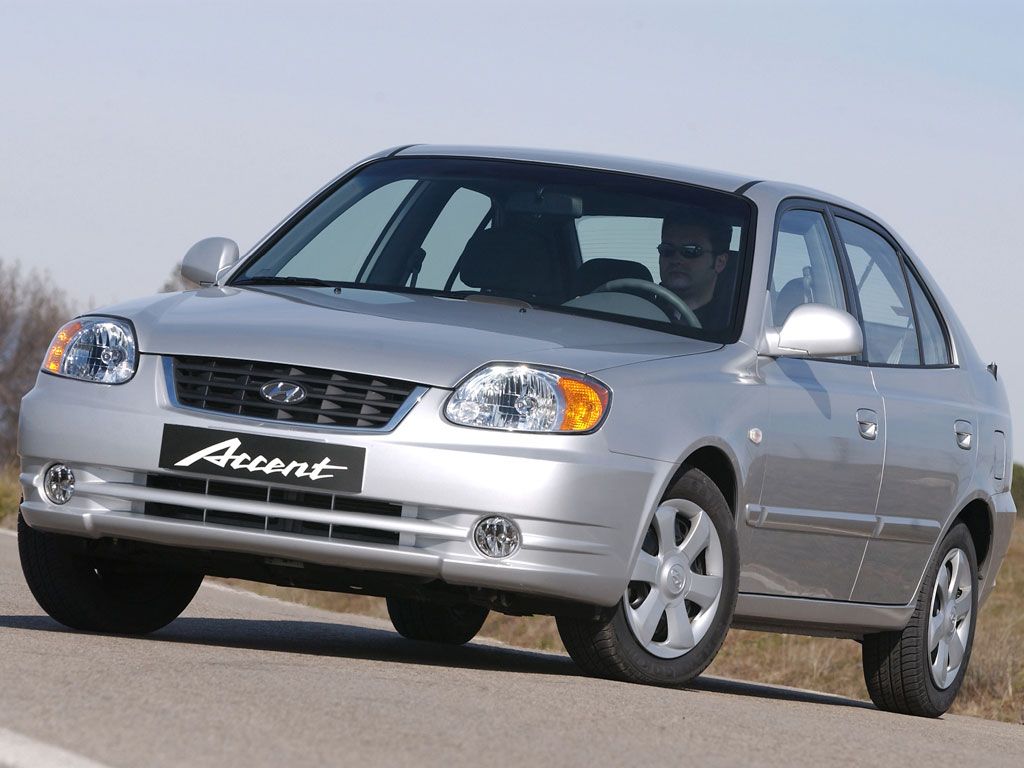
Hyundai Accent, third generation, factory photo
Factory color shown

2006–2011 Accent hatchback, sedan (third generation)

2006–2011hatchback, sedan (3 or 4 doors)159.1 in (4,041 mm) to 168.5 in (4,280 mm)

The third generation Hyundai Accent was sold from 2006 to 2011 as a hatchback or sedan with three or four doors. On a car of these years the paint may be original or repainted, so a test spot comes before a full wrap. The length ranges from 159.1 in (4,041 mm) to 168.5 in (4,280 mm), and the wrap takes about 52 ft (16 m) of 60-inch (1.52 m) cast film.

A tailgate with the rear glass in it: the film ends at the edge of the glass.

Film: about 52 ft (16 m) of 60-inch (1.52 m) cast film; chrome or patterned film: about 61 ft (18.5 m).

Hyundai Accent, second generation, factory photo
Factory color shown

1999–2006 Accent hatchback, sedan (second generation)

1999–2006hatchback, sedan (3 or 4 or 5 doors)165.4 in (4,200 mm) to 167.7 in (4,260 mm)

The second generation Hyundai Accent was built from 1999 to 2006 with a restyle in 2003, and it came as a hatchback or sedan with three, four, or five doors. The size and body style of this car mean the film amount runs about 48 ft (14.5 m) of 60-inch (1.52 m) cast film, and the number of panels changes between the three-door and five-door versions. The tailgate rear glass is part of the hatch, so the film stops at the glass edge.

A tailgate with the rear glass in it: the film ends at the edge of the glass.

Film: about 48 ft (14.5 m) of 60-inch (1.52 m) cast film; chrome or patterned film: about 59 ft (18 m).

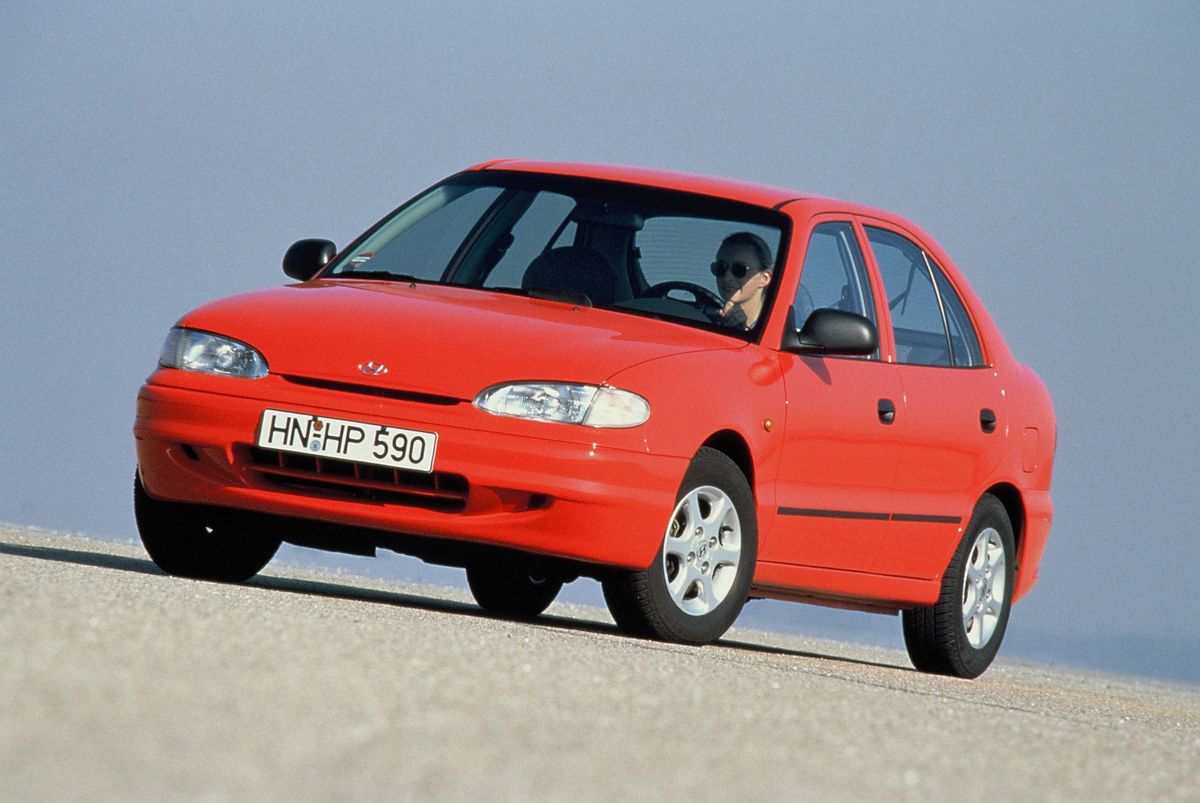
Hyundai Accent, first generation, factory photo
Factory color shown

1994–2000 Accent hatchback, sedan (first generation)

1994–2000hatchback, sedan (3 or 4 or 5 doors)161.5 in (4,103 mm) to 162.1 in (4,117 mm)

The first generation Hyundai Accent covers the years 1994 to 2000 in hatchback and sedan forms with three, four, or five doors. These years overlap with the newer body from 1999 to 2000, so the owner of a car from those years checks which body it is. The length is 161.5 in (4,103 mm) to 162.1 in (4,117 mm), and a wrap takes about 46 ft (14 m) for the sedan to 48 ft (14.5 m) for the hatchback.

A tailgate with the rear glass in it: the film ends at the edge of the glass.

Film: about 46 ft (14 m) for the sedan to 48 ft (14.5 m) for the hatchback, 60-inch (1.52 m) cast film; chrome or patterned film: up to about 59 ft (18 m).

Roof, hood, chrome delete and PPF on an Accent

A partial wrap on the Hyundai Accent can cover the roof, the hood, or the mirror caps on their own. Accent chrome delete covers the window trim and badges with black film. Paint protection film (PPF) is a clear film applied to the front end to protect against stone chips. Any of these jobs uses less film than a full wrap and can be done without touching the rest of the body.

  • Partial wrap: roof, hood, mirror caps.
  • Chrome delete: window trim and badges.
  • Paint protection film: clear film on the front end, also over a wrap.

Wrapping a Hyundai Accent: body, cut-outs and film

The Hyundai Accent vinyl wrap is shaped by the body style and the car's subcompact dimensions. The current sedan has four doors and no tailgate, while older generations came as hatchbacks or sedans with three or four doors. The shorter lengths of earlier models mean the film amount drops to as low as 46 ft (14 m) for the first generation sedan. Every version needs seams managed on the bumpers and where panels meet.

Accent wrap ideas start with knowing which parts need cut-outs or removal. On some trims of the current Accent there are parking sensors in the bumpers, and the film is cut around each sensor. If your car has cameras in the body, the film is also cut around each lens. On the hatchback bodies from 1999 to 2017 the tailgate includes the rear glass, so the film ends at the edge of the glass.

How much vinyl to wrap an Accent depends on the generation and body style you have. The newest sedan requires about 54 ft (16.5 m) of 60-inch (1.52 m) cast film, while a 2006–2011 model uses about 52 ft (16 m). If you choose chrome or patterned film the amount rises to about 64 ft (19.5 m) on the latest Accent. The hatchback and sedan of the same generation may differ by up to 2 ft (0.6 m).

Questions about wrapping a Hyundai Accent

How much vinyl does it take to wrap a Hyundai Accent?

Yes, a Hyundai Accent takes about 54 ft (16.5 m) of vinyl for the newest body in 60-inch (1.52 m) cast film. That figure covers the full exterior of the fifth generation sedan with no chrome or pattern. If you choose a chrome or patterned film the amount rises to about 64 ft (19.5 m).

Which years of the Accent take the same film cuts?

The Accent film cuts are the same within a body style and version, but not across restylings or generations. The fifth generation changed in 2020, so a 2017–2019 sedan does not share bumper and light cuts with a 2020–now car. The second generation changed in 2003, so a 1999–2002 car and a 2003–2006 car need different cuts for the front and rear.

Can I wrap only the hood or the roof of an Accent?

Yes, you can wrap only the hood or the roof of an Accent as a partial wrap. The job can also cover the mirror caps on their own, and a chrome delete covers the window trim and badges. Paint protection film (PPF) on the front end is another single-area option.

Is an Accent hard to wrap?

The Accent is a small car, but some details add work to the wrap. On some trims of the current Accent there are parking sensors in the bumpers that need cutting around, and cameras in the body also need cut-outs. The hatchback tailgates on older generations have the rear glass in them, so the film must be trimmed to the glass edge.