Wraps by car

Hyundai i10 wrap

The Hyundai i10 wrap is a color change or protection project on a mini hatchback sold in three generations. The oldest body measures 140.4 in (3,565 mm), while the newest is 144.5 in (3,670 mm). A full wrap of the newest body takes about 48 ft (14.5 m) of 60-inch (1.52 m) cast film.

3generations14.5 mof film for a full wrap

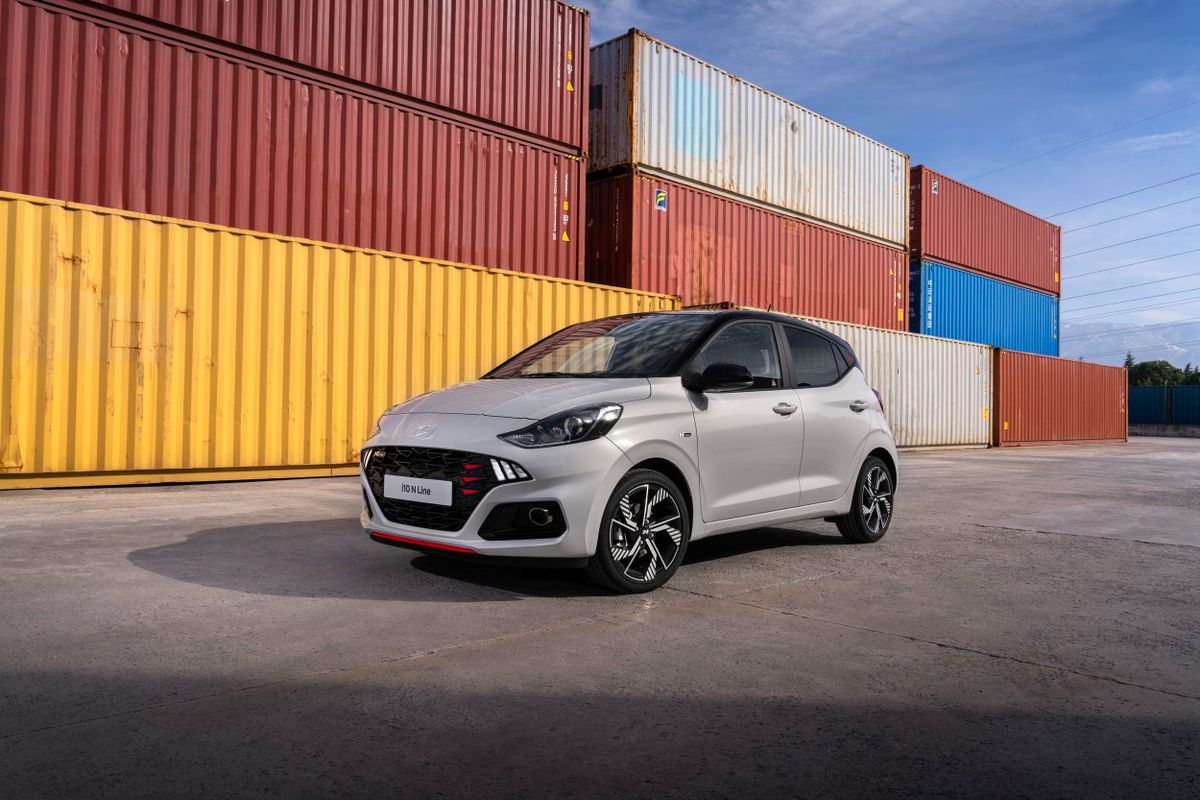
Hyundai i10, third generation, factory photo
Hyundai i10, third generation. Factory color shown.

Hyundai i10 wrap colors and ideas

  • Hyundai i10 black wrap
  • Hyundai i10 white wrap
  • Hyundai i10 gray wrap
  • Hyundai i10 silver wrap
  • Hyundai i10 red wrap
  • Hyundai i10 blue wrap
  • Hyundai i10 green wrap
  • Hyundai i10 yellow wrap
  • Hyundai i10 orange wrap
  • Hyundai i10 purple wrap
  • Hyundai i10 pink wrap
  • Hyundai i10 teal wrap
  • Hyundai i10 brown wrap
  • Hyundai i10 gold wrap
  • Hyundai i10 chrome wrap
  • Hyundai i10 color shift wrap
  • Hyundai i10 carbon fiber wrap
  • Hyundai i10 camo and patterned wrap

How much vinyl to wrap a Hyundai i10

Estimates from the body dimensions in the catalog, for a 1.52 m (60 in) roll.

YearsBodyLengthFilm to order
2019–nowhatchback (5 doors)144.5 in (3,670 mm)about 48 ft (14.5 m) of 60-inch (1.52 m) cast film; chrome or patterned film: about 56 ft (17 m)
2013–2020hatchback (5 doors)144.3 in (3,665 mm)about 48 ft (14.5 m) of 60-inch (1.52 m) cast film; chrome or patterned film: about 56 ft (17 m)
2007–2014hatchback (5 doors)140.4 in (3,565 mm)about 46 ft (14 m) of 60-inch (1.52 m) cast film; chrome or patterned film: about 54 ft (16.5 m)

Hyundai i10 wrap cost factors

The Hyundai i10 wrap cost depends on film size, film type, and the body details of the car. A newer body takes about 48 ft (14.5 m) of 60-inch (1.52 m) film, while the first generation takes about 46 ft (14 m). Chrome or patterned film adds about 8 ft (2.5 m) to the total. Features like sunroofs, cameras, or fog lamps add cut-outs that require more labor.
  • Film for a full wrap: about 48 ft (14.5 m) of 60-inch (1.52 m) cast film; chrome or patterned film: about 56 ft (17 m).
  • Body: hatchback (5 doors).
  • A tailgate with the rear glass in it: the film ends at the edge of the glass.
  • Some trims have a sunroof: the roof film is cut around its opening.
  • Some trims have cameras in the body: the film is cut around each lens.
  • Some trims have fog lamps in the front bumper: cut-outs in the bumper film.
  • Restyled in 2023: bumpers and lights differ between the versions, and so do the film cuts.

Hyundai i10 wraps by generation

Swipe sideways. Tap a card for the full description.

Hyundai i10, third generation, factory photo
Factory color shown

2019–now Hyundai i10 hatchback (third generation)

2019–nowhatchback (5 doors)144.5 in (3,670 mm)

The third generation Hyundai i10 was restyled in 2023, and the bumpers and lights changed. Film cut for one version does not fit the other, so the wrap shop needs the exact production year. The restyling affects only the newest body from 2019 onward, not the older generations.

A tailgate with the rear glass in it: the film ends at the edge of the glass.

Some trims have a sunroof: the roof film is cut around its opening.

Some trims have cameras in the body: the film is cut around each lens.

Some trims have fog lamps in the front bumper: cut-outs in the bumper film.

Film: about 48 ft (14.5 m) of 60-inch (1.52 m) cast film; chrome or patterned film: about 56 ft (17 m).

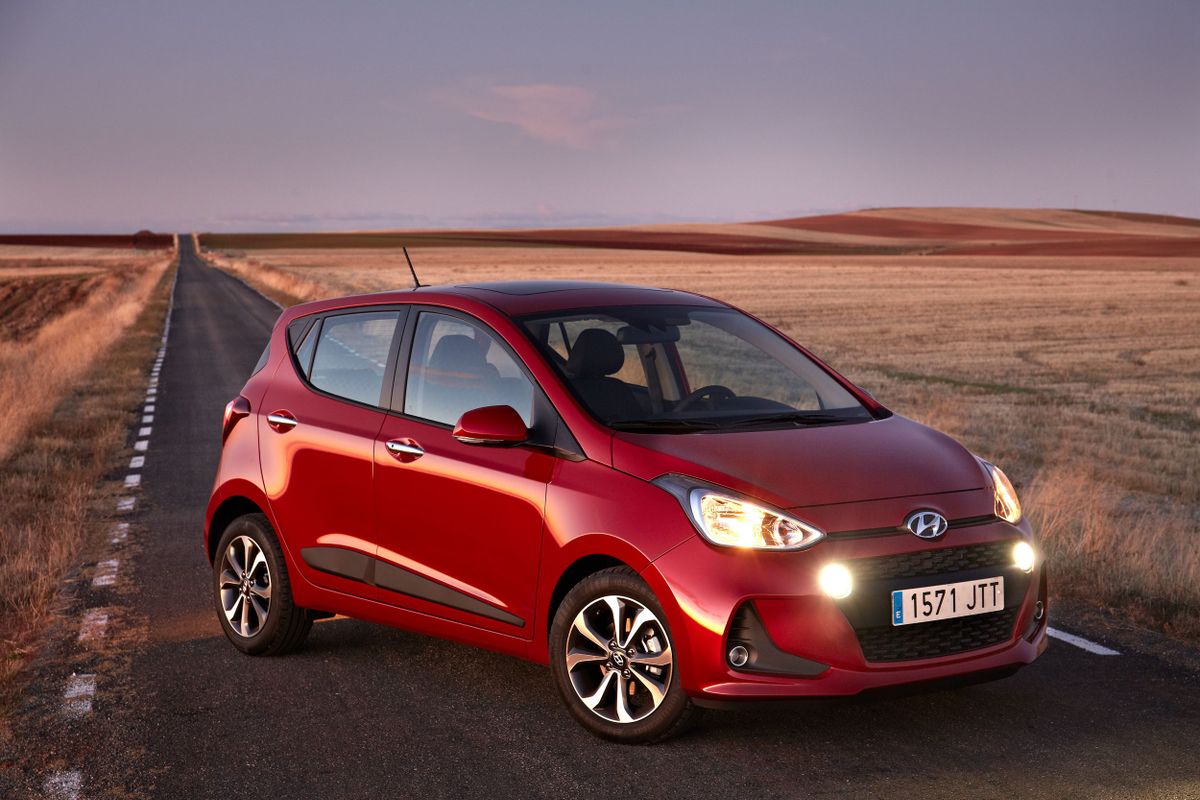
Hyundai i10, second generation, factory photo
Factory color shown

2013–2020 Hyundai i10 hatchback (second generation)

2013–2020hatchback (5 doors)144.3 in (3,665 mm)

The second generation Hyundai i10 covers cars from 2013 to 2020, but its years overlap with the newer body from 2019 to 2020. The owner of a car from those years must check which body it is before ordering film cuts. The two bodies have different front and rear designs, so the film patterns are not interchangeable.

A tailgate with the rear glass in it: the film ends at the edge of the glass.

Some trims have cameras in the body: the film is cut around each lens.

Some trims have fog lamps in the front bumper: cut-outs in the bumper film.

Film: about 48 ft (14.5 m) of 60-inch (1.52 m) cast film; chrome or patterned film: about 56 ft (17 m).

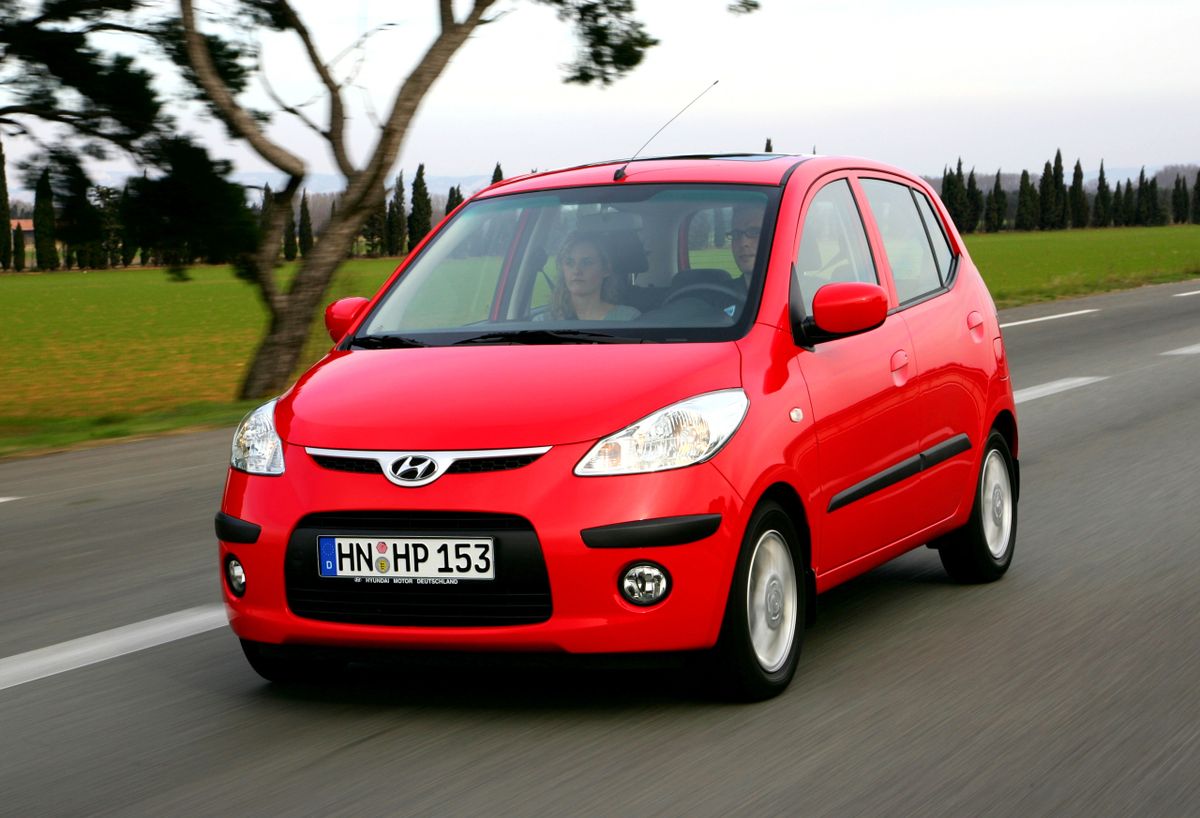
Hyundai i10, first generation, factory photo
Factory color shown

2007–2014 Hyundai i10 hatchback (first generation)

2007–2014hatchback (5 doors)140.4 in (3,565 mm)

The first generation Hyundai i10 was built from 2007 to 2014, and paint age matters for a wrap. On a car of these years panels may be original or repainted, so a test spot comes before a full wrap. The wrap film needs clean, stable paint to adhere properly.

A tailgate with the rear glass in it: the film ends at the edge of the glass.

Some trims have a panoramic glass roof: glass is not wrapped, and the film ends at the roof rails.

Some trims have a sunroof: the roof film is cut around its opening.

Some trims have parking sensors in the bumpers: the film is cut around each sensor.

Some trims have cameras in the body: the film is cut around each lens.

Some trims have fog lamps in the front bumper: cut-outs in the bumper film.

Film: about 46 ft (14 m) of 60-inch (1.52 m) cast film; chrome or patterned film: about 54 ft (16.5 m).

Roof, hood, chrome delete and PPF on a Hyundai i10

A partial wrap on a Hyundai i10 can cover the roof, hood, or mirror caps. A chrome delete covers the window trim and badges with black film. Paint protection film (PPF) is clear film applied to the front end to guard against stone chips. These smaller jobs let you change one part of the car without a full wrap.

  • Partial wrap: roof, hood, mirror caps.
  • Chrome delete: window trim and badges.
  • Paint protection film: clear film on the front end, also over a wrap.

Wrapping a Hyundai i10: body, cut-outs and film

The Hyundai i10 is a five-door hatchback in every generation, so a full wrap includes the rear tailgate and the roof. A tailgate with the rear glass in it means the film ends at the edge of the glass. The newest body is 144.5 in (3,670 mm) long, close to the second generation at 144.3 in (3,665 mm). The first generation is smaller at 140.4 in (3,565 mm), so it uses slightly less film.

Some Hyundai i10 trim levels have cameras in the body, and the film is cut around each lens. Some trims have fog lamps in the front bumper, so the bumper film needs cut-outs. On some trims with a sunroof, the roof film is cut around its opening. The first generation may have a panoramic glass roof on some trims, and glass is not wrapped.

When you count how much vinyl to wrap a Hyundai i10, the generation changes the film estimate. The newest body from 2019 onward uses about 48 ft (14.5 m) of 60-inch (1.52 m) cast film. The first generation from 2007 to 2014 needs about 46 ft (14 m) of the same film. Chrome or patterned film adds roughly 8 ft (2.5 m) on the newer bodies and about 8 ft (2.5 m) on the first generation.

Questions about wrapping a Hyundai i10

How much vinyl does it take to wrap a Hyundai i10?

It takes about 48 ft (14.5 m) of 60-inch (1.52 m) cast film to wrap the newest Hyundai i10 body. The first generation from 2007 to 2014 takes about 46 ft (14 m) of the same size film. Chrome or patterned film adds roughly 8 ft (2.5 m) to those figures.

Can the roof of a Hyundai i10 be wrapped?

Yes, the roof of a Hyundai i10 can be wrapped. Some trims have a sunroof, and the roof film is cut around its opening. The first generation may have a panoramic glass roof on some trims, and glass is not wrapped.

Which years of the Hyundai i10 take the same film cuts?

The same film cuts fit a Hyundai i10 within one generation and before any restyling. For the newest body from 2019 onward, cars before the 2023 restyling share cuts, and cars after it share different cuts. The second generation from 2013 to 2020 has its own cuts, except the overlap years need checking. The first generation from 2007 to 2014 has one set of cuts for its years.

Can I wrap only the hood or the roof of a Hyundai i10?

Yes, you can wrap only the hood or the roof of a Hyundai i10. A partial wrap can cover the roof, hood, or mirror caps. A chrome delete covers the window trim and badges. These jobs use less film than a full wrap.