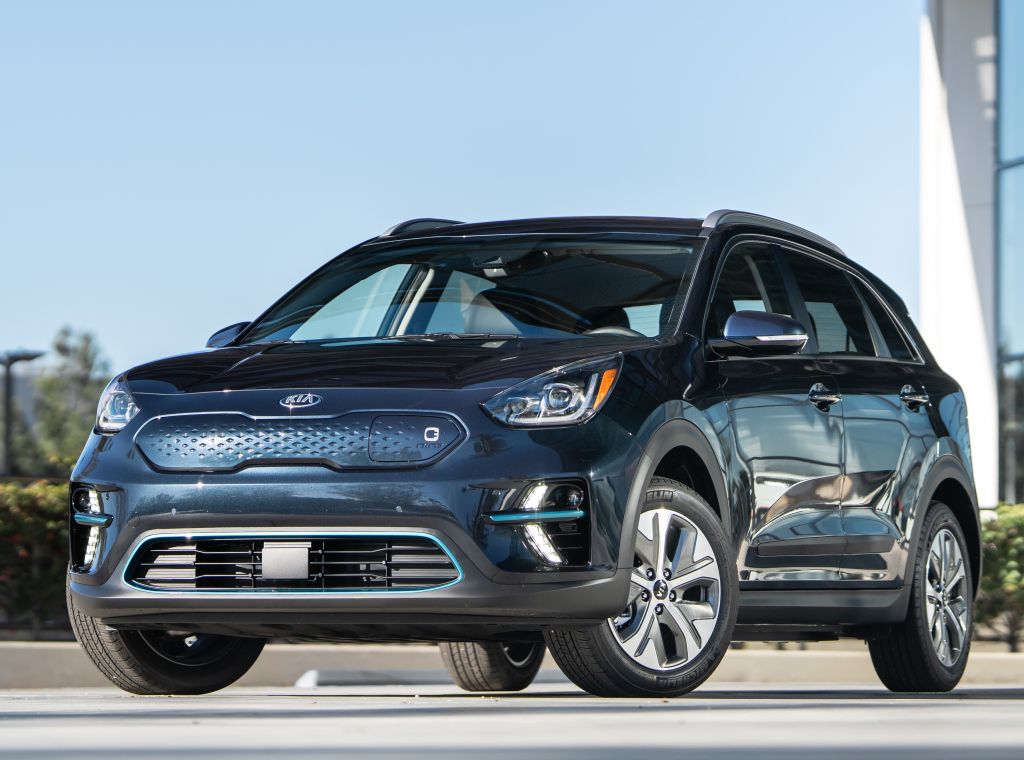
Niro wrap cost depends on the size of the vehicle, the complexity of the body, and the film type. The second generation is longer than the first, so a full wrap uses about 59 ft (18 m) of 60-inch film versus about 56 ft (17 m). Chrome or patterned film increases material to about 67 ft (20.5 m) for the newer car and about 66 ft (20 m) for the older one. Parts like roof rails, sensors, and cameras add labor time for removal and cut-outs.
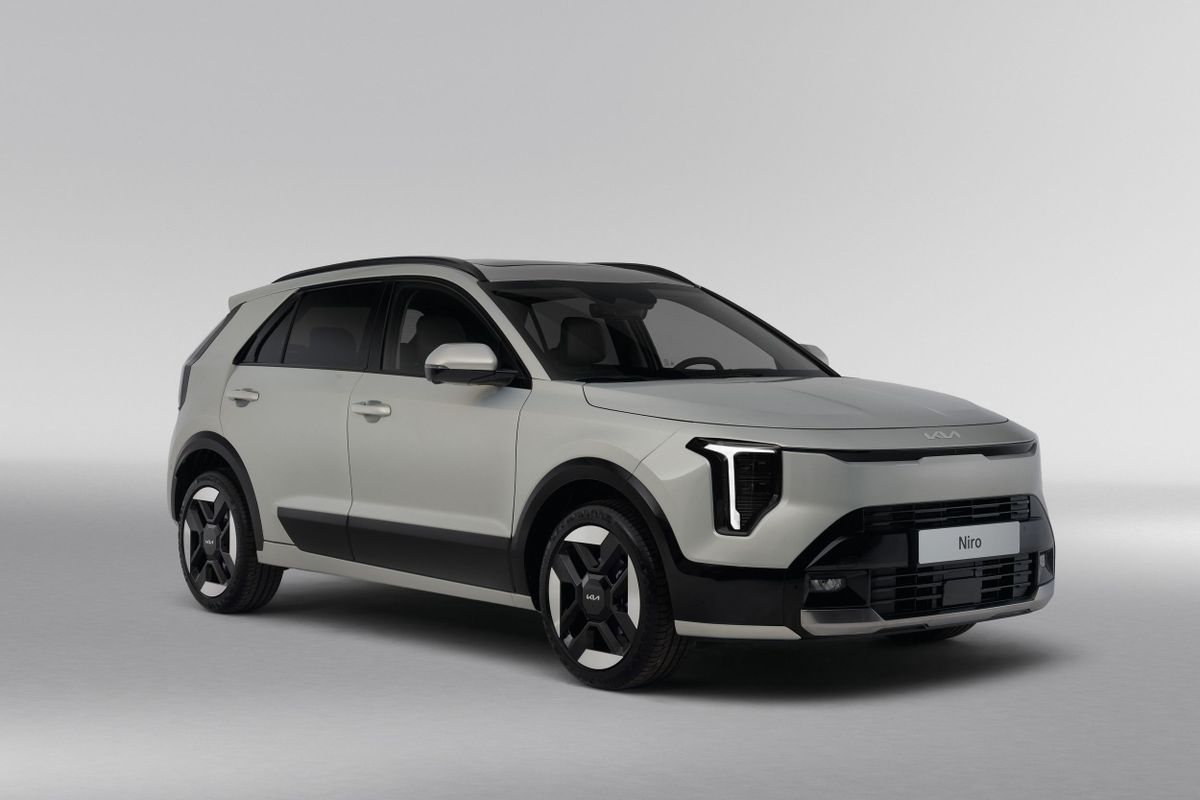
2022–now Niro SUV (second generation)
The second generation Kia Niro offers a glass roof on some trims, and glass is not wrapped. The film ends at the roof rails, so the roof panel itself may not be fully covered on those cars. This leaves the dark glass as a contrast to the wrapped body color. If the owner wants a uniform roof color, the glass roof cannot be changed with vinyl.
A tailgate with the rear glass in it: the film ends at the edge of the glass.
Some trims have a panoramic glass roof: glass is not wrapped, and the film ends at the roof rails.
Every trim has roof rails: they come off before the roof is wrapped, or the film is cut along them.
Some trims have a rear spoiler: it is wrapped as a piece of its own.
Every trim has parking sensors in the bumpers: the film is cut around each sensor.
Every trim has cameras in the body: the film is cut around each lens.
Some trims have fog lamps in the front bumper: cut-outs in the bumper film.
Plug-in and electric versions: the charge port door is wrapped as a small piece of its own.
Film: about 59 ft (18 m) of 60-inch (1.52 m) cast film; chrome or patterned film: about 67 ft (20.5 m).