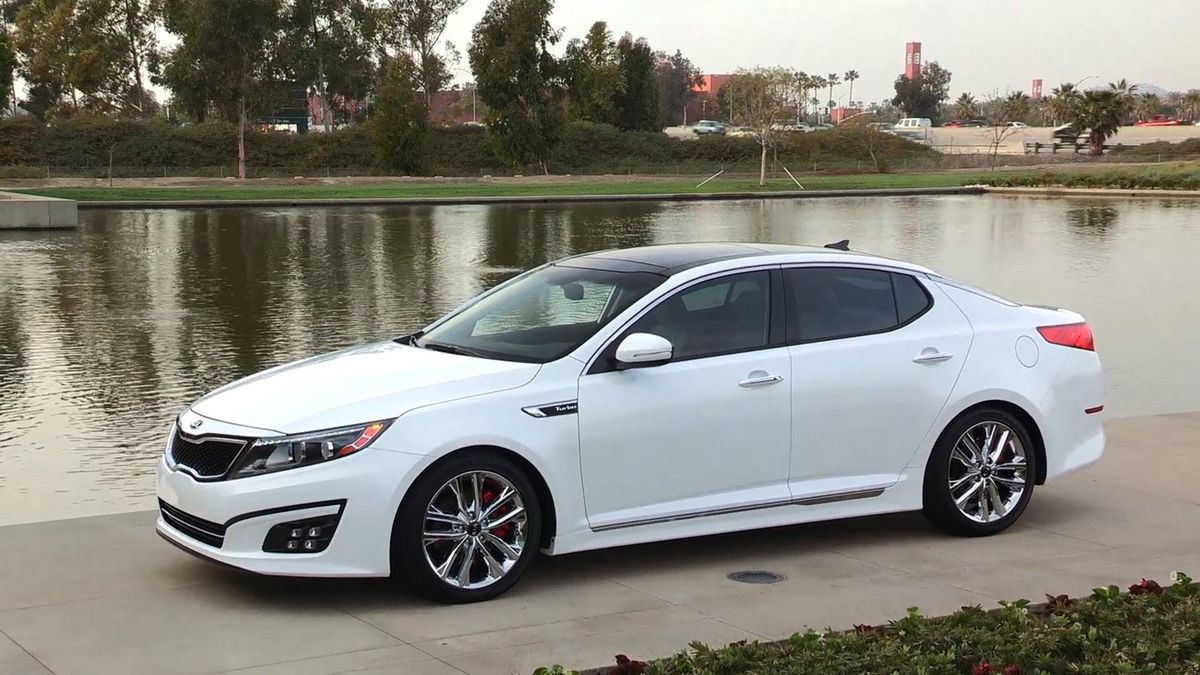
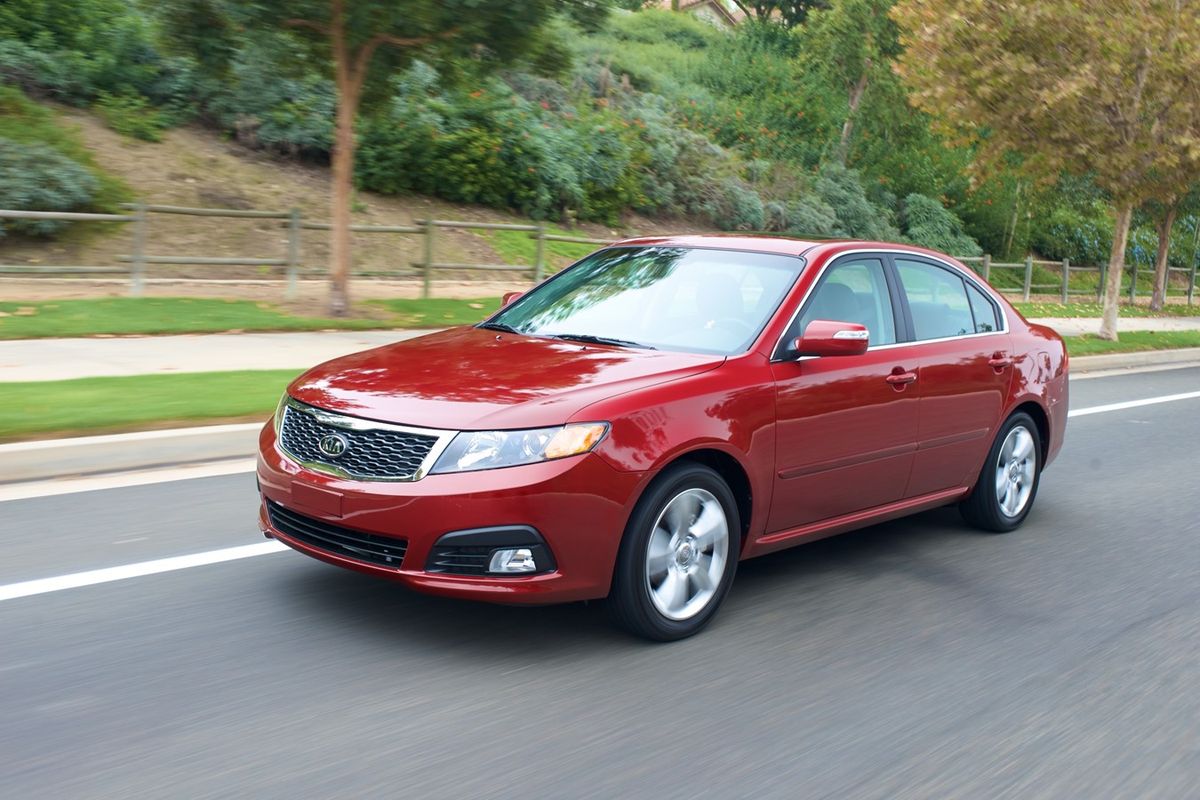
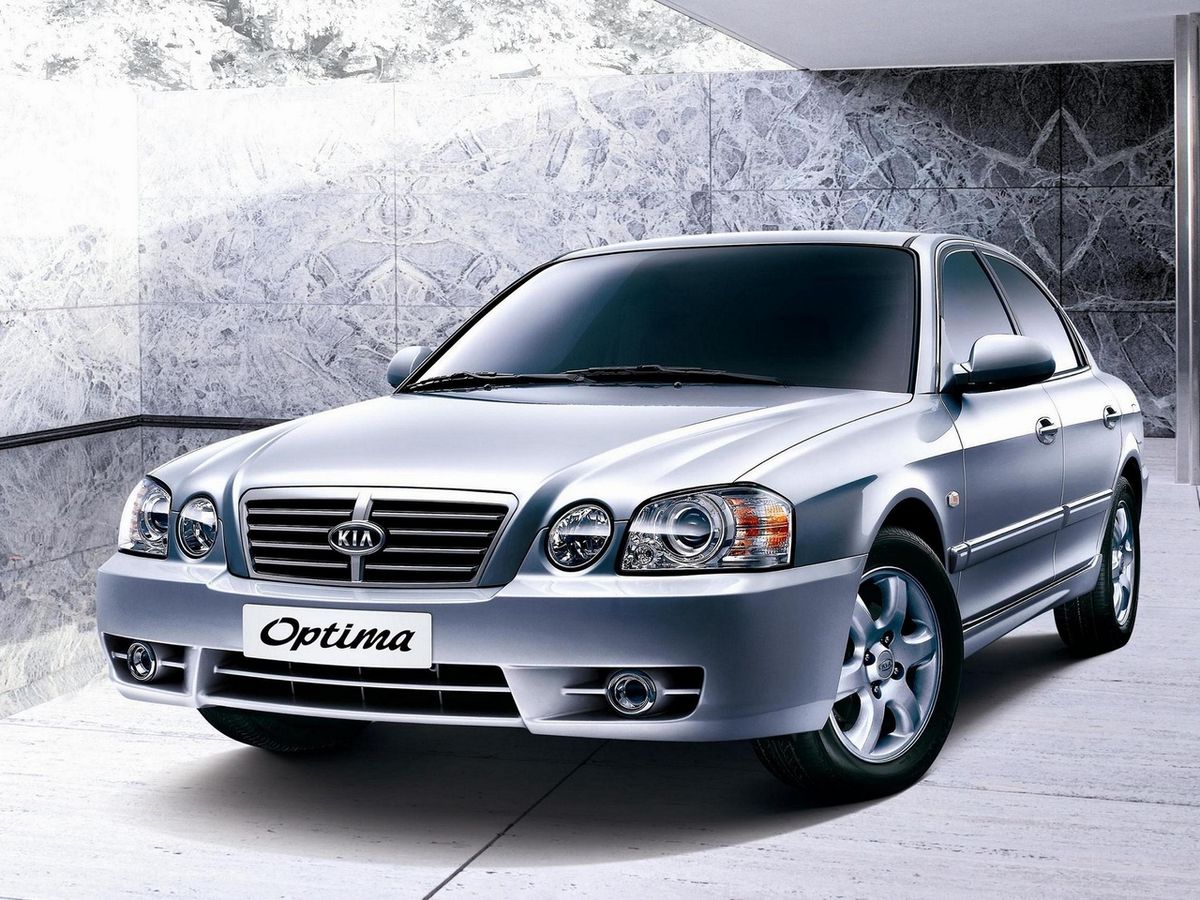
Optima wrap cost depends on the generation, body style, and film type. The first generation's shorter body uses less film, while the fourth-generation wagon's large tailgate and extra glass add labor. Chrome or patterned film increases the film amount by about 10 to 24 ft (3 to 7 m) compared to standard cast film. The number of trim pieces, sensors, and cameras on any given car also affects the installer's time.
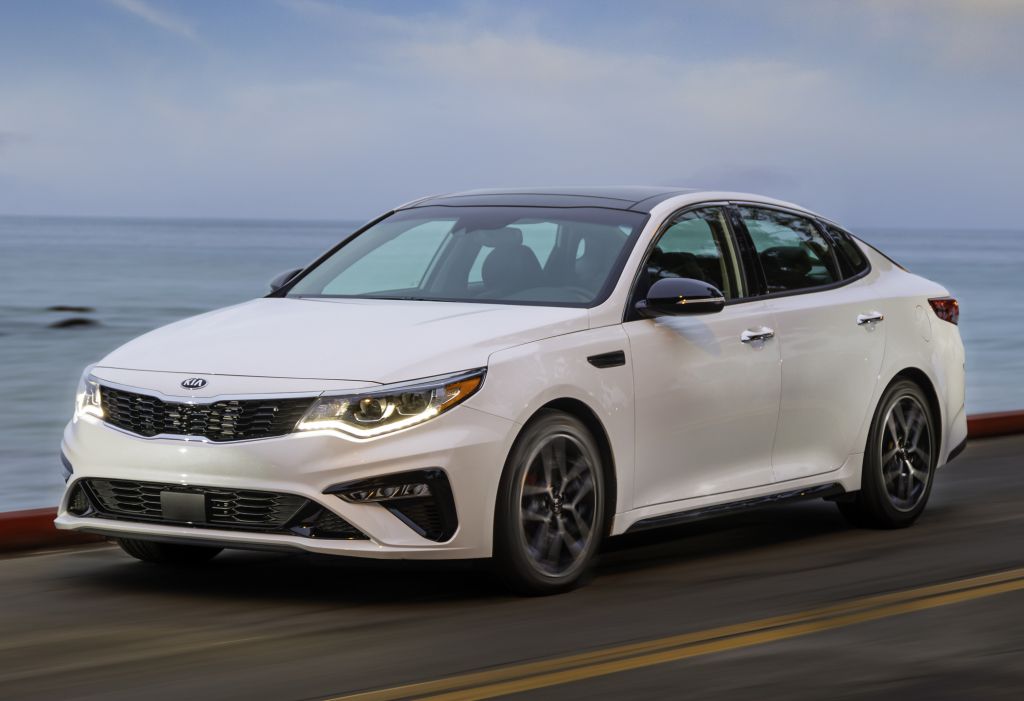
2016–2020 Optima sedan, wagon (fourth generation)
The fourth generation Kia Optima's glass roof is not wrapped, so the roof stays dark whatever the color of the film. Some trims have a panoramic glass roof, and the film ends at the roof rails on those cars. A sunroof on other trims means the roof film must be cut around its opening. This keeps the roof area consistent across colors.
A tailgate with the rear glass in it: the film ends at the edge of the glass.
Some trims have a panoramic glass roof: glass is not wrapped, and the film ends at the roof rails.
Some trims have a sunroof: the roof film is cut around its opening.
Some trims have a styling kit on the bumpers and sills: more separate pieces to wrap.
Some trims have parking sensors in the bumpers: the film is cut around each sensor.
Some trims have cameras in the body: the film is cut around each lens.
Some trims have fog lamps in the front bumper: cut-outs in the bumper film.
Film: about 59 ft (18 m) of 60-inch (1.52 m) cast film; chrome or patterned film: about 76 ft (23 m).