Wraps by car

Kia Rio wrap

The Kia Rio wrap page covers the subcompact Kia Rio in four generations, from the first series of 2000 to the current fourth generation introduced in 2016. A full vinyl wrap of the newest hatchback body takes about 48 ft (14.5 m) of 60-inch (1.52 m) cast film, while the sedan takes about 54 ft (16.5 m). The page explains what changes between generations, which parts need extra work, and how film estimates differ by body style.

4generations16.5 mof film for a full wrap

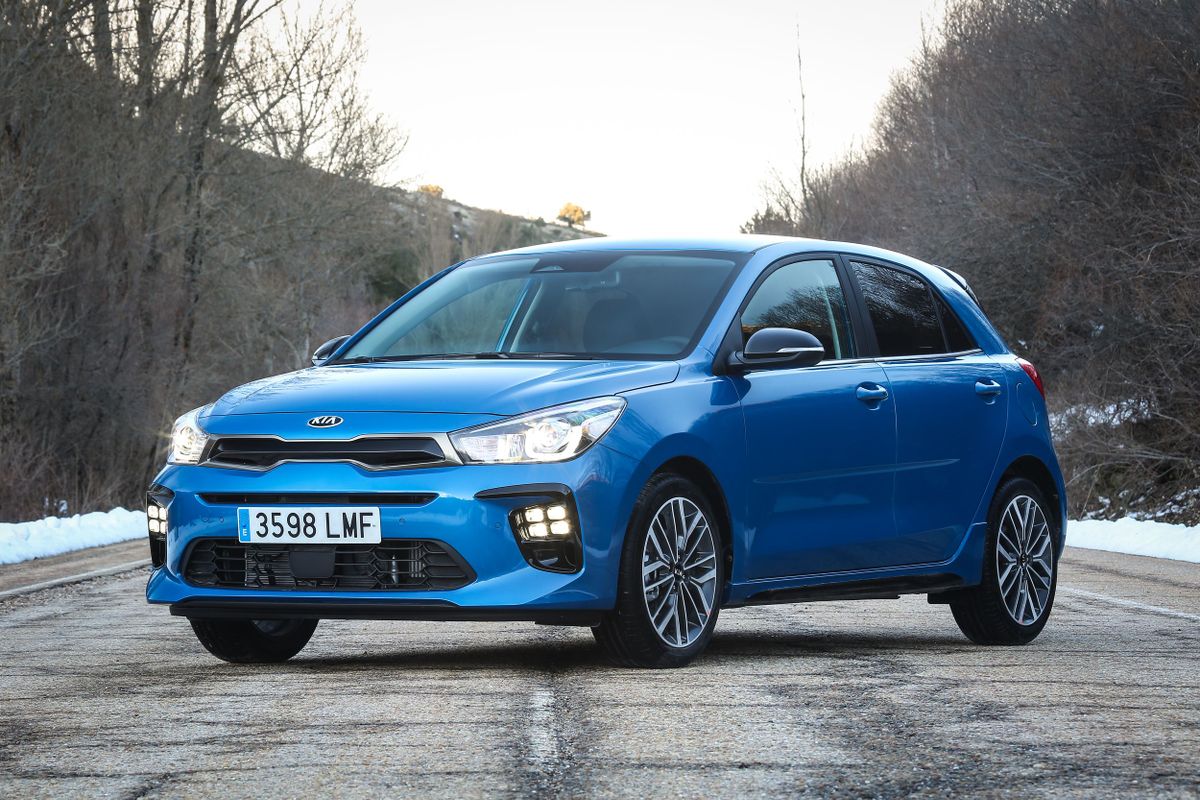
Kia Rio, fourth generation, factory photo
Kia Rio, fourth generation. Factory color shown.

Kia Rio wrap colors and ideas

  • Rio black wrap
  • Rio white wrap
  • Rio gray wrap
  • Rio silver wrap
  • Rio red wrap
  • Rio blue wrap
  • Rio green wrap
  • Rio yellow wrap
  • Rio orange wrap
  • Rio purple wrap
  • Rio pink wrap
  • Rio teal wrap
  • Rio brown wrap
  • Rio gold wrap
  • Rio chrome wrap
  • Rio color shift wrap
  • Rio carbon fiber wrap
  • Rio camo and patterned wrap

How much vinyl to wrap a Kia Rio

Estimates from the body dimensions in the catalog, for a 1.52 m (60 in) roll.

YearsBodyLengthFilm to order
2016–nowhatchback, sedan (4 or 5 doors)160.0 in (4,065 mm) to 174.0 in (4,420 mm)about 48 ft (14.5 m) for the hatchback to 54 ft (16.5 m) for the sedan, 60-inch (1.52 m) cast film; chrome or patterned film: up to about 64 ft (19.5 m)
2011–2017hatchback, sedan (4 or 5 doors)162.2 in (4,120 mm) to 172.0 in (4,370 mm)about 52 ft (16 m) for the hatchback to 54 ft (16.5 m) for the sedan, 60-inch (1.52 m) cast film; chrome or patterned film: up to about 62 ft (19 m)
2005–2012hatchback, sedan (4 or 5 doors)157.1 in (3,990 mm) to 167.3 in (4,250 mm)about 51 ft (15.5 m) for the hatchback to 52 ft (16 m) for the sedan, 60-inch (1.52 m) cast film; chrome or patterned film: up to about 61 ft (18.5 m)
2000–2005sedan, wagon (4 or 5 doors)165.9 in (4,215 mm) to 166.9 in (4,240 mm)about 48 ft (14.5 m) for the sedan to 51 ft (15.5 m) for the wagon, 60-inch (1.52 m) cast film; chrome or patterned film: up to about 66 ft (20 m)

Rio wrap cost factors

The Rio wrap cost is driven by the amount of film, the number of cut-outs, and the condition of the car rather than a fixed price. The newest Rio sedan uses about 54 ft (16.5 m) of film while the hatchback uses about 48 ft (14.5 m), so the sedan costs more in material. Chrome or patterned film on a Rio can require up to about 64 ft (19.5 m), adding to the film estimate and the labor for careful pattern matching. A car with roof rails, parking sensors, or cameras needs extra time to remove parts and cut the film around them, which raises the total cost.
  • Film for a full wrap: about 48 ft (14.5 m) for the hatchback to 54 ft (16.5 m) for the sedan, 60-inch (1.52 m) cast film; chrome or patterned film: up to about 64 ft (19.5 m).
  • Body: hatchback, sedan (4 or 5 doors).
  • A tailgate with the rear glass in it: the film ends at the edge of the glass.
  • Some trims have roof rails: they come off before the roof is wrapped, or the film is cut along them.
  • Some trims have bright decorative moldings: they stay bright next to the film unless a chrome delete covers them.
  • Some trims have parking sensors in the bumpers: the film is cut around each sensor.
  • Some trims have cameras in the body: the film is cut around each lens.
  • Some trims have fog lamps in the front bumper: cut-outs in the bumper film.
  • Restyled in 2020: bumpers and lights differ between the versions, and so do the film cuts.

Rio wraps by generation

Swipe sideways. Tap a card for the full description.

Kia Rio, fourth generation, factory photo
Factory color shown

2016–now Rio hatchback, sedan (fourth generation)

2016–nowhatchback, sedan (4 or 5 doors)160.0 in (4,065 mm) to 174.0 in (4,420 mm)

The fourth generation Kia Rio, coded YB, was produced from 2016 to the present and restyled in 2020. The restyling changed the bumpers and lights, so film cut for one version does not fit the other. When wrapping a fourth generation Rio, check whether it is the pre-facelift or post-facelift shape before ordering a pre-cut kit. This generation offers a hatchback and a sedan, with lengths from 160.0 in (4,065 mm) to 174.0 in (4,420 mm).

A tailgate with the rear glass in it: the film ends at the edge of the glass.

Some trims have roof rails: they come off before the roof is wrapped, or the film is cut along them.

Some trims have bright decorative moldings: they stay bright next to the film unless a chrome delete covers them.

Some trims have parking sensors in the bumpers: the film is cut around each sensor.

Some trims have cameras in the body: the film is cut around each lens.

Some trims have fog lamps in the front bumper: cut-outs in the bumper film.

Film: about 48 ft (14.5 m) for the hatchback to 54 ft (16.5 m) for the sedan, 60-inch (1.52 m) cast film; chrome or patterned film: up to about 64 ft (19.5 m).

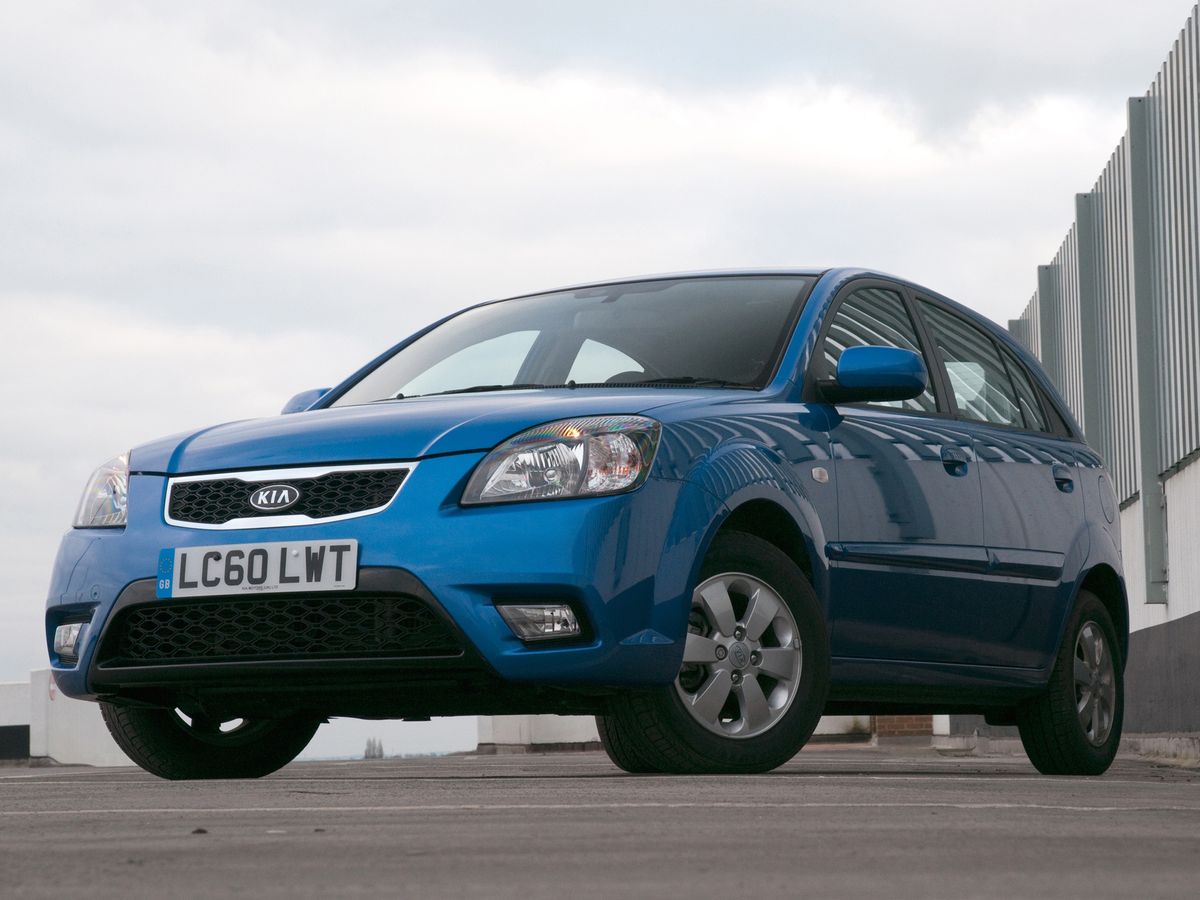
Kia Rio, third generation, factory photo
Factory color shown

2011–2017 Rio hatchback, sedan (third generation)

2011–2017hatchback, sedan (4 or 5 doors)162.2 in (4,120 mm) to 172.0 in (4,370 mm)

The third generation Kia Rio, coded UB, was produced from 2011 to 2017, with a restyling in 2015. Its production years overlap with the fourth generation from 2016 to 2017, so the owner of a car from those years must check which body it is. The third generation has a tailgate with the rear glass in it, and some trims have a sunroof that requires the roof film to be cut around its opening. Hatchback and sedan styles were offered, with lengths from 162.2 in (4,120 mm) to 172.0 in (4,370 mm).

A tailgate with the rear glass in it: the film ends at the edge of the glass.

Some trims have a sunroof: the roof film is cut around its opening.

Some trims have parking sensors in the bumpers: the film is cut around each sensor.

Some trims have fog lamps in the front bumper: cut-outs in the bumper film.

Film: about 52 ft (16 m) for the hatchback to 54 ft (16.5 m) for the sedan, 60-inch (1.52 m) cast film; chrome or patterned film: up to about 62 ft (19 m).

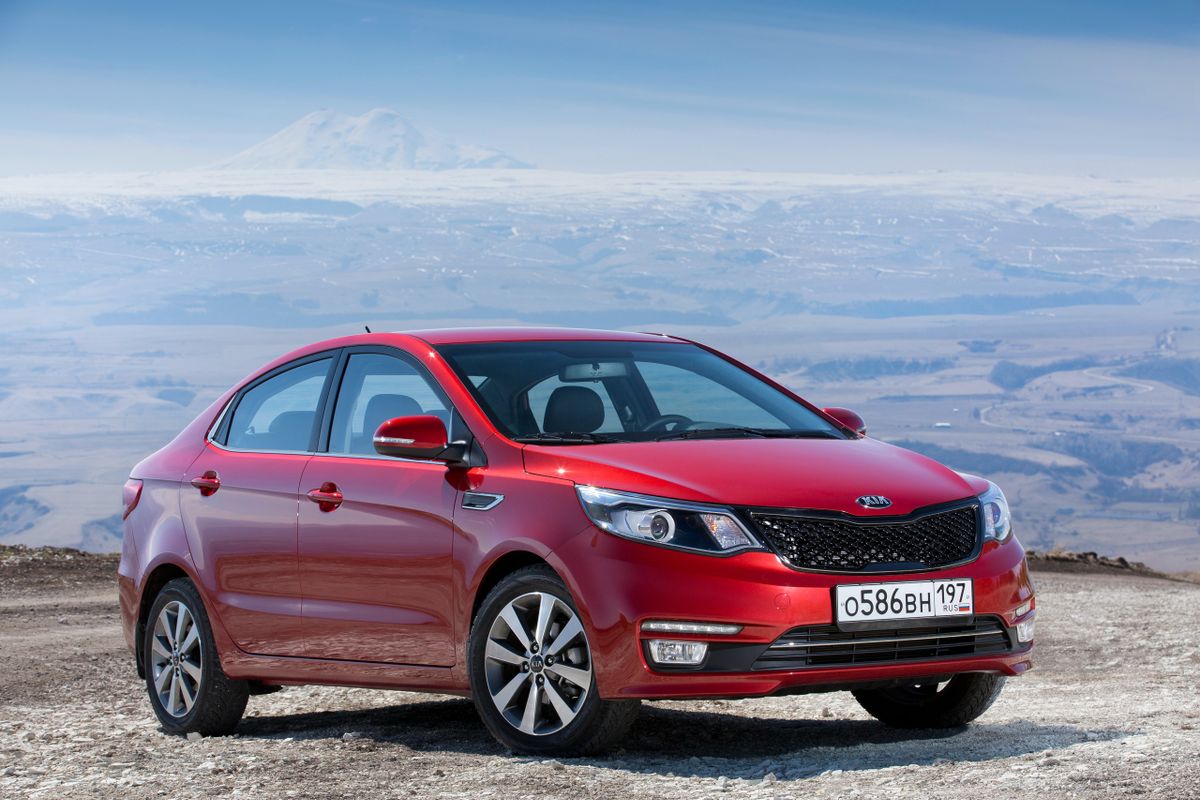
Kia Rio, second generation, factory photo
Factory color shown

2005–2012 Rio hatchback, sedan (second generation)

2005–2012hatchback, sedan (4 or 5 doors)157.1 in (3,990 mm) to 167.3 in (4,250 mm)

The second generation Kia Rio, coded JB, was produced from 2005 to 2012 and restyled in 2009. The body styles are a hatchback and a sedan, and the style decides the panel plan and the film amount. A hatchback takes about 51 ft (15.5 m) of film, while a sedan takes about 52 ft (16 m), so the difference is small. This generation has fog lamps on some trims, which need cut-outs in the front bumper film.

A tailgate with the rear glass in it: the film ends at the edge of the glass.

Some trims have fog lamps in the front bumper: cut-outs in the bumper film.

Film: about 51 ft (15.5 m) for the hatchback to 52 ft (16 m) for the sedan, 60-inch (1.52 m) cast film; chrome or patterned film: up to about 61 ft (18.5 m).

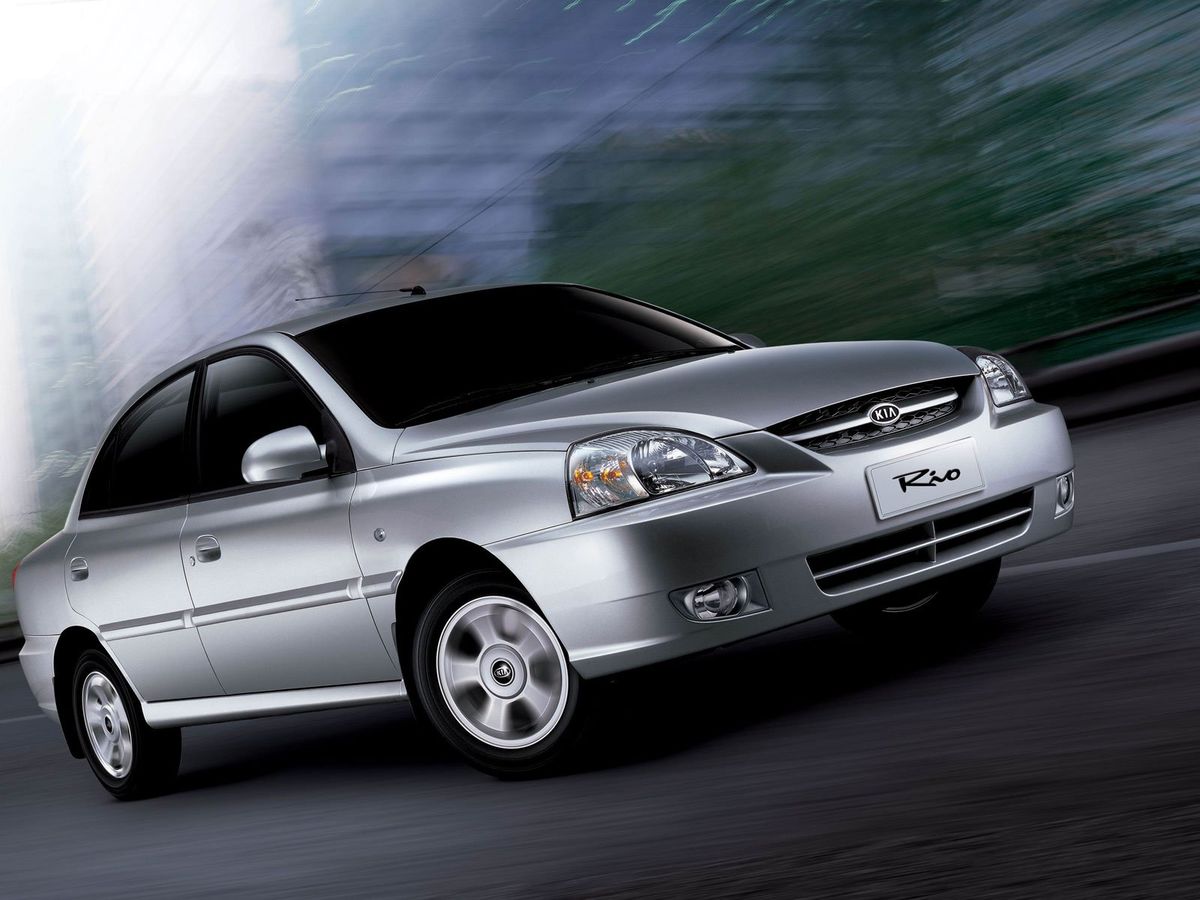
Kia Rio, first generation, factory photo
Factory color shown

2000–2005 Rio sedan, wagon (first generation)

2000–2005sedan, wagon (4 or 5 doors)165.9 in (4,215 mm) to 166.9 in (4,240 mm)

The first generation Kia Rio, coded DC, was produced from 2000 to 2005 and restyled in 2002. Paint age is a key factor on a car of these years, because panels may be original or repainted, and a test spot comes before a full wrap. The body styles are a sedan and a wagon, with lengths from 165.9 in (4,215 mm) to 166.9 in (4,240 mm). This generation has a tailgate with the rear glass in it, so the film ends at the edge of the glass.

A tailgate with the rear glass in it: the film ends at the edge of the glass.

Film: about 48 ft (14.5 m) for the sedan to 51 ft (15.5 m) for the wagon, 60-inch (1.52 m) cast film; chrome or patterned film: up to about 66 ft (20 m).

Roof, hood, chrome delete and PPF on a Rio

A partial wrap on a Kia Rio can cover the roof, hood, or mirror caps as a smaller job than a full wrap. A Rio chrome delete covers window trim, decorative moldings, and badges with black film, which changes the look without wrapping large panels. Paint protection film (PPF) is an option for the front end, and it is a clear film that protects the bumper, hood, and fenders from stone chips. These smaller jobs are good ways to change the appearance of a Rio without using as much film as a full wrap.

  • Partial wrap: roof, hood, mirror caps.
  • Chrome delete: window trim, decorative moldings and badges.
  • Paint protection film: clear film on the front end, also over a wrap.

Wrapping a Kia Rio: body, cut-outs and film

The body styles and sizes of the Kia Rio vinyl wrap directly affect the amount of film and the number of panels. The current fourth generation comes as a hatchback or sedan with four or five doors, measuring 160.0 in (4,065 mm) to 174.0 in (4,420 mm) in length. On a subcompact car, most panels are small enough for a single installer to handle, but the roof and hood still benefit from two people to avoid wrinkles. A hatchback has a larger rear hatch with glass, which means the film ends at the edge of the glass rather than wrapping a separate trunk lid.

Some Rio wrap ideas require cut-outs or removal of parts on certain trims of the Rio. A tailgate with the rear glass in it means the film stops at the glass edge without overlapping it. On some trims, roof rails must be removed before the roof is wrapped, or the film is cut along them. Bright decorative moldings stay bright next to the film unless a chrome delete covers them, and parking sensors, cameras, and fog lamps all need precise cut-outs in the film.

How much vinyl to wrap a Rio depends on the generation and body style, and the numbers are useful when you are counting film. The first generation sedan takes about 48 ft (14.5 m) and the wagon about 51 ft (15.5 m), while the fourth generation hatchback takes about 48 ft (14.5 m) and the sedan about 54 ft (16.5 m). The third generation is closer to the fourth, with about 52 ft (16 m) for the hatchback and 54 ft (16.5 m) for the sedan. Comparing these figures shows that the hatchback and sedan are never more than 6 ft (2 m) apart, so the body style does not create a huge jump in film use.

Questions about wrapping a Kia Rio

How much vinyl does it take to wrap a Kia Rio?

It takes about 48 ft (14.5 m) of 60-inch (1.52 m) cast film to wrap the hatchback of the newest Kia Rio, and about 54 ft (16.5 m) for the sedan. These figures assume a standard color change wrap with no chrome or patterned film. If you use chrome or patterned film, the estimate can go up to about 64 ft (19.5 m).

Which years of the Rio take the same film cuts?

The years that take the same film cuts are 2016 to 2019 and 2020 to the present for the fourth generation, 2011 to 2014 and 2015 to 2017 for the third generation, 2005 to 2008 and 2009 to 2012 for the second generation, and 2000 to 2001 and 2002 to 2005 for the first generation. Each generation was restyled in the middle of its production run, changing the bumpers and lights so pre- and post-restyling cars need different cuts. The fourth and third generations overlap from 2016 to 2017, so you must check the body code to know which cuts fit.

Which Rio body takes more film?

The sedan takes more film than the hatchback in every generation of the Kia Rio. For the fourth generation, the sedan takes about 54 ft (16.5 m) compared to 48 ft (14.5 m) for the hatchback. The first generation wagon is the only style that takes more film than the sedan of that generation, at about 51 ft (15.5 m) versus 48 ft (14.5 m).

Can I wrap only the hood or the roof of a Rio?

Yes, you can wrap only the hood or the roof of a Rio as a partial wrap. Partial wraps on a Rio often include the roof, hood, or mirror caps instead of the whole car. A Rio chrome delete is another non-full option that covers window trim, decorative moldings, and badges with black film. Paint protection film (PPF) is a clear film that can be applied just to the front end of a Rio.