Wraps by car

Toyota Camry wrap

This page is the Toyota Camry wrap guide for the mid-size sedan sold through nine generations. The catalog covers every generation from the fifth through the current ninth, with the newest body taking about 61 ft (18.5 m) of 60-inch (1.52 m) cast film for a full vinyl wrap. A color change wrap on the ninth-generation Camry uses roughly the same amount as a standard cast film.

9generations18.5 mof film for a full wrap

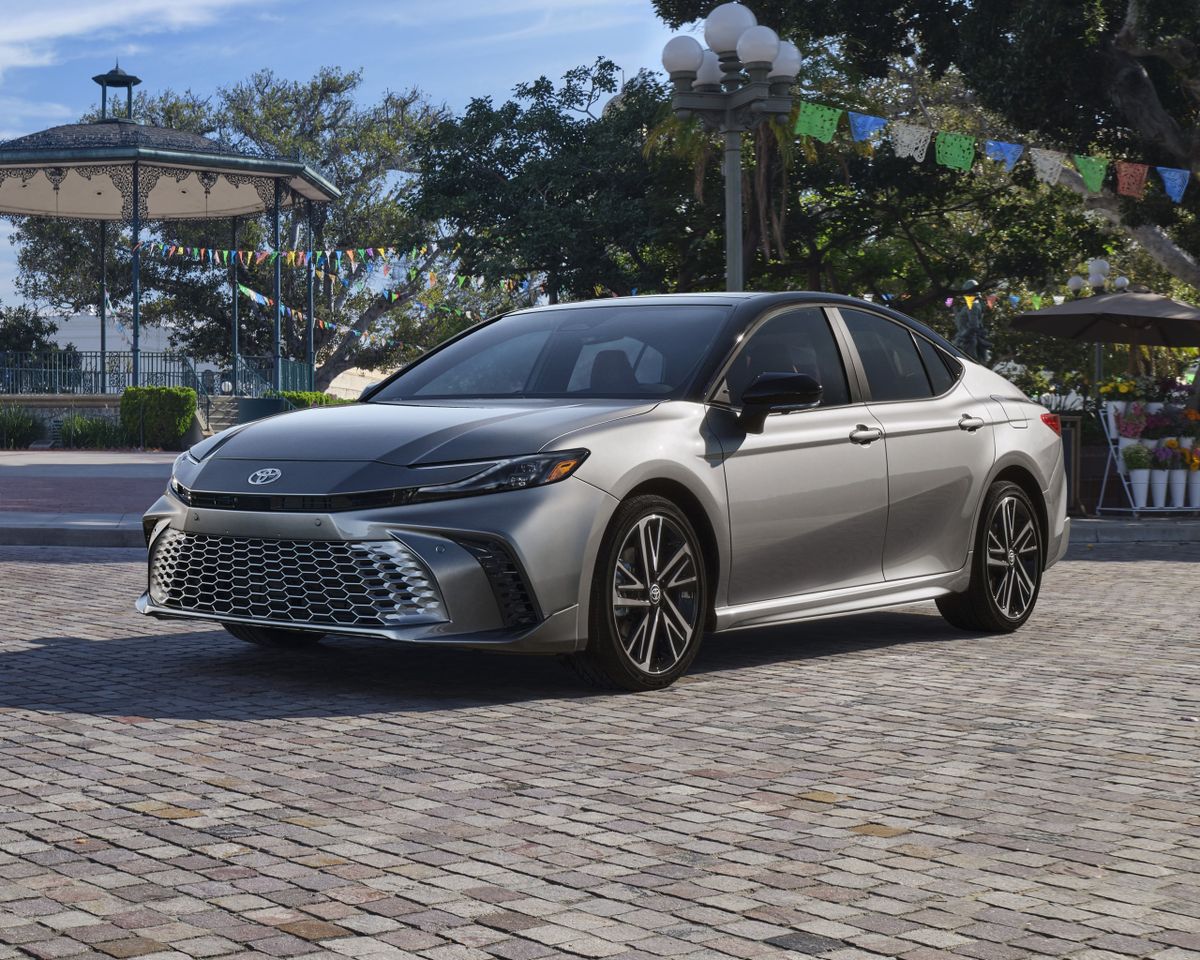
Toyota Camry, ninth generation, factory photo
Toyota Camry, ninth generation. Factory color shown.

Toyota Camry wrap colors and ideas

  • Camry black wrap
  • Camry white wrap
  • Camry gray wrap
  • Camry silver wrap
  • Camry red wrap
  • Camry blue wrap
  • Camry green wrap
  • Camry yellow wrap
  • Camry orange wrap
  • Camry purple wrap
  • Camry pink wrap
  • Camry teal wrap
  • Camry brown wrap
  • Camry gold wrap
  • Camry chrome wrap
  • Camry color shift wrap
  • Camry carbon fiber wrap
  • Camry camo and patterned wrap

How much vinyl to wrap a Toyota Camry

Estimates from the body dimensions in the catalog, for a 1.52 m (60 in) roll.

YearsBodyLengthFilm to order
2023–nowsedan (4 doors)193.7 in (4,920 mm)about 61 ft (18.5 m) of 60-inch (1.52 m) cast film; chrome or patterned film: about 69 ft (21 m)
2017–2024sedan (4 doors)192.3 in (4,885 mm)about 59 ft (18 m) of 60-inch (1.52 m) cast film; chrome or patterned film: about 69 ft (21 m)
2006–2018sedan (4 doors)189.2 in (4,806 mm) to 192.1 in (4,879 mm)about 59 ft (18 m) of 60-inch (1.52 m) cast film; chrome or patterned film: about 69 ft (21 m)
2001–2006sedan (4 doors)189.6 in (4,815 mm)about 59 ft (18 m) of 60-inch (1.52 m) cast film; chrome or patterned film: about 69 ft (21 m)
1996–2002sedan (4 doors)189.6 in (4,815 mm)about 59 ft (18 m) of 60-inch (1.52 m) cast film; chrome or patterned film: about 69 ft (21 m)
1991–1996sedan, wagon (4 or 5 doors)187.4 in (4,760 mm)about 52 ft (16 m) for the sedan to 57 ft (17.5 m) for the wagon, 60-inch (1.52 m) cast film; chrome or patterned film: up to about 74 ft (22.5 m)
1990–1994sedan, wagon (4 or 5 doors)183.9 in (4,670 mm) to 188.8 in (4,795 mm)about 57 ft (17.5 m) for the sedan to 62 ft (19 m) for the wagon, 60-inch (1.52 m) cast film; chrome or patterned film: up to about 74 ft (22.5 m)
1986–1990sedan, wagon (4 or 5 doors)177.2 in (4,500 mm) to 178.0 in (4,520 mm)about 51 ft (15.5 m) for the sedan to 54 ft (16.5 m) for the wagon, 60-inch (1.52 m) cast film; chrome or patterned film: up to about 69 ft (21 m)
1982–1986liftback, sedan (4 or 5 doors)173.2 in (4,400 mm) to 174.8 in (4,440 mm)about 49 ft (15 m) for the sedan to 51 ft (15.5 m) for the liftback, 60-inch (1.52 m) cast film; chrome or patterned film: up to about 62 ft (19 m)

Camry wrap cost factors

Camry wrap cost depends mainly on the film you choose and the size of the car, which is about 193.7 in (4,920 mm) long for the current generation. A full wrap on this sedan takes about 61 ft (18.5 m) of cast film, and a chrome or patterned film raises the amount to about 69 ft (21 m). The number of cut-outs for sensors, cameras, or fog lamps on some trims also changes the labor, so a car with more of these features costs more to wrap.
  • Film for a full wrap: about 61 ft (18.5 m) of 60-inch (1.52 m) cast film; chrome or patterned film: about 69 ft (21 m).
  • Body: sedan (4 doors).

Camry wraps by generation

Swipe sideways. Tap a card for the full description.

Toyota Camry, ninth generation, factory photo
Factory color shown

2023–now Camry sedan (ninth generation)

2023–nowsedan (4 doors)193.7 in (4,920 mm)

The ninth-generation Toyota Camry is a four-door sedan that measures 193.7 in (4,920 mm) from bumper to bumper. This size means a full vinyl wrap needs about 61 ft (18.5 m) of 60-inch cast film, while a chrome or patterned film calls for about 69 ft (21 m) to match the design. The body has four doors, a hood, a trunk, and two bumpers, so the installer works across the usual number of panels for a mid-size sedan.

Film: about 61 ft (18.5 m) of 60-inch (1.52 m) cast film; chrome or patterned film: about 69 ft (21 m).

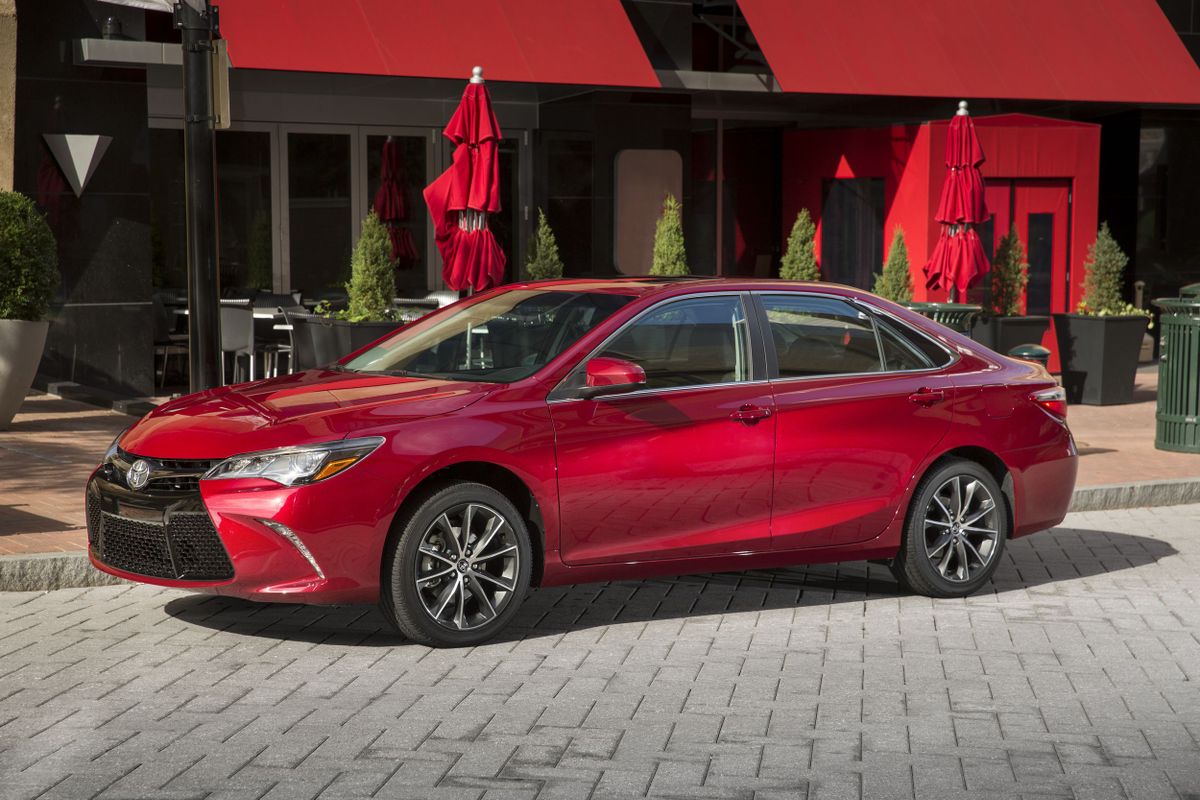
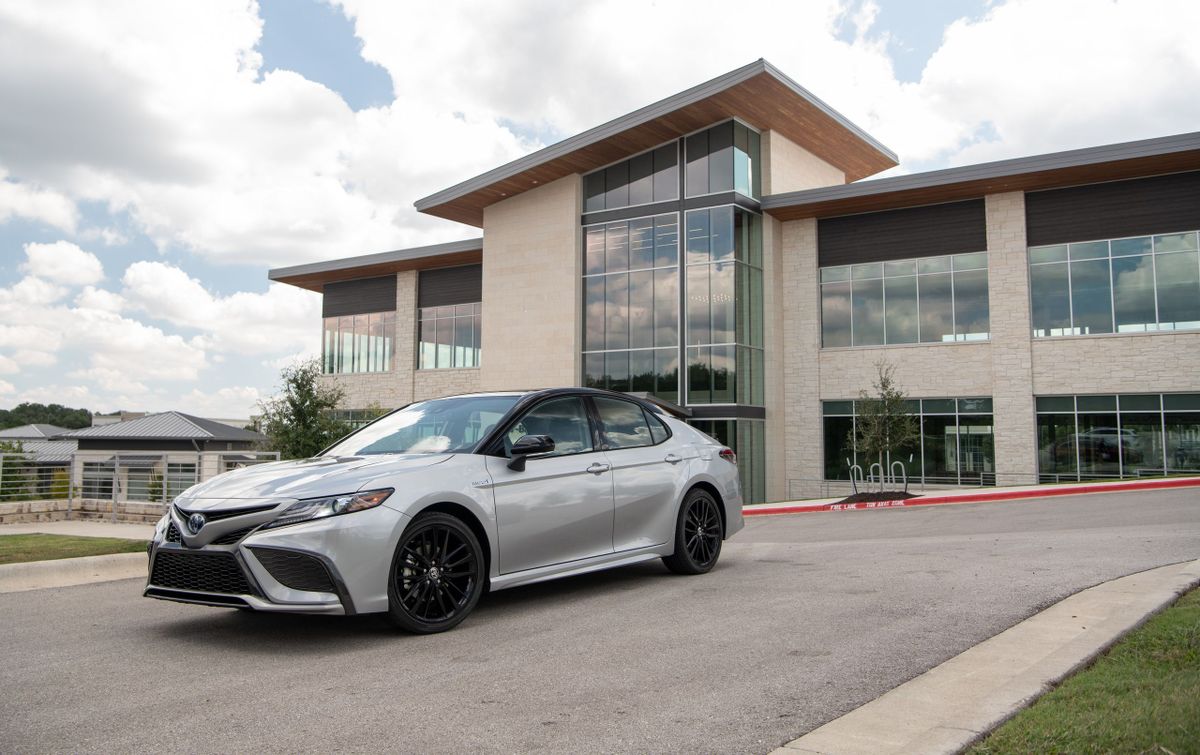
Toyota Camry, eighth generation, factory photo
Factory color shown

2017–2024 Camry sedan (eighth generation)

2017–2024sedan (4 doors)192.3 in (4,885 mm)

The eighth-generation Toyota Camry was produced from 2017 to 2024 and is also a four-door sedan with the codes XV55 and a restyling in 2020. This body overlaps with the ninth generation in 2023 and 2024, so an owner of a Camry from those years must check the body style before ordering film. The eighth generation is slightly shorter at 192.3 in (4,885 mm) and uses about 59 ft (18 m) of 60-inch cast film for a full wrap.

Some trims have parking sensors in the bumpers: the film is cut around each sensor.

Some trims have cameras in the body: the film is cut around each lens.

Some trims have fog lamps in the front bumper: cut-outs in the bumper film.

Film: about 59 ft (18 m) of 60-inch (1.52 m) cast film; chrome or patterned film: about 69 ft (21 m).
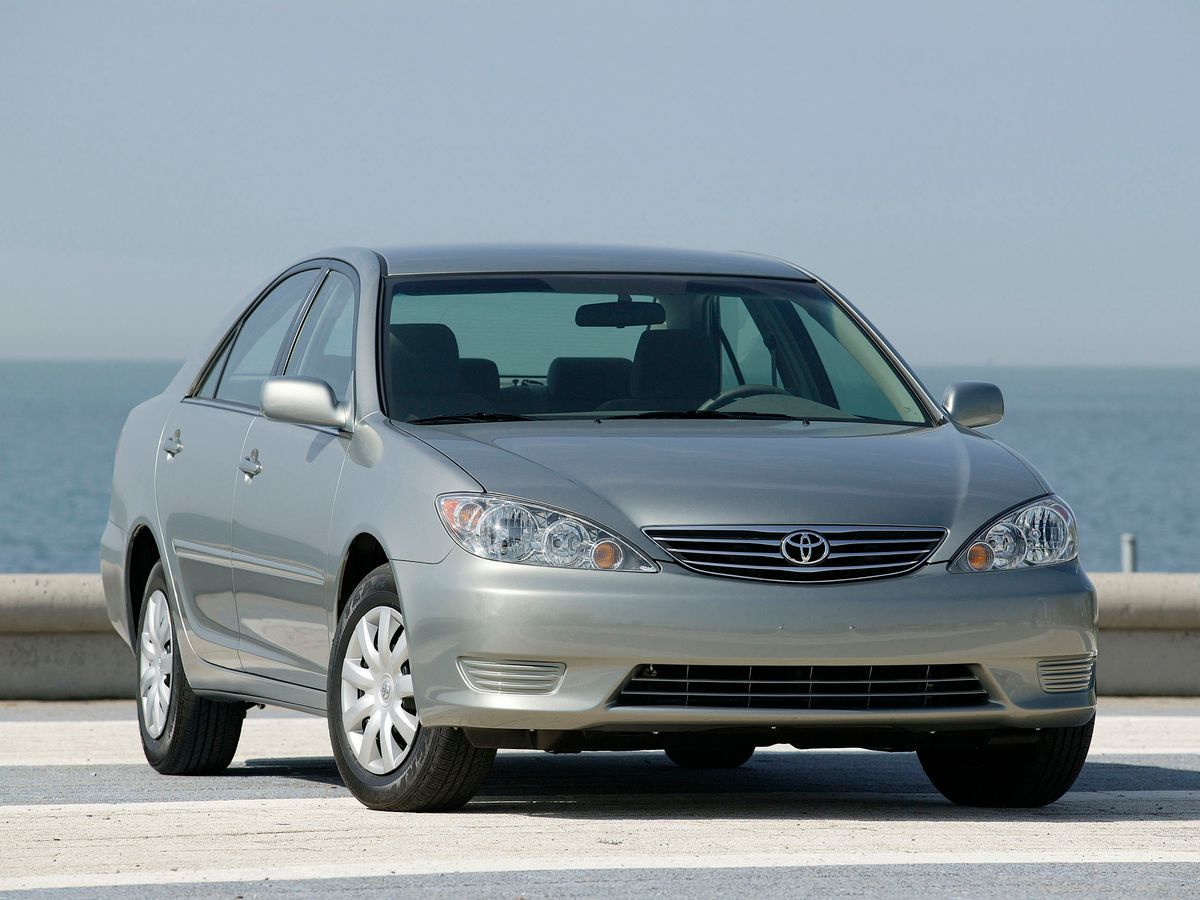
Toyota Camry, seventh generation, factory photo
Factory color shown

2006–2018 Camry sedan (seventh generation)

2006–2018sedan (4 doors)189.2 in (4,806 mm) to 192.1 in (4,879 mm)

The seventh-generation Toyota Camry was built from 2006 to 2018 and includes two distinct versions, the XV40 and XV50, with restylings in 2009 and 2011. The bumpers and lights changed at each restyling, so pre-cut film made for one version does not fit the other version. A full wrap on this sedan uses about 59 ft (18 m) of 60-inch cast film, with the length ranging from 189.2 in (4,806 mm) to 192.1 in (4,879 mm) depending on the version.

Some trims have a sunroof: the roof film is cut around its opening.

Some trims have a styling kit on the bumpers and sills: more separate pieces to wrap.

Some trims have parking sensors in the bumpers: the film is cut around each sensor.

Some trims have cameras in the body: the film is cut around each lens.

Some trims have fog lamps in the front bumper: cut-outs in the bumper film.

Film: about 59 ft (18 m) of 60-inch (1.52 m) cast film; chrome or patterned film: about 69 ft (21 m).
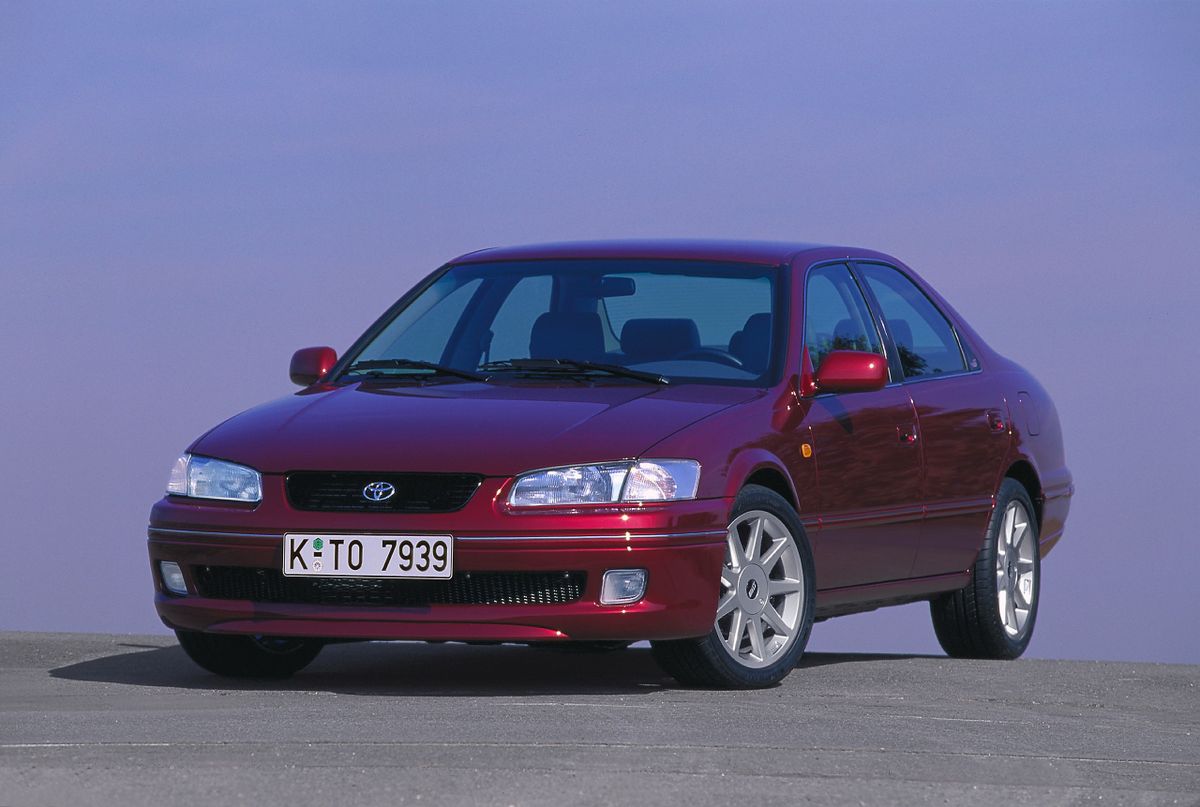
Toyota Camry, sixth generation, factory photo
Factory color shown

2001–2006 Camry sedan (sixth generation)

2001–2006sedan (4 doors)189.6 in (4,815 mm)

The sixth-generation Toyota Camry from 2001 to 2006 is a four-door sedan with the XV30 code and a restyling in 2004. On a car of these years the paint may be original or repainted, so a test spot of the vinyl adhesive on the panel is wise before a full wrap. The body is 189.6 in (4,815 mm) long and takes about 59 ft (18 m) of 60-inch cast film, while some trims have fog lamps that need cut-outs in the bumper film.

Some trims have fog lamps in the front bumper: cut-outs in the bumper film.

Film: about 59 ft (18 m) of 60-inch (1.52 m) cast film; chrome or patterned film: about 69 ft (21 m).
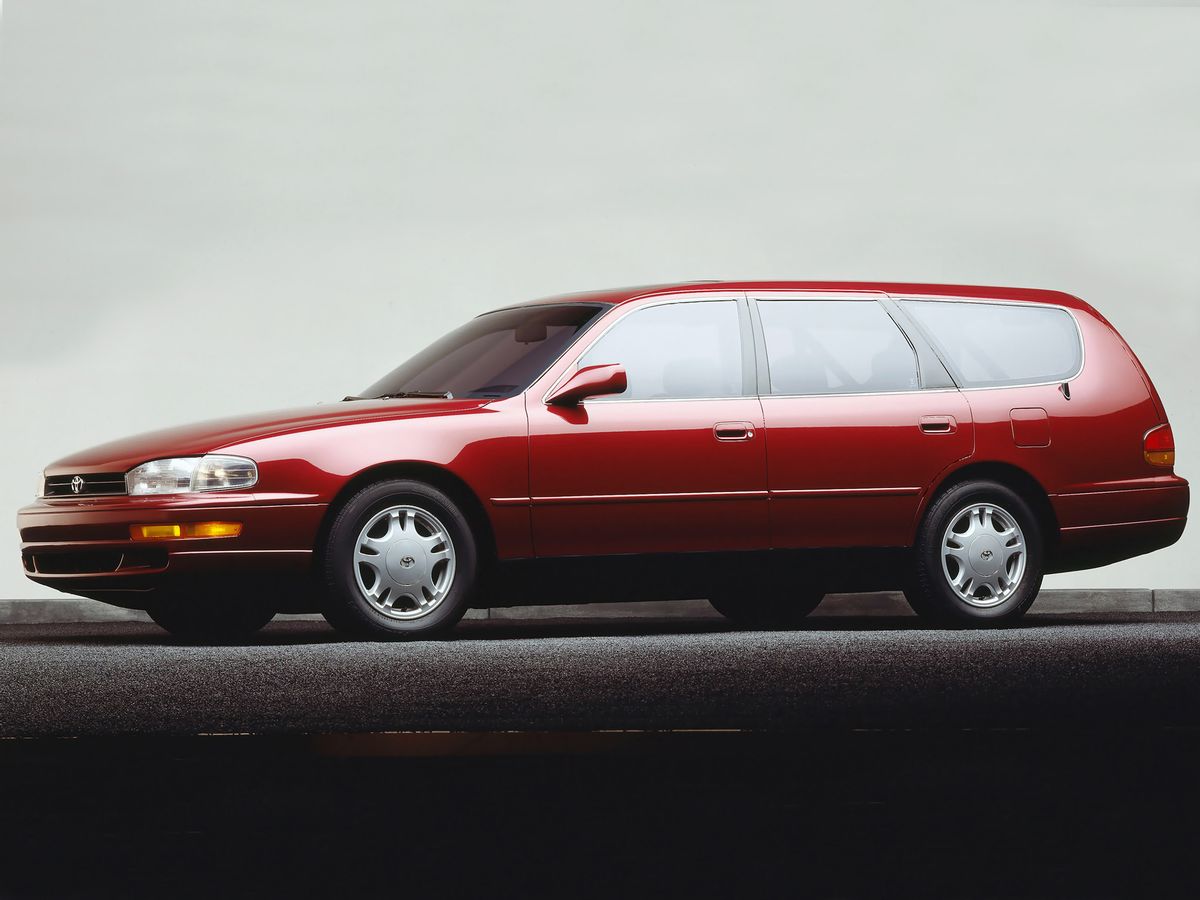
Toyota Camry, fifth generation, factory photo
Factory color shown

1996–2002 Camry sedan (fifth generation)

1996–2002sedan (4 doors)189.6 in (4,815 mm)

The fifth-generation Toyota Camry from 1996 to 2002 is a four-door sedan with the XV20 code and a length of 189.6 in (4,815 mm). A full vinyl wrap on this body uses about 59 ft (18 m) of 60-inch cast film, or about 69 ft (21 m) if you choose a chrome or patterned film. The panel count is the same as other Camry sedans, with the hood, roof, trunk, four doors, and two bumpers.

Film: about 59 ft (18 m) of 60-inch (1.52 m) cast film; chrome or patterned film: about 69 ft (21 m).
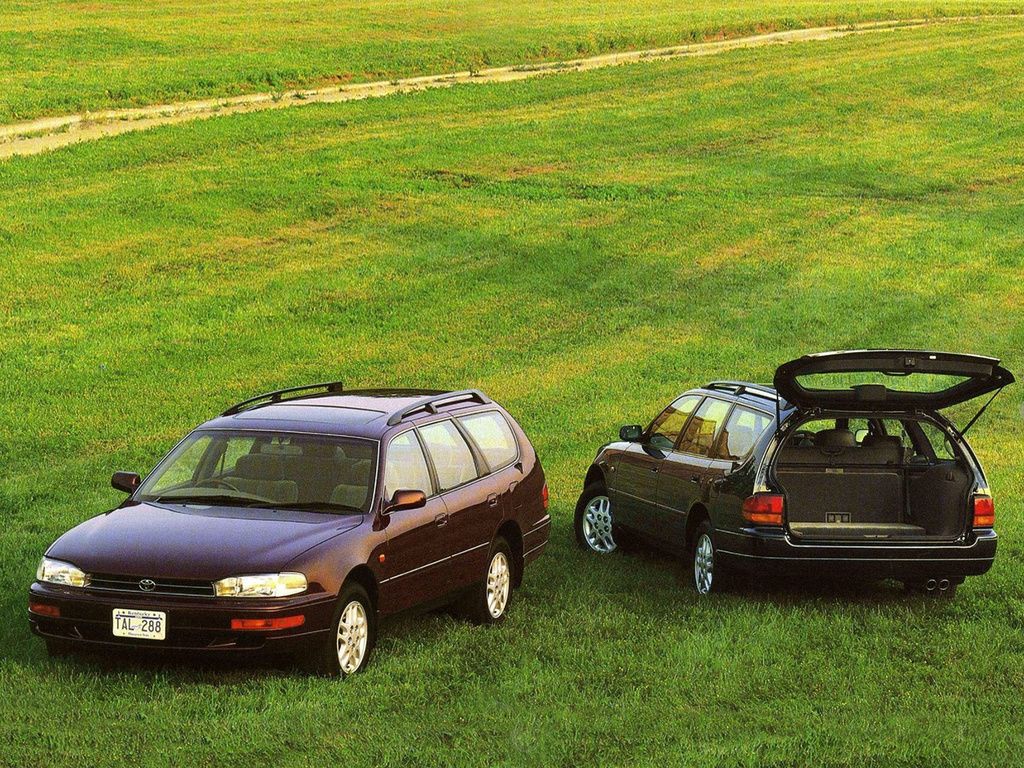
Toyota Camry, fourth generation, factory photo
Factory color shown

1991–1996 Camry sedan, wagon (fourth generation)

1991–1996sedan, wagon (4 or 5 doors)187.4 in (4,760 mm)

A tailgate with the rear glass in it: the film ends at the edge of the glass.

Film: about 52 ft (16 m) for the sedan to 57 ft (17.5 m) for the wagon, 60-inch (1.52 m) cast film; chrome or patterned film: up to about 74 ft (22.5 m).

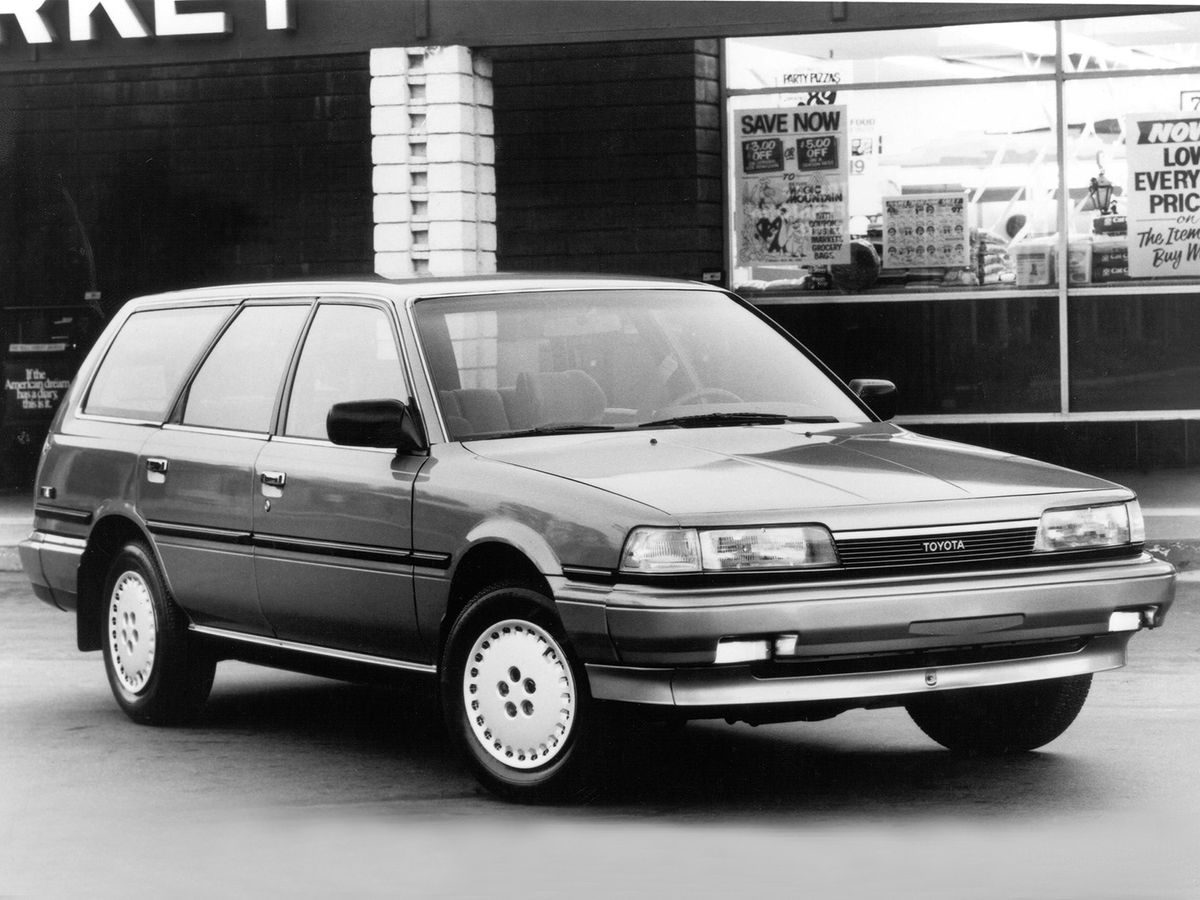
Toyota Camry, third generation, factory photo
Factory color shown

1990–1994 Camry sedan, wagon (third generation)

1990–1994sedan, wagon (4 or 5 doors)183.9 in (4,670 mm) to 188.8 in (4,795 mm)

A tailgate with the rear glass in it: the film ends at the edge of the glass.

Film: about 57 ft (17.5 m) for the sedan to 62 ft (19 m) for the wagon, 60-inch (1.52 m) cast film; chrome or patterned film: up to about 74 ft (22.5 m).

Toyota Camry, second generation, factory photo
Factory color shown

1986–1990 Camry sedan, wagon (second generation)

1986–1990sedan, wagon (4 or 5 doors)177.2 in (4,500 mm) to 178.0 in (4,520 mm)

A tailgate with the rear glass in it: the film ends at the edge of the glass.

Film: about 51 ft (15.5 m) for the sedan to 54 ft (16.5 m) for the wagon, 60-inch (1.52 m) cast film; chrome or patterned film: up to about 69 ft (21 m).

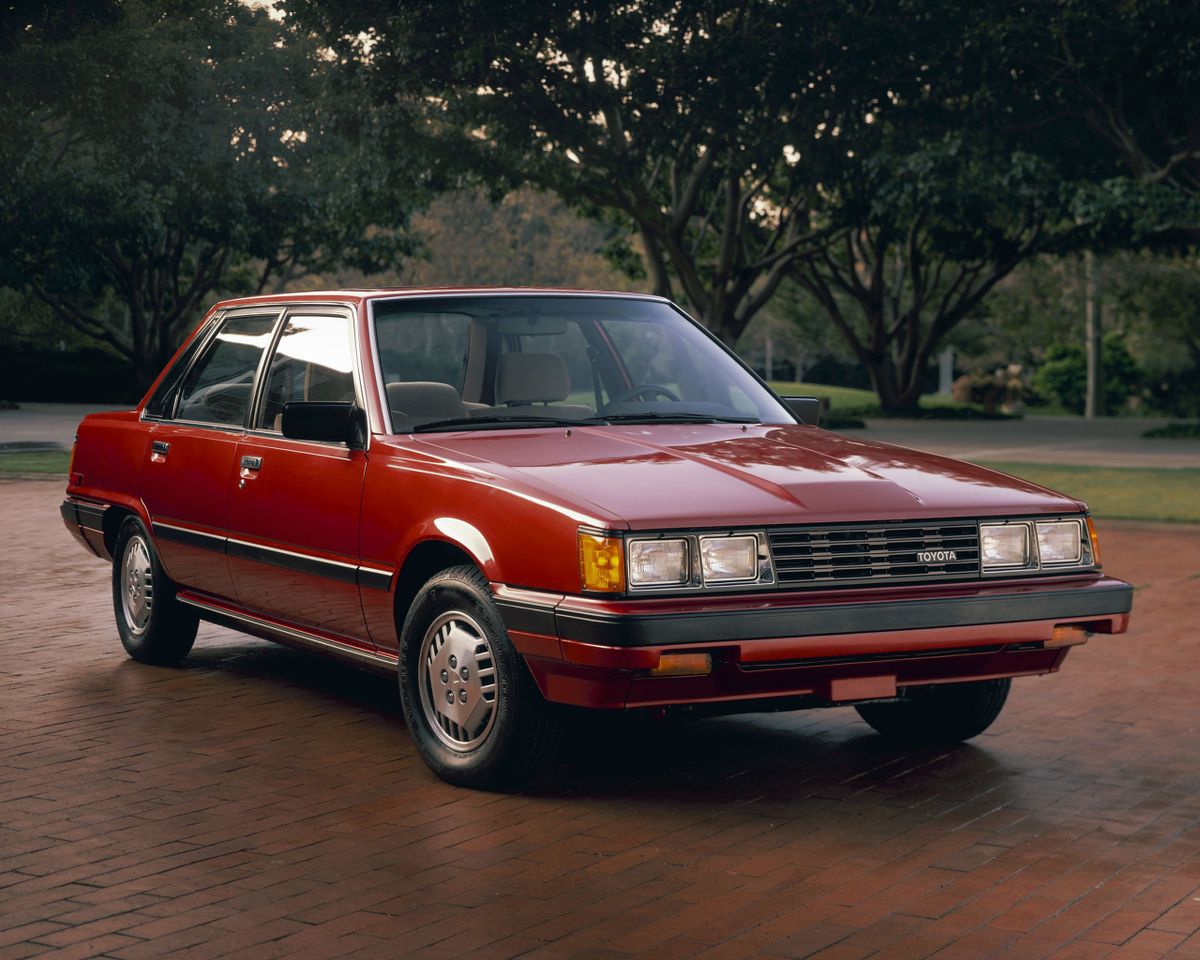
Toyota Camry, first generation, factory photo
Factory color shown

1982–1986 Camry liftback, sedan (first generation)

1982–1986liftback, sedan (4 or 5 doors)173.2 in (4,400 mm) to 174.8 in (4,440 mm)

A tailgate with the rear glass in it: the film ends at the edge of the glass.

Film: about 49 ft (15 m) for the sedan to 51 ft (15.5 m) for the liftback, 60-inch (1.52 m) cast film; chrome or patterned film: up to about 62 ft (19 m).

Roof, hood, chrome delete and PPF on a Camry

A partial wrap on a Camry can cover the roof, hood, or mirror caps, which uses less film than a full wrap and allows a two-tone look. Chrome delete is another option, where the window trim and badges are covered with black film to change the bright finish. Paint protection film on the front end is a clear film that guards the hood, bumper, and fenders from stone chips without changing the car's color.

  • Partial wrap: roof, hood, mirror caps.
  • Chrome delete: window trim and badges.
  • Paint protection film: clear film on the front end, also over a wrap.

Wrapping a Toyota Camry: body, cut-outs and film

A Toyota Camry vinyl wrap on the current sedan body is a large job because the car is 193.7 in (4,920 mm) long and has four doors plus a trunk. The long roof and tall doors mean you will use more film than on a smaller sedan, but the smooth panels are straightforward to cover. A standard color change wrap uses about 61 ft (18.5 m) of 60-inch film, while a chrome or patterned film needs about 69 ft (21 m) because the pattern must be matched.

When planning Camry wrap ideas on the eighth generation, the front and rear bumpers on some trims have parking sensors that need the film cut around each sensor. Some cars also have cameras in the body, so the installer cuts the film around each lens to keep the view clear. Fog lamps on certain trims require cut-outs in the bumper film, and any of these details add time to the wrap.

If you need to know how much vinyl to wrap a Camry, the amount has stayed close to 59 ft (18 m) on 60-inch film from the fifth generation through the eighth. The ninth generation is slightly longer at 193.7 in (4,920 mm), so its film estimate is about 61 ft (18.5 m). Length changed between the seventh-generation versions, which ranged from 189.2 in (4,806 mm) to 192.1 in (4,879 mm), but the surface area stays in the same film range.

Questions about wrapping a Toyota Camry

How much vinyl does it take to wrap a Toyota Camry?

It takes about 61 ft (18.5 m) of 60-inch (1.52 m) cast film to wrap a Toyota Camry from the current ninth generation. A chrome or patterned film requires about 69 ft (21 m) because the installer must match the pattern across the panels.

Can I wrap only the hood or the roof of a Camry?

Yes, you can wrap only the hood or the roof of a Camry as a partial wrap, which also includes mirror caps as an option. This job uses less film than a full wrap and is a way to change the look of one or two large panels.

Is a Camry hard to wrap?

A Camry is not hard to wrap, but a few features on some trims add work such as cutting the film around parking sensors, cameras, and fog lamps. The car is a mid-size sedan at about 193.7 in (4,920 mm) long, which means a full wrap takes about 61 ft (18.5 m) of film and more time than a smaller car.

How many generations of the Camry does this page cover?

This page covers nine generations of the Toyota Camry, from the fifth generation built from 1996 to 2002 through the ninth generation that started in 2023. The guide includes details on the film amounts and body changes for each generation.