Wraps by car

Mitsubishi Space Wagon wrap

This page covers a Mitsubishi Space Wagon wrap, from film estimates to the sliding door work. The Space Wagon is a minivan with three generations in this catalog, from 1983 to 2004. A full wrap of the newest body, the 1997–2004 third generation, takes about 66 ft (20 m) of 60-inch (1.52 m) cast film. A chrome or patterned film layout on that body needs about 79 ft (24 m), because the pattern has to match panel to panel.

3generations20 mof film for a full wrap

Mitsubishi Space Wagon, third generation, factory photo
Mitsubishi Space Wagon, third generation. Factory color shown.

Mitsubishi Space Wagon wrap colors and ideas

  • Space Wagon black wrap
  • Space Wagon white wrap
  • Space Wagon gray wrap
  • Space Wagon silver wrap
  • Space Wagon red wrap
  • Space Wagon blue wrap
  • Space Wagon green wrap
  • Space Wagon yellow wrap
  • Space Wagon orange wrap
  • Space Wagon purple wrap
  • Space Wagon pink wrap
  • Space Wagon teal wrap
  • Space Wagon brown wrap
  • Space Wagon gold wrap
  • Space Wagon chrome wrap
  • Space Wagon color shift wrap
  • Space Wagon carbon fiber wrap
  • Space Wagon camo and patterned wrap

How much vinyl to wrap a Mitsubishi Space Wagon

Estimates from the body dimensions in the catalog, for a 1.52 m (60 in) roll.

YearsBodyLengthFilm to order
1997–2004van (5 doors)181.1 in (4,600 mm)about 66 ft (20 m) of 60-inch (1.52 m) cast film; chrome or patterned film: about 79 ft (24 m)
1991–2001van (5 doors)177.8 in (4,515 mm)about 64 ft (19.5 m) of 60-inch (1.52 m) cast film; chrome or patterned film: about 74 ft (22.5 m)
1983–1991van (5 doors)176.8 in (4,490 mm)about 62 ft (19 m) of 60-inch (1.52 m) cast film; chrome or patterned film: about 72 ft (22 m)

Space Wagon wrap cost factors

The Space Wagon wrap cost is set by the size of the van, the film type and the sliding door work. The newest body takes about 66 ft (20 m) of 60-inch (1.52 m) cast film, and a chrome film on the same body uses about 79 ft (24 m). A textured or color-shifting film adds to the cost because the material is harder to handle on the tall sides. A full wrap of the five-door van is a larger job than a partial wrap, so the labor hours are higher as well.
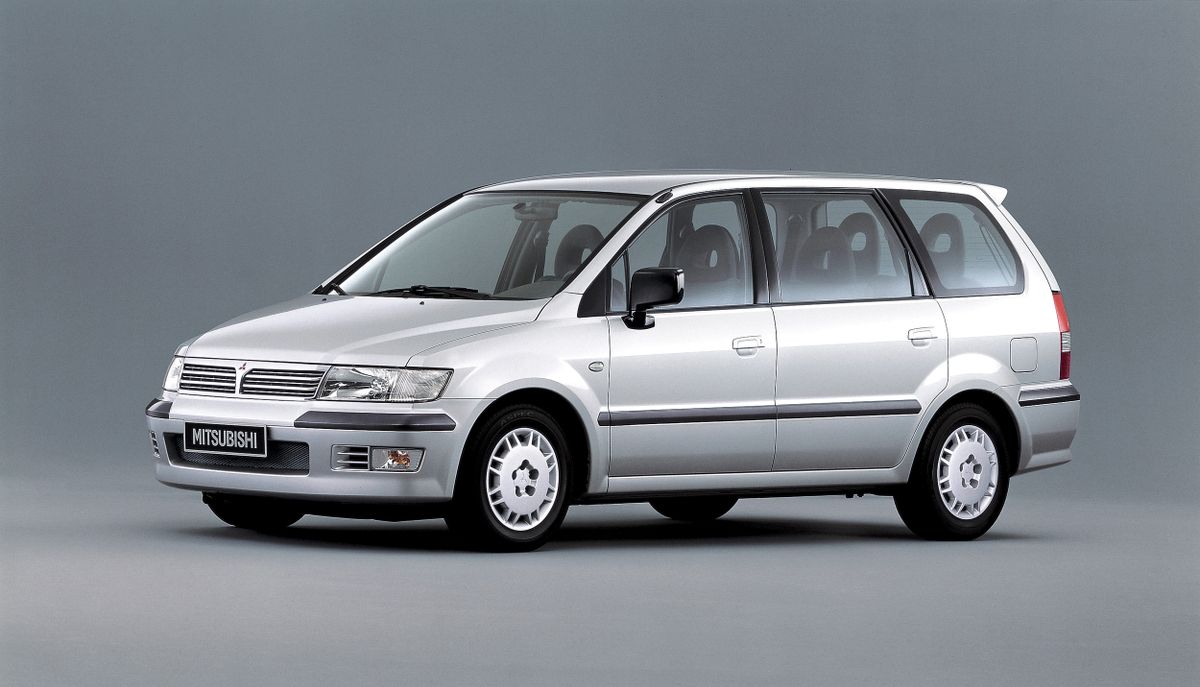
  • Film for a full wrap: about 66 ft (20 m) of 60-inch (1.52 m) cast film; chrome or patterned film: about 79 ft (24 m).
  • Body: van (5 doors).
  • Sliding side doors: the door tracks stay bare, and the film is cut along them.

Space Wagon wraps by generation

Swipe sideways. Tap a card for the full description.

Mitsubishi Space Wagon, third generation, factory photo
Factory color shown

1997–2004 Space Wagon van (third generation)

1997–2004van (5 doors)181.1 in (4,600 mm)

The third generation Mitsubishi Space Wagon, built from 1997 to 2004, has sliding side doors where the tracks stay bare. The film is cut along the track edges, and the cut line has to be straight because the track channel is deep. The rear edge of the sliding door is also cut back from the rubber seal so the film does not peel when the door opens.

Sliding side doors: the door tracks stay bare, and the film is cut along them.

Film: about 66 ft (20 m) of 60-inch (1.52 m) cast film; chrome or patterned film: about 79 ft (24 m).
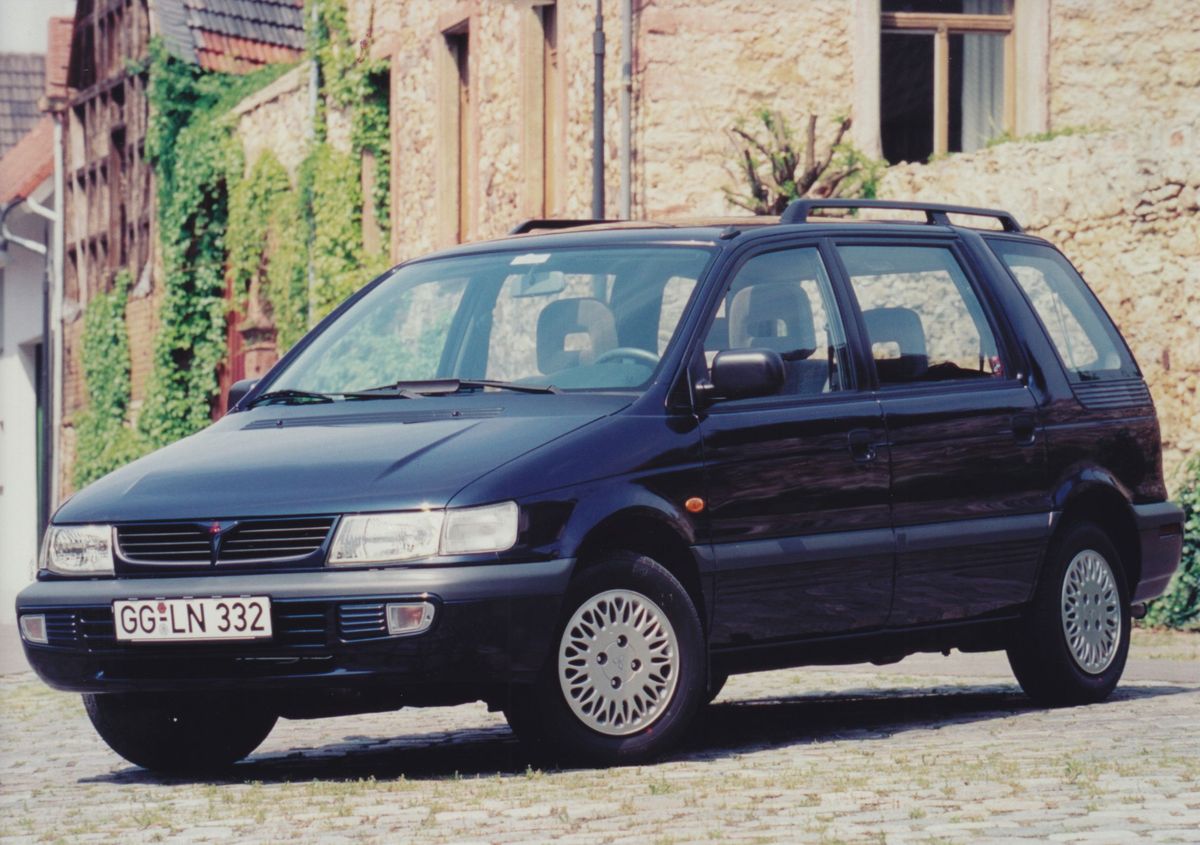
Mitsubishi Space Wagon, second generation, factory photo
Factory color shown

1991–2001 Space Wagon van (second generation)

1991–2001van (5 doors)177.8 in (4,515 mm)

The second generation Mitsubishi Space Wagon covers the van body from 1991 to 2001, but its years overlap with the third generation from 1997 to 2001. A car from those overlap years could be either body, and the film estimate differs by about 2 ft (0.5 m). The owner of a 1997 to 2001 Space Wagon should check the body length and the door shape before ordering the film.

Sliding side doors: the door tracks stay bare, and the film is cut along them.

Film: about 64 ft (19.5 m) of 60-inch (1.52 m) cast film; chrome or patterned film: about 74 ft (22.5 m).

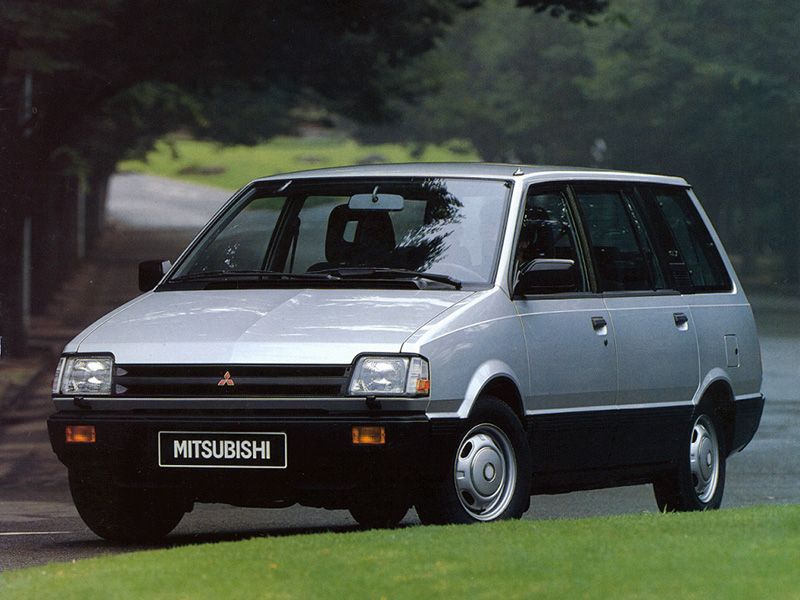
Mitsubishi Space Wagon, first generation, factory photo
Factory color shown

1983–1991 Space Wagon van (first generation)

1983–1991van (5 doors)176.8 in (4,490 mm)

The first generation Mitsubishi Space Wagon was built from 1983 to 1991, and paint age matters before a full wrap. On a car of these years the panels may be original or repainted, and old paint can fail under the film or when the film is removed. The installer should do a test spot on a hidden area first, then check the paint for lifting after the film is pulled.

Sliding side doors: the door tracks stay bare, and the film is cut along them.

Film: about 62 ft (19 m) of 60-inch (1.52 m) cast film; chrome or patterned film: about 72 ft (22 m).

Roof, hood, chrome delete and PPF on a Space Wagon

A partial wrap on a Mitsubishi Space Wagon can cover the roof, the hood or the mirror caps, without the sliding door work. A chrome delete covers the window trim and the badges with black film, and it leaves the door tracks untouched. Paint protection film (PPF) on the front end covers the hood, fenders and mirrors with clear film. These smaller jobs use less material and are a good way to change the look of the van without a full color change wrap.

  • Partial wrap: roof, hood, mirror caps.
  • Chrome delete: window trim and badges.
  • Paint protection film: clear film for the front end, which can also go over a wrap.

Wrapping a Mitsubishi Space Wagon: body, cut-outs and film

The Mitsubishi Space Wagon has a five-door van body, and the long roofline adds to the vinyl wrap area. The newest third generation is 181.1 in (4,600 mm) long, while the first generation is a little shorter at 176.8 in (4,490 mm). The extra length changes the film layout on the roof and the upper side panels. Because the body is a tall van, the rocker panels and rear corners take a larger cut from the roll than on a sedan.

Space Wagon wrap ideas have to work around the sliding side doors on every generation. The door tracks stay bare, so the film is cut along the track edges and tucked behind them. The door handles and the badges come off for a cleaner install, and the mirror caps are wrapped off the car. The large rear hatch is a single panel, so the film on it is laid in one piece down to the bumper line.

How much vinyl to wrap a Space Wagon depends on the body generation, and the difference is small but real. The first generation takes about 62 ft (19 m) of 60-inch (1.52 m) cast film, and the second takes about 64 ft (19.5 m). The third generation is the longest and takes about 66 ft (20 m) of the same film. A chrome or patterned film layout adds roughly 10 to 13 ft (3 to 4 m), because the installer has to align the pattern across the sliding doors.

Questions about wrapping a Mitsubishi Space Wagon

How much vinyl does it take to wrap a Mitsubishi Space Wagon?

A full wrap of the newest Mitsubishi Space Wagon, the 1997–2004 body, takes about 66 ft (20 m) of 60-inch (1.52 m) cast film. That figure is for a standard color change with no pattern, cut and tucked on the van. A chrome or patterned film layout on the same body uses about 79 ft (24 m), because the pattern must run continuously across the sliding doors.

Are the sliding doors of a Space Wagon wrapped?

Yes, the sliding doors of a Space Wagon are wrapped, but the door tracks stay bare. The film is cut along the track edges and tucked behind them, so the film does not foul the track when the door slides. The cut line has to be made before the film is set, on both the upper and lower track sides of the door.

Can I wrap only the hood or the roof of a Space Wagon?

Yes, you can wrap only the hood or the roof of a Space Wagon, as a partial wrap. The roof is the largest single panel on the van, and the hood is a simple flat area that takes less film than the roof. The mirror caps and a chrome delete on the window trim are other partial jobs on this car.

Is a Space Wagon hard to wrap?

A Space Wagon is not especially hard to wrap, but the sliding doors and the tall body add work. The door tracks stay bare and the film is cut along them, which takes time on both sides of the van. The newest body is 181.1 in (4,600 mm) long, so the roof and upper sides take large pieces of film, and the installer has to set them without wrinkles.